
Mushrooms of The Oregon Coast!
When the rain returns, mushroom season comes alive....And if you've never spent a fall morning wandering through an Oregon coastal forest looking for wild mushrooms, you're missing one of the most entertaining treasure hunts in the Pacific Northwest. Mushroom foraging combines hiking, exploring, photography, learning, cooking, and the thrill of finding something hidden in the wilderness. You can walk through the same forest you've visited dozens of times and suddenly discover an entire world you never noticed before. A golden chanterelle pokes through the moss. A strange cluster of fungi covers an old stump. A massive mushroom hides underneath a sword fern. Then you find one mushroom. And another. And another. Suddenly you're hooked.
Why the Oregon Coast Is Mushroom Country
The Coast Range and coastal forests receive tremendous amounts of moisture. Dense stands of Douglas fir, western hemlock, Sitka spruce, and other trees shade a forest floor covered with needles, leaves, moss, ferns, fallen branches, and decaying wood. Add mild coastal temperatures and regular autumn rain and you have excellent fungal habitat. What most people call a mushroom is actually only the visible fruiting body of a much larger organism. Much of the fungus exists out of sight as a network of threadlike structures called mycelium, growing through soil, wood, and other organic material.
Fall Is When the Treasure Hunt Really Begins
Mushrooms can appear at different times of year, but autumn is the season that gets many Oregon foragers excited. The first substantial rains following the dry part of summer can trigger impressive flushes of fungi. September can bring the beginning of the action in some areas, while October and November can be fantastic depending on rainfall, elevation, and temperature. Mild coastal weather can sometimes keep mushrooms appearing surprisingly late.
The Pacific Golden Chanterelle: Oregon's Golden Prize
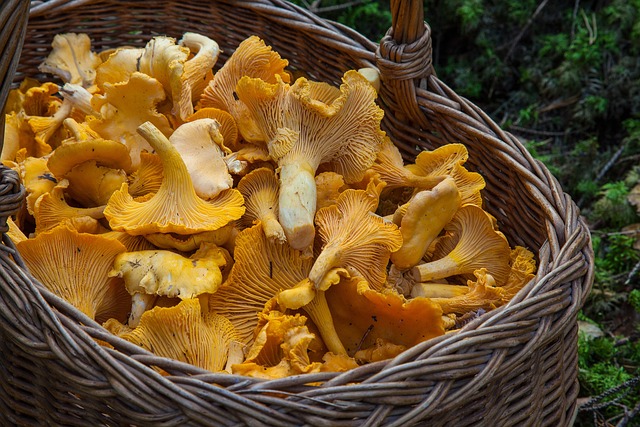
For many Oregon mushroom hunters, the Pacific golden chanterelle is the mushroom that starts the obsession. There's something incredibly satisfying about seeing that golden color emerging from a dark green forest floor. Pacific golden chanterelles are among the edible mushrooms associated with Oregon's forests, but beginners should never assume that a yellow or orange mushroom is automatically a chanterelle. Positive identification matters every single time.
Hedgehog Mushrooms: Another Forest Favorite
Another interesting edible mushroom encountered by knowledgeable Oregon foragers is the hedgehog mushroom. The name makes sense when you turn one over. Instead of conventional blade-like gills beneath the cap, hedgehog mushrooms have small tooth-like structures hanging downward. They can be an exciting discovery because once you've learned their identifying characteristics from experienced mushroom hunters, they're remarkably interesting fungi to study.
Lobster Mushrooms: The Weird Ones
Then there are lobster mushrooms. These things look like they came from another planet. Their orange-to-reddish exterior can make them surprisingly conspicuous against a dark forest floor. The really fascinating part is that what we call a lobster mushroom results from a parasitic fungus transforming another mushroom. Nature gets weird out here.That's exactly why mushroom hunting never gets boring. The more you learn, the stranger the fungal world becomes.
Boletes: The Big Ones You Can't Ignore
Certain boletes develop substantial caps and thick stems, making them impressive finds when they're in good condition.Instead of typical gills, boletes generally have a sponge-like pore surface beneath the cap. Finding a big mushroom hiding beneath the coastal vegetation is enough to stop almost anyone in their tracks. Even when I'm not planning to harvest a mushroom, I love finding specimens like these. They're fantastic subjects for photography.
Matsutake: A Famous Coastal Mushroom
One of the most fascinating mushrooms associated with Oregon's coastal forests is the matsutake. These aromatic mushrooms have considerable culinary and commercial value. That's an excellent example of why mushroom hunters should never assume that the rules for one mushroom, forest, or piece of public land automatically apply somewhere else.
Half the Fun Is Finding Them
Mushroom hunting activates the same part of my brain as fishing. You don't know what's going to happen.Y ou might hike for an hour and find almost nothing. Then you cross a little creek, climb onto another slope, and notice one chanterelle. Then another. Then another. Suddenly you've found the spot. That unpredictability is addictive. You begin noticing subtle changes in the landscape. The trees are different here. The ground is softer. There's more moss. The slope faces another direction. The forest seems wetter. You start wondering why they're growing here but not twenty yards over there. That's when you're no longer simply hiking around collecting mushrooms.You're learning the forest.
The Weather Makes It Better
Rain hits the hood of your jacket. Your boots sink into soft soil. Fog hangs between the trees. Water drips from sword ferns. Everything smells alive. You're cold enough to appreciate the thermos of coffee waiting in the truck, but you're not ready to quit because the next patch could be fifty feet away. Some people wait all year for sunshine. Mushroom hunters start smiling when the forecast shows rain.
Identification Is the Serious Part
Everything about mushroom hunting can be fun right up until somebody guesses about what they're eating. Don't guess. Some poisonous mushrooms can be confused with edible species, and mushroom poisoning can cause serious illness. Cooking a poisonous mushroom does not necessarily make it safe. A professional field guide is the safe way to learn. There is no mushroom delicious enough to gamble your health on.
Mushrooms Are Doing Important Work
The fungal world isn't just interesting because some species taste good. Fungi are essential parts of forest ecosystems. Many help break down dead organic material and recycle nutrients. Others form relationships with living trees through mycorrhizal associations, exchanging resources in ways that help sustain forest ecosystems. That mushroom you see above the soil may represent only a small visible part of a much larger fungal organism. Thinking about that changes the experience. You're not walking through a forest filled with isolated mushrooms. You're walking through an incredibly complicated living system, much of which is hidden beneath your feet.
The Best Part Comes Back at Camp or Home
Depending on the species, mushrooms can be wonderful sautéed with butter, added to eggs, folded into pasta, served alongside meat, cooked into soup, or simply piled onto toasted bread. The smell of mushrooms cooking after spending an entire rainy day searching for them somehow makes the meal taste better. You didn't grab these from a grocery-store shelf.
Make It a Family Adventure
Mushroom hunting can also be a fantastic family adventure. Kids are natural treasure hunters. Tell them you're looking for strange mushrooms and suddenly a boring forest walk becomes an expedition. Who can find the smallest mushroom? The biggest? The weirdest? The brightest? The one growing in the strangest place? Children should be taught never to taste wild mushrooms. Make identification and discovery part of the adventure.
The Oregon Coast's Ultimate Fall Treasure Hunt
There are countless ways to experience fall on the Oregon Coast. You can chase salmon. Watch whales. Go crabbing. Explore beaches. Photograph storms. Hike through coastal forests. But mushroom hunting offers adventure in the coastal rainforests. And Somewhere beneath the dripping ferns, moss, and towering evergreens of the Oregon Coast, another wild treasure hunt is waiting to begin.


