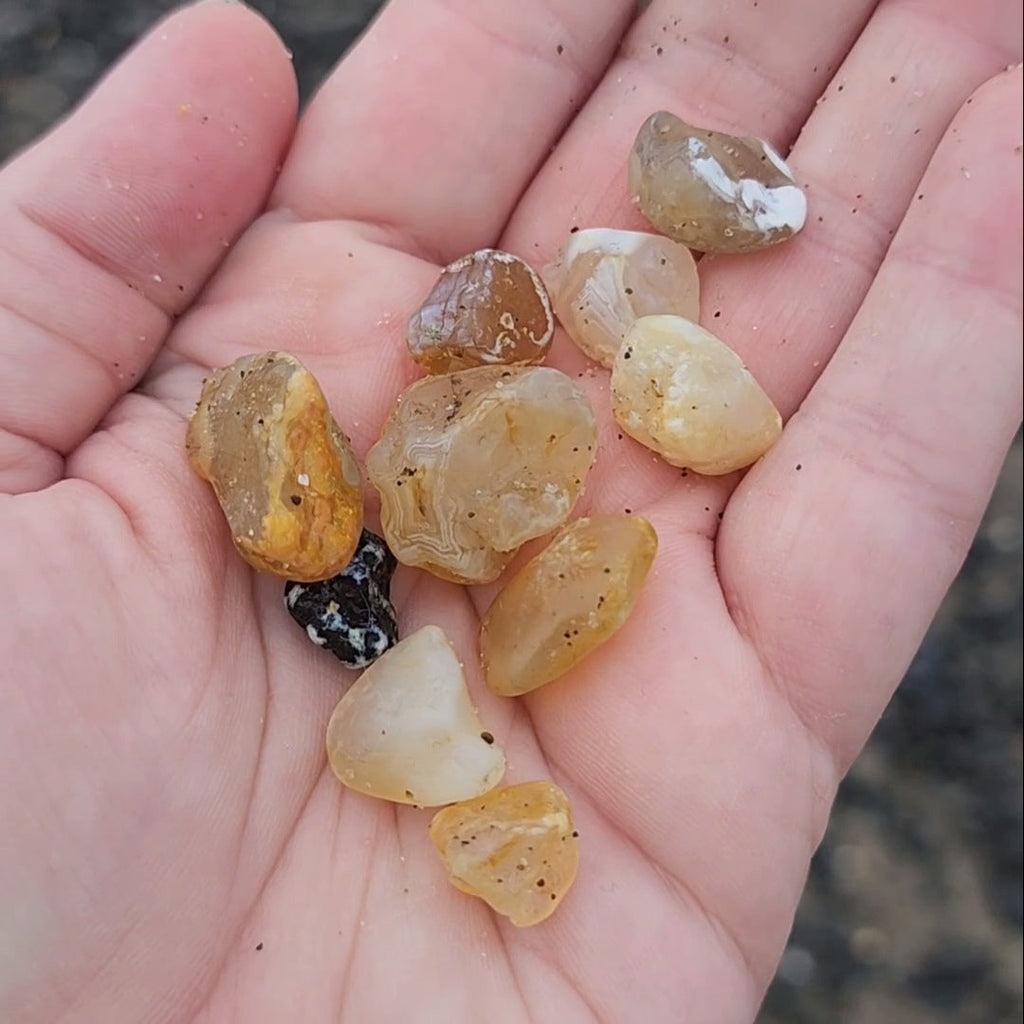
Discover the Hidden Treasure of the Oregon Coast: Agate Hunting for Beginners
There are few activities on the Oregon Coast that combine adventure, relaxation, and the thrill of discovery quite like agate hunting. While many visitors come for the crashing waves and breathtaking sunsets, seasoned locals know that some of the coast's greatest treasures are hiding right beneath their feet.
Every walk along the shoreline becomes a treasure hunt. One minute you're listening to the surf roll onto the beach, and the next you're spotting a glowing gemstone nestled among thousands of ordinary rocks. It's surprisingly addictive—and once you find your first agate, you'll understand why people return year after year.
What Makes Oregon Coast Agates So Special?
Millions of years ago, volcanic activity throughout the Pacific Northwest created pockets within lava flows. Over time, silica-rich minerals slowly filled these cavities, forming agates with beautiful bands, swirls, and translucent colors. As cliffs eroded and rivers carried these stones to the ocean, waves polished them into the smooth gems that beachcombers search for today.
Unlike ordinary beach rocks, agates often appear to glow when wet. They range in color from crystal clear and honey gold to deep orange, red, blue-gray, and occasionally even green.
Best Places to Search
Some of the Oregon Coast's most productive beaches include:
- Yachats area beaches
- Stonefield Beach
- Neptune Beach
- Oceanside Beach
- Cape Meares
- Fogarty Creek State Recreation Area
- Beaches between Newport and Florence
These locations are well known for exposed gravel beds where agates naturally collect after storms.
When to Go
The best agate hunting usually happens:
- During low tide
- After winter storms
- Following King Tides
- Early in the morning before crowds arrive
Winter through spring generally offers the best conditions because shifting waves remove sand and expose fresh gravel beds where agates become visible.
Tips for Finding More Agates
Experienced rockhounds rarely rush. Instead, they slowly scan the ground a few feet ahead.
Here are a few tricks:
- Look for rocks that appear slightly translucent.
- Search where gravel meets wet sand.
- Focus around rocky outcroppings and creek mouths.
- Wet rocks are much easier to identify than dry ones.
- Carry a small flashlight to test your finds—real agates often glow when light shines through them.
Many beginners walk right past beautiful agates because they're looking too far ahead instead of carefully scanning each step.
More Than Just Rocks
Agate hunting isn't really about collecting stones.
It's about slowing down.
It's the sound of waves replacing the noise of everyday life. It's noticing tiny details most people overlook. Children become explorers. Adults forget about their phones. Hours disappear without anyone realizing it.
Many lifelong collectors say they return to the beach even when they don't find a single agate because the search itself is calming and rewarding.
What to Bring
Pack light for a comfortable day on the beach:
- Waterproof hiking shoes or boots
- Small backpack
- Drinking water
- Windbreaker or rain jacket
- Bucket or mesh bag for your finds
- Flashlight for checking translucent stones
- Tide chart before heading out
Respect the Coast
Always collect responsibly.
Leave driftwood habitats undisturbed, avoid climbing unstable coastal cliffs, and never dig into bluffs or protected areas. Most agates found naturally on the beach are legal to collect for personal enjoyment, but it's always wise to know the rules for the area you're visiting.
Your Next Oregon Coast Adventure
Agate hunting is one of those rare activities that appeals to everyone. Whether you're traveling as a family, exploring solo, or spending a romantic weekend on the coast, the excitement of spotting a gemstone sparkling among the pebbles never gets old.
The next time you're walking along an Oregon beach, slow your pace and look down. That ordinary-looking rock catching the sunlight might just be a beautiful agate that's been waiting millions of years for someone to discover it.