November Crabbing in Lincoln City, Oregon: A Guide to Catching Dungeness Crab
November is traditionally one of the better months for harvesting Dungeness crab along the Oregon Coast. Many crabs have recovered from their seasonal molting period, meaning recreational crabbers have a better chance of finding hard-shell crabs with a good amount of meat.
However, November also brings heavier rainfall to the Oregon Coast. Freshwater flowing into Siletz Bay can lower salinity levels, causing crabs to move toward deeper, saltier water near the ocean. After several days of heavy rain, crabbing closer to the mouth of the bay may be more productive than farther inland.
Expect cooler temperatures, occasional strong winds, fewer crowds, and opportunities to catch both Dungeness and red rock crab.
Best Places to Go Crabbing in Lincoln City
Taft Beach and the Mouth of Siletz Bay
Located at the southern end of Lincoln City, the historic Taft district is one of the most popular destinations for recreational crabbing. The bay-facing beach provides easy access to productive water without the need for a boat.
Look for deeper channels and areas where the sandy bottom gradually drops off. Casting folding crab traps and crab rings from the shoreline can be particularly productive during an incoming tide.
Taft is also an excellent location for beginners and families, with nearby parking, restaurants and public restrooms.
Siletz Bay by Boat
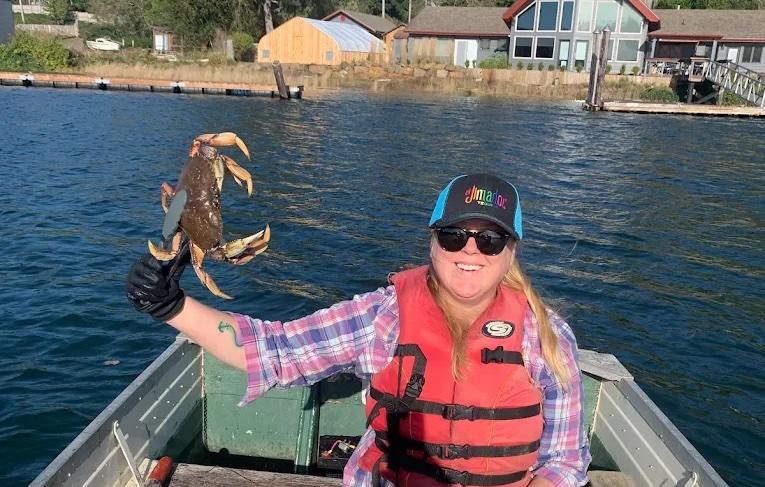
Having a boat gives you a considerable advantage when crabbing in November. You can explore deeper channels, cover more territory and reposition your pots depending on freshwater runoff.
Target sandy and muddy bottoms along the edges of deeper tidal channels. Spread your crab pots out at different depths until you find where the crabs are congregating.
Avoid navigating near the mouth of Siletz Bay during strong tidal exchanges or stormy weather. Currents can be surprisingly powerful.
Best Tides for November Crabbing
Timing the tides can make a tremendous difference in how many crabs you catch. During November, an incoming tide can be especially beneficial because it brings saltwater back into the bay, helping counteract freshwater runoff from recent rains.
Some of the best times to crab include:
- One to two hours before high tide.
- High slack tide.
- Low slack tide when sufficient water remains.
- Days with smaller tidal exchanges.
- Periods following several days of lighter rainfall.
Strong outgoing tides can make it difficult for crabs to move around and feed. They can also drag lighter crab traps across the bottom.
Best Bait for Dungeness Crab
Dungeness crabs are opportunistic scavengers with an excellent sense of smell. Using oily, scent-producing bait can help attract crabs from considerable distances.
Chicken legs, chicken thighs, salmon carcasses, herring, sardines, tuna scraps and shad are all excellent choices.
Chicken tends to hold up well during longer soak times, while oily fish can create a stronger scent trail. Combining chicken and fish in the same bait cage can give you the advantages of both.
Always secure your bait to prevent seals, sea lions and crabs from stealing it.
Essential Crabbing Equipment
You don't need expensive equipment to enjoy a successful day of crabbing in Lincoln City. A relatively simple setup will get you started.
- Crab pots, rings or castable folding traps
- Crab measuring gauge
- Bait cages
- Heavy-duty rope
- Floating buoys for boat crabbing
- Waterproof gloves
- Rubber boots
- Cooler with ice
- Oregon shellfish license
- Waterproof clothing
November weather can change quickly, so dressing in layers and bringing extra clothing is highly recommended.
How Long Should You Leave Your Crab Pots In?
Soak times vary depending on your equipment, tidal conditions and crab activity.
Crab rings generally work well with soak times of 10–20 minutes. Folding crab traps can be checked every 20–30 minutes, while enclosed crab pots can be left underwater for 45–90 minutes or longer.
If you're consistently pulling up empty pots, don't be afraid to change locations. Moving even 30 or 40 feet can sometimes make a noticeable difference.
How Rain Affects Crabbing in Siletz Bay
One of the biggest challenges of November crabbing is the amount of freshwater entering Siletz Bay from the Siletz River, Schooner Creek and other surrounding waterways.
Following heavy rainfall, Dungeness crab may retreat toward the ocean in search of higher salinity levels. Dirty water, floating debris and stronger currents can also make crabbing more challenging.
When crabbing after a storm, concentrate on the lower bay, look for deeper water and work the incoming tide. A few consecutive days without significant rainfall can help improve conditions.
Oregon Crabbing Regulations for November 2026
Recreational crabbers should be familiar with Oregon's shellfish harvesting regulations before heading out.
- Dungeness crab daily limit: 12 per person.
- Minimum Dungeness crab size: 5¾ inches.
- Only male Dungeness crabs may be retained.
- Red rock crab daily limit: 24 per person, any size or sex.
- Maximum of three legal crabbing devices per person.
- A shellfish license is required for anyone 12 years of age or older.
According to the November 19, 2026, ODFW recreation report, recreational crabbing in bays and estuaries remains generally permitted, subject to shellfish safety closures and area-specific restrictions. Ocean crabbing is seasonally closed from October 16 through November 30. The report does not provide a specific catch-rate update for Siletz Bay.
Always check ODFW and call the Oregon Shellfish Safety Hotline at 1-800-448-2474 before harvesting.
Tips and Tricks for Successful November Crabbing
Fresh bait, good tidal timing and patience are three of the most important ingredients for a successful crabbing trip.
Try using heavier traps when currents are strong. Replace your bait when it loses its scent, and avoid repeatedly dropping your pots in unproductive areas. When harvesting Dungeness crab, look for firm, hard shells rather than soft shells, which typically contain less meat.
Keep your crabs cool and alive until you're ready to cook them, and clean out the internal organs before cooking as an additional precaution against marine biotoxins.
Most importantly, never underestimate the power of the Oregon Coast during late fall. Watch for incoming tides, sneaker waves, slippery rocks and floating debris.
Is November a Good Time to Go Crabbing in Lincoln City?
Absolutely. Although rainfall can make conditions unpredictable, November has wonderful opportunities to harvest fresh Dungeness crab. And there's no better way to finish a chilly November afternoon on the Oregon Coast than with a plate of freshly cooked Dungeness crab, melted garlic butter and warm sourdough bread.