November Crabbing in Winchester Bay, Oregon: A Complete Guide to Catching Dungeness Crab on the Umpqua River
Now that the summer crowds have disappeared, the coastal weather turns colder, and fall storms begin rolling across the Pacific, the lower Umpqua River becomes a popular destination for recreational crabbers hoping to bring home fresh Dungeness crab.
Located where the Umpqua River meets the Pacific Ocean, Winchester Bay has sheltered bay waters, tidal channels, public docks, and boat-accessible crabbing grounds. However, late-fall crabbing comes with challenges. Heavy rainfall, freshwater runoff, strong tidal currents, and changing ocean conditions can affect where crabs concentrate and how actively they feed. Knowing how to adjust your approach can make the difference between a nearly empty pot and a cooler full of keeper-sized Dungeness.
Why November Can Be a Good Month for Crabbing in Winchester Bay
November brings a noticeable change to Winchester Bay. The busy summer boating season has slowed, the docks are quieter, and the cooler weather creates a completely different atmosphere along the Umpqua River.
One advantage of crabbing this time of year is that Dungeness crab remain active throughout the colder months. Fall can also be a period when many male crabs have had time to fill out after molting, although meat quality varies depending on individual crabs and their molt cycles.
The biggest factor affecting November crabbing isn't necessarily the colder temperature. It's the amount of freshwater entering the estuary.
After several days of heavy rainfall, the Umpqua River can push large amounts of freshwater downstream. Dungeness crab generally prefer saltier water, so prolonged freshwater influence can change their distribution within the bay.
During wet periods, crabbers may have better luck closer to the ocean entrance or in deeper channels where saltwater remains more influential. During stretches of lighter rainfall and stable conditions, crabs may spread farther into the estuary.
November 2026 Crabbing Outlook: What to Expect After the Fall Rains
With the arrival of November rains along the Oregon Coast, increased freshwater runoff becomes a concern for recreational crabbers. The Umpqua River drains a substantial amount of the surrounding landscape, making Winchester Bay particularly susceptible to changes in water conditions.
For crabbers visiting Winchester Bay during the second half of November, expect conditions to change quickly. A productive location one weekend may produce fewer crabs following several days of heavy rain.
Targeting incoming tides and fishing during breaks between storm systems may improve your chances of bringing home dinner.
One advantage of November is that recreational crabbing within Oregon's bays and estuaries remains open unless a separate closure applies, even though recreational ocean crabbing is seasonally closed through November 30.
Best Places to Go Crabbing in Winchester Bay
Windy Cove Crab and Fishing Dock
One of the easiest places for beginners and families, the Windy Cove Crab and Fishing Dock offers convenient access without needing a boat. Crab rings and traps are popular choices, and the location provides an opportunity to work different sections of the dock as the tide changes.
Half Moon Bay
Half Moon Bay is a good area to consider for boat crabbing because of its relatively protected waters and opportunities to set gear away from strong currents. Sandy and muddy bottom areas provide suitable habitat for Dungeness crab searching for food.
Salmon Harbor Marina
Salmon Harbor provides boat-launching access and designated public crabbing docks. The designated dock near the west boat launch on Ork Rock Road is another option for people crabbing without a boat.
This is a particularly convenient location for families and visitors who want to spend a few hours crabbing without investing in a boat or specialized equipment.
Lower Umpqua River Near the Jetties
The lower estuary can be worth exploring after significant rainfall because it remains more influenced by ocean saltwater. Generally, the first two miles of the lower Umpqua River offer some of the better crabbing opportunities.
Boat crabbers should focus on legally accessible areas away from the navigation channel, jetty hazards, and the dangerous river bar. November's ocean crabbing closure still applies beyond the estuary boundary.
Best Tides for November Crabbing
Tides are one of the most important factors to consider when crabbing in Winchester Bay, particularly during periods of increased river flow.
Dungeness crab tend to become more active when tidal currents slow down. Strong currents can make it difficult for crabs to move around and feed, and they can also cause problems with crab rings and traps.
The period surrounding high tide and slack water is a good starting point. An incoming tide can bring saltier ocean water into the lower estuary, potentially improving conditions following periods of freshwater runoff.
For a typical November trip, I would recommend arriving about two hours before high tide, setting your gear as the water rises, and continuing through the slack-water period.
However, high tide isn't the only productive time. Low slack can also offer good opportunities, especially when currents are manageable.
Best Bait for Dungeness Crab in November
One thing that hasn't changed with the seasons is the importance of fresh, oily, strong-smelling bait. Dungeness crab rely heavily on their sense of smell to locate food, and the right bait can make a noticeable difference.
Some of the best bait choices for November crabbing include:
- Chicken legs and thighs
- Salmon carcasses
- Rockfish scraps
- Squid
- Fish heads
- Raw turkey legs
- Herring and sardines
A combination of chicken and fish scraps can be especially useful. Chicken holds up well, while fish releases scent into the surrounding water.
In stronger November currents, keep bait securely attached so it doesn't wash away or get stripped off too quickly.
Crab Rings vs. Crab Pots: Which Works Better?
Both methods can work in Winchester Bay, but the best choice depends on where you're crabbing and how much time you want to spend checking your gear.
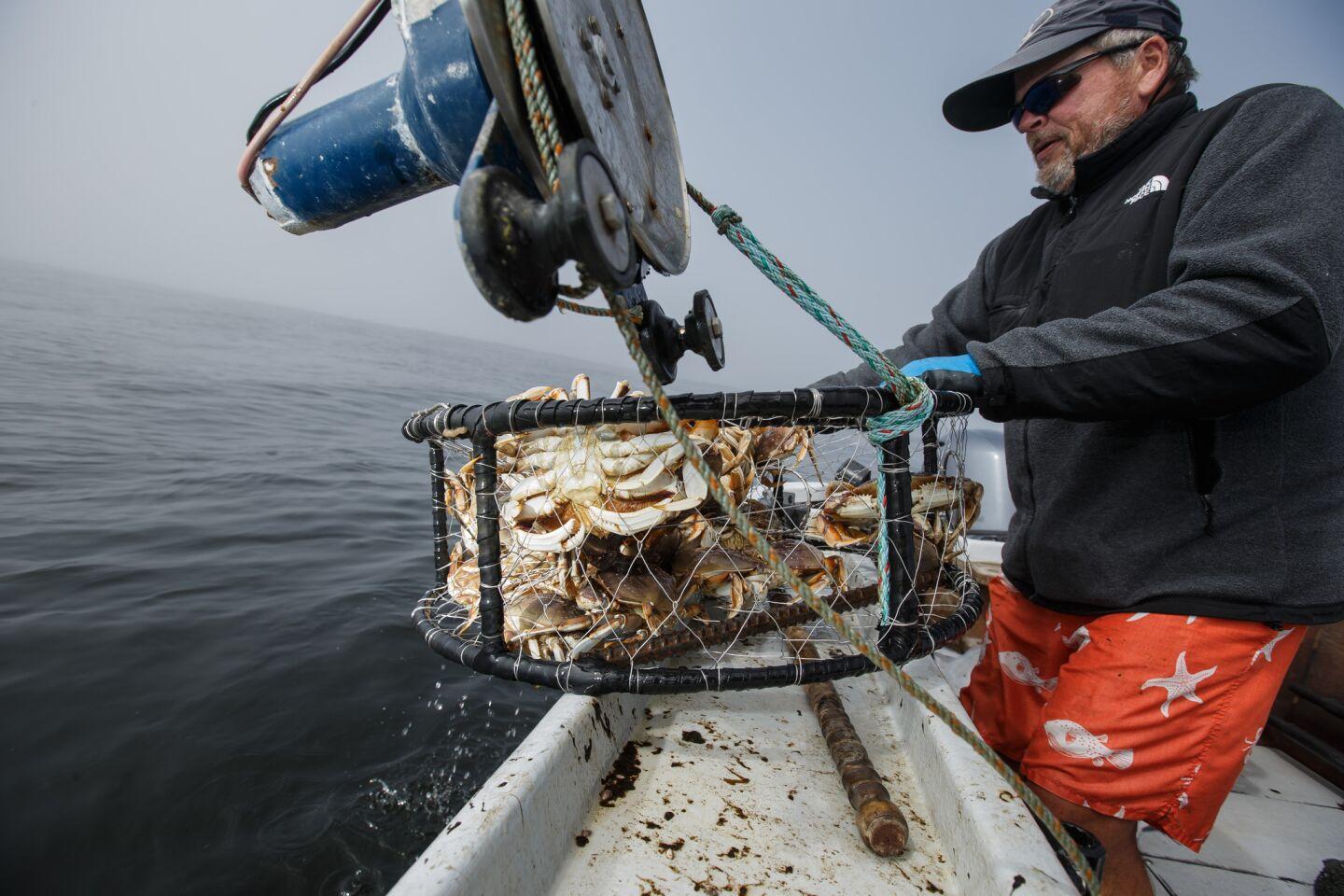
Crab rings are ideal for public docks and active crabbing. Lower the ring to the bottom, allow crabs time to find the bait, and pull it up quickly and steadily. Checking approximately every 10–20 minutes is a reasonable starting point, adjusting based on activity.
Crab pots are better suited for longer soaks, particularly when fishing from a boat. Pots allow crabs to enter through openings and remain inside until the trap is retrieved. Soak times of 30–60 minutes are a practical starting point, although conditions may require adjustments.
For November crabbing, pots can be advantageous during colder weather because they require less frequent pulling. However, crab rings are a fun way to stay active, especially when crabbing with family or friends.
How Heavy Rain Changes Crabbing in the Umpqua River
November rainfall is probably the biggest variable affecting crabbing success in Winchester Bay.
When heavy storms move through the Oregon Coast Range, large amounts of runoff enter the Umpqua River. The resulting freshwater can lower salinity throughout portions of the estuary.
Dungeness crab are adapted to saltwater environments, so significant freshwater influence may cause them to move toward areas with higher salinity.
If you're crabbing after several days of heavy rainfall, consider adjusting your strategy. Instead of repeatedly setting gear in the same unproductive location, look for areas within the open estuary that are closer to the ocean entrance. Pay attention to tidal movement and consider trying slightly deeper water where saltwater may remain more influential.
It's also important to understand that crabbing may temporarily slow down following major storms. Sometimes the best strategy is simply waiting for river conditions to stabilize.
A couple of days of lighter rainfall can improve the outlook, although the Umpqua's freshwater influence may persist longer depending on upstream flows.
November Crabbing Tips That Can Improve Your Catch
A successful November trip often comes down to preparation rather than luck.
Arrive early enough to prepare your gear before the most favorable tidal period. Make sure your bait is secured, your ropes are long enough for the water depth and tidal changes, and your traps are properly weighted.
When crabbing from a boat, try setting gear along the edges of productive flats and channels rather than directly in the strongest current. Sandy and muddy bottom areas are often good places to begin.
If a trap produces nothing after several checks, consider moving it. Even a relatively short change in location can sometimes produce better results.
Watch what other crabbers are doing, too. If nearby crabbers are consistently pulling legal-sized Dungeness while your gear remains empty, pay attention to differences in depth, bait, and location.
Another important tip is to check the condition of the crabs you're catching. Hard-shelled Dungeness generally offer better meat recovery than recently molted, soft-shelled crabs.
Finally, remember that November weather can change quickly. A calm morning can turn into a windy, rainy afternoon, so dress appropriately and avoid taking unnecessary risks.
Oregon Crabbing Regulations
Recreational crabbers in Oregon are generally allowed to keep 12 male Dungeness crab per person per day, with a minimum shell width of 5¾ inches. All female and undersized Dungeness crab must be released.
Each person may use a combined total of three crab pots, rings, or baited lines. An Oregon shellfish license is required for anyone 12 years of age or older.
Recreational crabbing in bays and estuaries is generally open year-round, while recreational ocean crabbing is closed from October 16 through November 30.
Always check the Oregon Department of Fish and Wildlife and the Oregon Department of Agriculture for updated regulations and shellfish biotoxin closures before harvesting.
What to Bring for a November Crabbing Trip
November weather in Winchester Bay can be unpredictable, so being prepared makes the experience much more enjoyable.
A few essentials include waterproof boots, rain gear, warm clothing, crab rings or pots, fresh bait, a crab measuring gauge, gloves, and a cooler with ice.
If you're crabbing from a boat, bring properly fitted life jackets and check the weather, tides, and current conditions before launching. The Umpqua River entrance is known for hazardous bar conditions, particularly during winter storms.
Even when the ocean looks relatively calm from shore, strong currents and incoming swells can make boating dangerous. Stay within sheltered waters appropriate for your vessel and experience.
Is November Worth a Trip to Winchester Bay for Crabbing?
Absolutely, provided the weather and river conditions cooperate.
November can produce quality Dungeness crab, and the quieter waterfront makes the experience particularly enjoyable for people who prefer avoiding the summer crowds.
The biggest challenge is timing your trip around the rain. Heavy freshwater runoff can temporarily reduce the number of crabs available within the bay, but periods of stable weather and favorable tides can create better opportunities.
For beginners, the Windy Cove Crab Dock is an excellent starting point. More experienced crabbers with boats may prefer exploring Half Moon Bay and the lower Umpqua estuary.
Happy Crabbing!