Ocean Safety on the Oregon Coast: What to Expect Before You Go
The Oregon Coast is wild, beautiful, and powerful. You should never, i mean ever...casually turn your back on the water. Between sneaker waves, cold surf, slippery rocks, drifting logs, fast-changing tides, and steep cliffs, the coast demands respect — but if you come prepared, it can be one of the most amazing experiences in the Pacific Northwest.
What to Expect on the Oregon Coast
Expect dramatic scenery: sea stacks, cliffs, tide pools, sandy beaches, forests, lighthouses, fishing towns, and long stretches of rugged shoreline. Also expect weather to change quickly. A sunny morning can turn windy and misty by afternoon. Bring layers, waterproof shoes, a rain jacket, and clothes you do not mind getting sandy.
The ocean is cold year-round, even in summer. Many Oregon beaches are better for walking, photography, tide pooling, storm watching, beachcombing, fishing, and relaxing than casual swimming.
Sneaker Waves
Sneaker waves are one of the biggest dangers on the Oregon Coast. These waves can suddenly rush much farther up the beach than the waves before them. They can knock people down, drag them into the ocean, and move heavy driftwood like toys.
Never turn your back on the ocean. Stay far back from the surf, especially during high surf, storms, king tides, or winter conditions.
Picture idea: A wide shot of waves crashing against rocks or cliffs with a caption: “Always keep one eye on the ocean.”
Driftwood and Logs
Large beach logs may look like fun places to sit or climb, but they can be extremely dangerous. When waves reach them, logs can roll suddenly and crush feet, legs, or even trap a person underneath.
Stay off logs near the waterline, wet sand, or anywhere waves might reach.
Picture idea: Driftwood scattered along an Oregon beach with a warning caption: “Never play on logs near the surf.”
Rip Currents
Rip currents are powerful channels of water that move away from shore. They can pull swimmers and waders out quickly. On the Oregon Coast, the water is cold and rough, making rip currents even more dangerous.
If you see choppy water, foam, or debris moving straight out to sea, avoid that area. Keep kids close and do not let pets run into the surf.
Cold Water Shock
Even on warm days, Pacific Ocean water can be painfully cold. Falling into cold water can make it hard to breathe, swim, or think clearly. This is why wading too deep, climbing rocks near waves, or fishing close to the surf can become dangerous fast.
Wear proper gear if kayaking, surfing, paddleboarding, or fishing near rough water.
Tide Pools and Rocks
Tide pools are amazing places to see starfish, anemones, crabs, mussels, and small fish, but they are safest at low tide. Rocks can be slippery, sharp, and covered with barnacles.
Check tide tables before visiting. Go during low tide, wear sturdy shoes, and never get trapped between cliffs and incoming water.
Picture idea: A close-up of tide pools at low tide with a caption: “Explore at low tide and watch the water.”
Cliffs and Trails
Many Oregon Coast viewpoints sit above steep cliffs. Edges can crumble from erosion, especially after rain. Stay on marked trails, obey fences and warning signs, and avoid taking risky photos near cliff edges.
The best view is not worth a fall.
Tsunami Awareness
The Oregon Coast is in a tsunami zone. When you arrive in a coastal town, notice the blue tsunami evacuation signs. Know where high ground is.
If you feel a strong earthquake near the coast, do not wait for an official warning. Move inland or uphill immediately.
Beach Driving and Parking
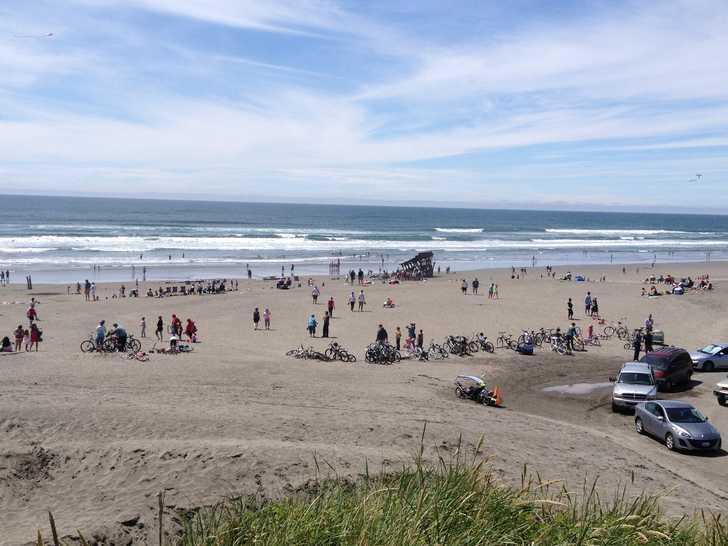
Some Oregon beaches allow vehicles in certain areas, but sand can be soft, tides can rise quickly, and beach access rules vary. Always check signs before driving onto sand. Never park close to the waterline.
Dogs and Kids
The Oregon Coast is a great place for families and dogs, but both need close supervision. Keep children away from logs, cliffs, and rough surf. Keep dogs leashed near waves, wildlife areas, tide pools, and busy beaches.
A dog chasing foam into the surf can get swept away faster than most people expect.
Best Times to Visit
Summer usually brings the driest weather and busiest beaches. Spring and fall are great for photography, hiking, fishing, tide pooling, and quieter travel. Winter is dramatic and beautiful, but storms, king tides, high surf, and sneaker waves are more common.
For tide pooling, visit during low tide. For storm watching, stay high above the beach at a safe viewpoint.
Quick Ocean Safety Checklist
Before heading to the beach:
- Check the tide table.
- Check the weather and surf forecast.
- Keep one eye on the ocean.
- Stay off wet logs and driftwood.
- Avoid climbing on jetties and slippery rocks.
- Keep kids and pets close.
- Stay back from cliffs.
- Know your tsunami evacuation route.
- Bring layers, sturdy shoes, and rain gear.
- Leave if waves are reaching farther up the beach.
The Oregon Coast is not a tame shoreline — and that is exactly what makes it so unique. It is raw, moody, powerful, and beautiful and stays with you long after the sand is out of your shoes. Respect the ocean, give the waves plenty of room, and let the coast show you its wild side from a safe distance.