Old Growth Cedar Reserve: A Hidden Ancient Forest on the Oregon Coast
Just behind the coastal highway in the small seaside town of Rockaway Beach, Oregon, lies a remarkable natural treasure: the Old Growth Cedar Reserve (also called the Cedar Wetlands Preserve or Old Growth Cedar Wetlands Preserve). This 45–46 acre stand of ancient coastal forest is one of the few places on the Oregon coast where visitors can walk among trees that have stood for half a millennium or more, experiencing a landscape that feels like stepping back in time.
A Forest Born Before Modern History
Unlike most forests along the Oregon coast, which were heavily logged in the 19th and 20th centuries, the cedar wetlands here were never logged, leaving behind an intact patch of old-growth forest. The area includes swamps and boggy ground dominated by towering western red cedar (Thuja plicata), Sitka spruce, western hemlock, and red alder, creating a unique mix of wetland and forest ecosystems.
At the heart of this preserve stands the legendary “Rockaway Big Tree,” a massive western red cedar that measures roughly 49 feet in circumference and about 154 feet tall — one of the largest of its species in Oregon. In 2007, a tree‑measuring nonprofit found the tree earned 756 points under their scoring system, surpassing the previous state champion by a significant margin.
Estimates of the tree’s age vary, but many sources place it at 500–900 years old, meaning it sprouted centuries before European settlement and has lived through innumerable storms, earthquakes, and the rise of nearby towns.
From Private Land to Preserved Wonder
The cedar wetlands weren’t always public. In the early 2000s, the land was gifted to the City of Rockaway Beach by The Nature Conservancy to be preserved as a natural and scientific resource — ensuring that neither development nor logging would ever disturb this ancient forest. The original deed even specifies the land’s use for scientific and educational purposes.
Over the years, local volunteers, city officials, and conservation groups have worked together to protect the site and make it accessible without harming the fragile ecosystem that supports it.
A Walk Through Time — The Boardwalk Experience
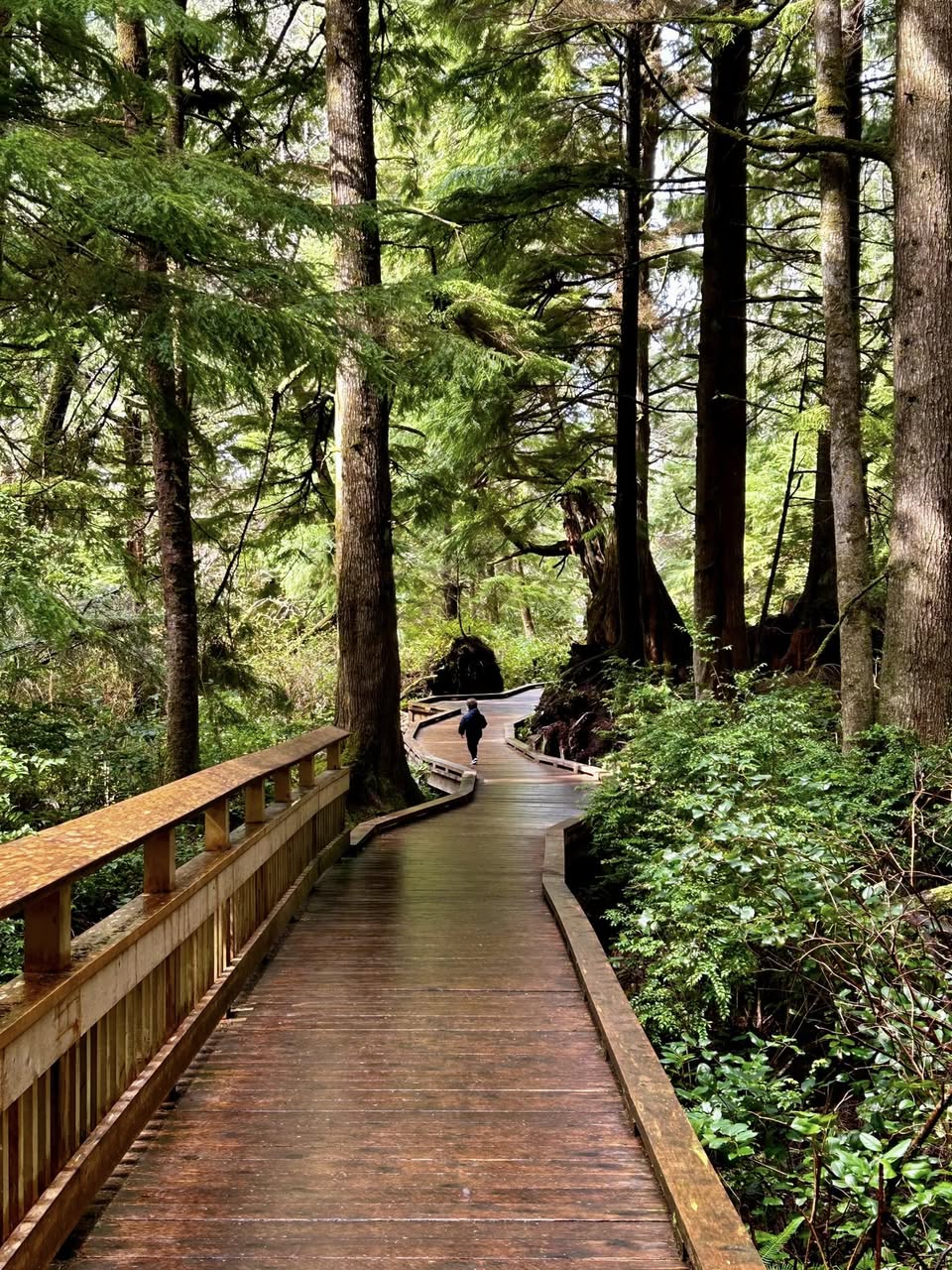
In 2019, the city completed a major enhancement: an ADA‑accessible elevated boardwalk that carries visitors from Highway 101 into the heart of the cedar wetlands. This boardwalk spans roughly 3,000 feet (about 1.1 miles round‑trip) and features railings, observation decks, and interpretive spaces that allow people of all abilities to experience the forest without trampling its sensitive soils or disturbing its plants.
The path gently winds over wet ground and meandering streams — including Saltair Creek and Heitmiller Creek, which converge and flow beneath the boardwalk — offering close‑up views of marsh grasses, skunk cabbage, alder thickets, and dense canopies of old trees.
Halfway in, an observation deck provides benches and an opportunity to pause, listen for birds and insects, and soak in the quiet ambiance of the wetlands. Continuing deeper, the trail leads to a wide platform that circles the Big Tree, giving a 360‑degree perspective on this ancient being.
Ecology, Wildlife, and Seasons
The cedar wetlands are more than just trees; they are a living ecosystem. The forest supports a variety of wildlife — from songbirds and woodpeckers to owls and the occasional osprey, which once nested in a lofty tree here before storms displaced it.
The wetland understory bursts with seasonal life: skunk cabbage in spring, flowering shrubs and ferns in summer, and moss‑covered branches and fungi in fall and winter. Each season paints the forest with a distinct palette — making it a rewarding destination year‑round.
Challenges and Resilience
Protecting an old‑growth stand within a town isn’t without its challenges. Severe storms have occasionally damaged the boardwalk and surrounding trees, leading to temporary closures and repair efforts. Yet, caretakers and volunteers remain committed to maintaining the trail and forest health while balancing public access with preservation.
In a region where much of the original coastal forest has been logged or altered, the Old Growth Cedar Reserve stands out as an exceptionally rare remnant of what the Oregon coast once was. It’s an urban wildland where visitors can literally walk among the ancients, see how ecosystems function, and appreciate the power and resilience of nature.
For locals and visitors— it’s an outdoor classroom, a sanctuary of silence, and a living testament to the forests that dominated this landscape long before highways, houses, or towns.