Sand Dollars on the Oregon Coast: What They Are and How to Find Them
There is something weirdly exciting about spotting a perfect sand dollar on the beach. At first glance it looks like a shell, or maybe a piece of ocean art, but a sand dollar is actually an animal. Along the Oregon Coast, the kind people usually find is the Pacific sand dollar, a close relative of sea urchins. In life, it is covered with tiny velvety spines and is usually dark purple, brown, or gray. The smooth white “sand dollar” people collect is the animal’s empty skeleton, also called a test, after the living animal has died and the surf has bleached it pale.
What makes sand dollars so memorable is that five-petaled pattern on top. That flower-like design is part of the animal’s body plan, because sand dollars are echinoderms, the same big family as sea stars and sea urchins. On the underside is the mouth, which uses five toothlike parts to grind food. Scientists can also estimate a sand dollar’s age by counting growth rings on the plates of the skeleton, and many live for roughly six to ten years.
On the Oregon Coast, sand dollars usually live offshore in sandy seafloor habitat rather than sitting around in tidepools waiting to be found. Oregon wildlife habitat guidance notes that shallow sandy areas can support dense beds of sand dollars stretching for long distances. That is why beachcombers usually find them after wave action, currents, storms, or unusual strandings push them ashore.
How to Tell if a Sand Dollar Is Alive
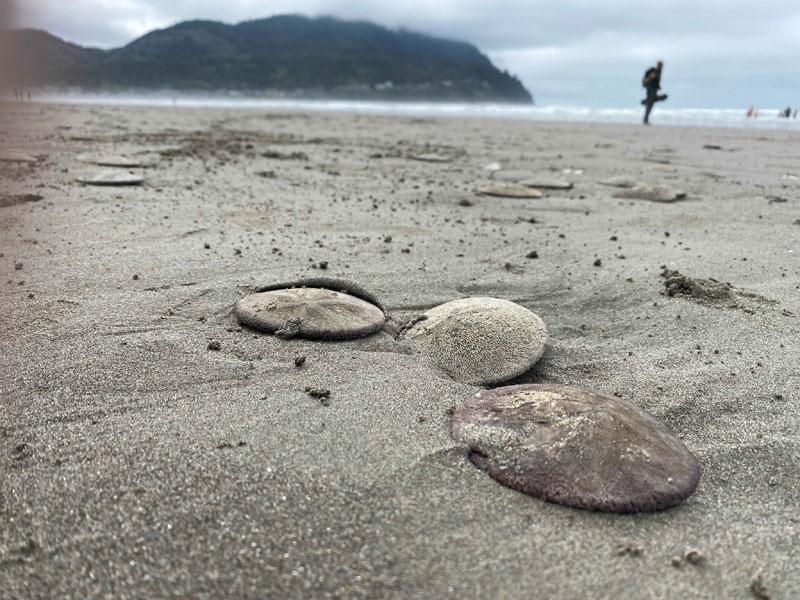
This is the big one on Oregon beaches: a live sand dollar does not look like the white souvenir version. A living one is darker and covered in short moving spines that can give it a fuzzy or velvety look. Bleached white ones are empty skeletons. Travel Oregon’s beachcombing guidance makes this distinction clearly, and reports from Seaside have documented mass strandings of live sand dollars on the northern Oregon Coast.
If you pick one up and it is soft-looking, dark, or visibly moving, it is still alive and should be placed gently back in the water. The prettiest beach find is not worth killing the animal for. Empty white tests are the ones to admire, photograph, or keep where allowed.
Where to Look on the Oregon Coast
You are most likely to find sand dollars on broad sandy beaches, especially after strong surf, changing tides, or stormy weather that churns up the nearshore bottom. The Oregon Coast’s long open beaches are much better bets than rocky coves. Northern coast beaches, including areas around Seaside, are especially well known for sand dollar strandings and beachcombing finds, though they can turn up on sandy beaches elsewhere too.
Good places to start are wide, flat beaches where shell fragments and other beachcast collect along the wrack line or near the last high tide mark. Walk slowly and scan for pale round discs partly buried in wet sand. Sometimes you will find whole ones mixed among shell hash; other times you will only spot broken pieces.
Best Time to Find Sand Dollars
The best time is usually after the ocean has done the digging for you. Go after a run of rough surf, after a storm, or around a receding tide when the beach has been freshly washed. Early morning can be especially nice because fewer people have already combed the beach. Travel Oregon specifically highlights low tide and patient searching as part of the hunt for intact sand dollars.
That said, timing matters for safety too. Winter and spring storms can expose more beach finds, but the Oregon Coast can get dangerous fast with sneaker waves, rip currents, and drifting logs. Stay well back from unstable surf, especially when you are focused on the sand at your feet instead of the ocean in front of you.
Tips for Finding Whole Sand Dollars
The trick is to slow way down. Don’t just march the shoreline. Look in patches of wet packed sand, along the fresh high-tide line, and in places where tiny shells and sea debris naturally pile up. Whole sand dollars can blend in surprisingly well until the light hits them right.
A few beachcomber tips that help:
- Look for circles, not bright white color. Fresh finds may still be tan, gray, or sand-coated.
- Check both wet and drying sand just above the wash zone.
- Search after big tide swings or rough weather.
- Bring a small bag or box so fragile finds do not crack in your pocket.
- Leave dark, fuzzy, or moving sand dollars alone because those are alive.
Why Oregon Beachcombers Love Them
Part of the appeal is that sand dollars feel almost unreal. They look delicate and symmetrical, like the ocean made a tiny piece of carved pottery. But they are also a reminder that the beach is full of living creatures, even the ones most people never notice offshore. Sand dollar beds help make up Oregon’s shallow sandy habitats, which are part of a larger coastal ecosystem shared with flatfish and other species that depend on those nearshore bottoms.
So the next time you walk an Oregon beach, keep your eyes down near the tide line. You might find a perfect white sand dollar, but even better, you might come away seeing the beach a little differently. What looks like a simple shell is actually the trace of a living echinoderm that once spent its life buried in the sand just offshore, quietly feeding in the Pacific.