Walking the Oregon Coast at Night: A Guide to Ghost Crab Hunting
When the sun disappears behind the Pacific and most visitors head back to their hotels, the Oregon Coast becomes an entirely different world. The crashing surf grows louder, stars emerge overhead, and the beach comes alive with creatures that rarely venture out during daylight. One of the most fascinating nighttime adventures you can experience is ghost crab hunting—not to collect them, but to quietly observe these elusive coastal residents in their natural habitat.
Most people never realize that some beaches come alive after dark. With a flashlight in hand and the sound of the waves as your guide, a simple evening walk can feel more like a wildlife safari than a stroll along the beach.
Where to Go
Wide, sandy beaches with plenty of dry sand above the high tide line offer the best opportunity to spot ghost crabs. Along the central and southern Oregon Coast, beaches near Florence, Winchester Bay, Bandon, and Gold Beach are excellent places for slow nighttime walks.
Look for areas where the sand is soft and relatively undisturbed. During the day, you may notice small round holes scattered across the beach—these are often burrows used by crabs and other small beach creatures.
What You'll See
As your eyes adjust to the darkness, you'll begin noticing movement.
Tiny shadows dart across the sand with surprising speed. Shine your flashlight gently in front of them rather than directly into their eyes, and you may watch them pause before racing back toward their burrows.
Besides crabs, nighttime beach walks often reveal:
- Shorebirds hunting along the tide line
- Sand fleas hopping across wet sand
- Small fish trapped in tide pools
- Glowing plankton during rare bioluminescent events
- Owls flying silently over nearby dunes
Every trip is different, and that's part of the excitement.
The Best Conditions
Timing makes all the difference.
The ideal night combines:
- A low tide
- Clear skies or a bright moon
- Mild winds
- At least an hour after sunset
The quieter the beach, the more wildlife you'll encounter.
Essential Gear
You don't need expensive equipment to enjoy the experience.
Bring:
- A flashlight with a red-light mode if possible
- Comfortable waterproof shoes
- Warm layers—the coast cools quickly after sunset
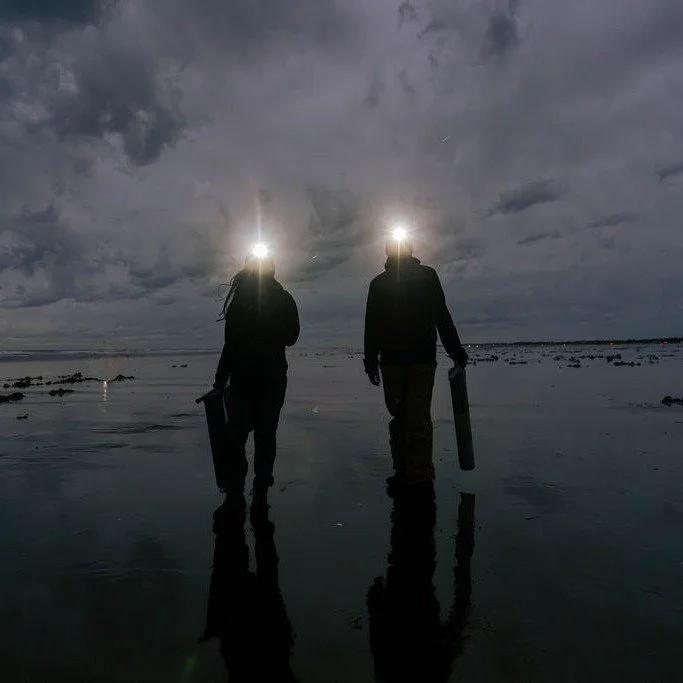
- A headlamp for hands-free walking
- A small backpack with water and snacks
Avoid shining bright lights directly at wildlife for extended periods.
Respect the Wildlife
The goal isn't to catch anything—it's to observe.
Stay on open sand whenever possible, avoid stepping on burrows, and never disturb nesting areas or dune vegetation. Watching wildlife naturally is far more rewarding than interfering with it.
If you do find a crab, give it plenty of space. Watching it sprint across the sand or disappear into its tunnel is part of the experience.
Safety First
Nighttime beaches deserve extra caution.
Always:
- Check the tide schedule before heading out.
- Watch for sneaker waves, especially near the waterline.
- Bring a fully charged phone.
- Let someone know where you're going.
- Stay off driftwood piles and slippery rocks after dark.
The beach can change quickly, so awareness is just as important as curiosity.
A Different Kind of Oregon Coast Adventure
Most Oregon Coast memories are made under blue skies, but some of the most unforgettable moments happen long after sunset.
Walking a quiet beach beneath a sky full of stars, hearing only the surf and the occasional cry of a seabird, changes the way you experience the coast. It slows you down. It sharpens your senses. And if you're lucky, you'll catch a glimpse of the small, secret lives unfolding in the sand while everyone else is asleep.
Nighttime wildlife walks may never become the coast's most popular attraction—and that's exactly what makes them so special.