Where to Harvest Mussels on the Oregon Coast: Best Locations, Seasons, Safety Tips & a Delicious Recipe
The Oregon Coast offers some of the best wild mussel harvesting opportunities in the Pacific Northwest. These nutrient-rich shellfish cling to rocky shorelines throughout the coast and can provide an unforgettable foraging experience when harvested responsibly. Before collecting any shellfish, always check current shellfish safety advisories, as marine biotoxins can cause closures at any time.
Oregon Coast Mussel Harvesting
Best Places to Harvest Mussels
Ecola State Park
Ecola State Park
The rocky headlands near Indian Beach provide excellent mussel habitat. Harvesters often find dense colonies attached to wave-washed rocks during minus tides. Local foragers frequently mention this area as a productive spot.
Hug Point
Hug Point State Recreation Site
Located south of Cannon Beach, Hug Point offers accessible rocky outcroppings where mussels can be gathered during low tide. The best beds are typically found on exposed rocks near the headland.
Cape Perpetua Area
Cape Perpetua Scenic Area
The volcanic shoreline around Cape Perpetua provides ideal habitat for California mussels. Numerous rocky shelves become exposed during extreme low tides.
Seal Rock
Seal Rock State Recreation Site
Seal Rock's dramatic sandstone formations support extensive mussel beds and are popular with coastal foragers.
Cape Arago
Cape Arago State Park
The rugged southern Oregon coastline offers productive mussel habitat, particularly around exposed rocky points and tidepool areas.
Best Time to Harvest Mussels
Best Tides
The most important factor is not the season—it's the tide.
Look for:
- Minus tides (-0.5 feet or lower)
- Early morning low tides
- Spring tides around new and full moons
These tides expose the greatest amount of rocky shoreline and make harvesting safer and easier.
Best Seasons
Fall through Spring (October–April)
- Cooler water temperatures
- Better meat quality
- Less chance of warm-weather spoilage
Summer
- Harvesting can still be excellent, but closures due to marine toxins are more common and must be monitored closely.
Important Safety Information
Marine biotoxins such as Paralytic Shellfish Poisoning (PSP) and domoic acid cannot be removed by cooking or freezing. Oregon regularly closes and reopens harvesting areas based on testing results. Always check current shellfish advisories before harvesting.
Before every trip:
- Check current shellfish closures
- Harvest only from legal areas
- Avoid marine reserves where harvest is prohibited
- Take only what you will use
How to Harvest Responsibly
When selecting mussels:
- Choose tightly closed shells
- Avoid broken or damaged shells
- Harvest medium-sized mussels for best eating quality
- Leave smaller mussels behind to grow
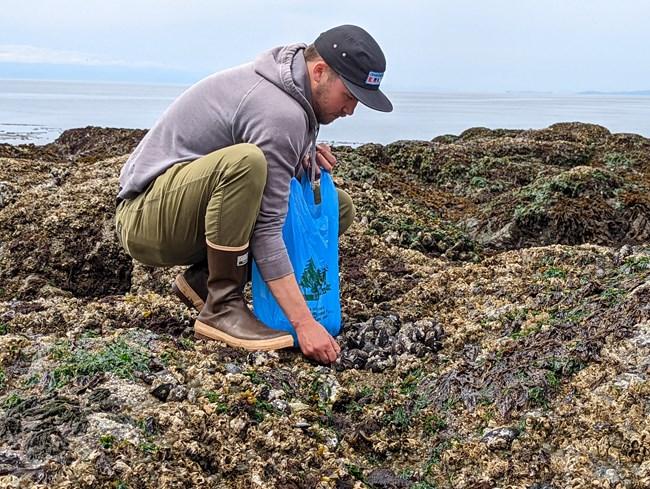
A flat screwdriver or oyster knife works well for removing mussels from rocks.
Oregon Coast Garlic Butter Mussels Recipe
Ingredients
- 2 pounds fresh mussels
- 4 tablespoons butter
- 4 cloves garlic, minced
- 1 cup dry white wine
- 1 tablespoon lemon juice
- 2 tablespoons fresh parsley
- Crusty bread for dipping
Instructions
- Rinse mussels thoroughly under cold water.
- Remove any beards attached to the shells.
- Discard any mussels that remain open when tapped.
- Melt butter in a large pot over medium heat.
- Add garlic and sauté for one minute.
- Pour in wine and lemon juice.
- Add mussels and cover.
- Steam for 5–7 minutes until shells open.
- Discard any mussels that do not open.
- Sprinkle with parsley and serve immediately.
Serving Suggestions
Serve with:
- Sourdough bread
- Grilled asparagus
- Roasted potatoes
- A crisp Oregon Pinot Gris
Harvesting mussels on the Oregon Coast is one of the most rewarding coastal foraging adventures available. From the rocky cliffs of Ecola State Park to the tide-swept shelves of Cape Perpetua Scenic Area, visitors can gather fresh shellfish while enjoying some of Oregon's most spectacular scenery. Just remember: always check current shellfish safety advisories before harvesting, plan your trip around a good low tide, and harvest responsibly so these coastal resources remain healthy for future generations.