Winter Steelhead on the Nestucca River, Oregon
Bank-Fishing Tactics, Gear & Where to Fish
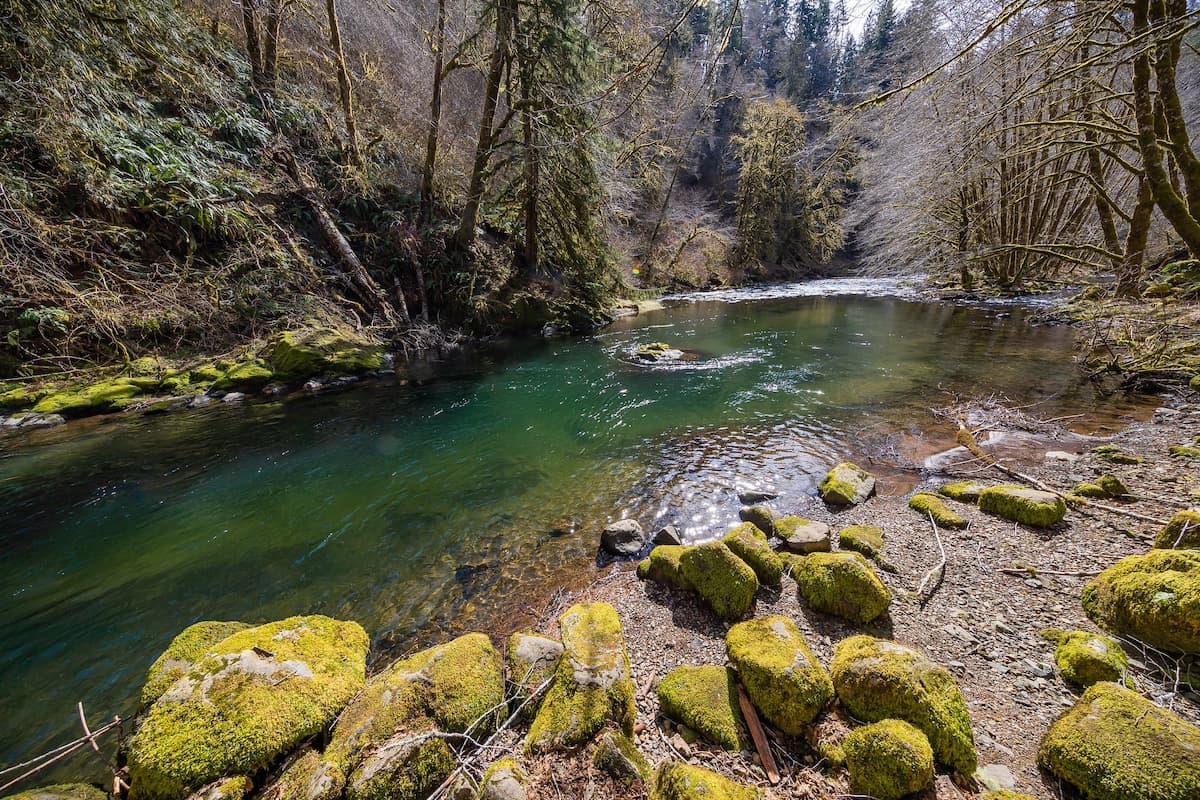
The first thing you notice on a winter morning along the Nestucca River isn’t the cold—it’s the sound. Water slips through gravel. Rain ticking off vine maple. The river looks that green-brown winter tone that tells you fish can move. The steelhead slide along edges, pause where current softens, then vanish again. If you’re fishing from the bank, success here isn’t about distance or flash. It’s about standing in the right spot and letting the river do most of the work.
Understanding Winter Steelhead on the Nestucca
The Nestucca is a classic coastal system—rain-driven, fast to rise, and quick to clear. Winter steelhead enter on fresh water, often pushing upstream the first night the river bumps. As flows settle, they travel tight to structure: seams, soft tailouts, inside bends, and walking-speed water near the bank.
From shore, your advantage is access. Much of the lower and mid river offers walk-and-fish opportunities where steelhead naturally travel within casting range.
Best Gear for Bank Fishing the Nestucca
Rods & Reels
- Rod: 9’6”–10’6” medium to medium-heavy spinning rod
- Reel: 3000–4000 size with a smooth drag
- Line: 12–15 lb mono or 30 lb braid with a fluorocarbon leader
A slightly longer rod helps manage line over conflicting currents and keeps your drift clean from shore.
Terminal Setup
- Leader: 3–5 feet of 10–12 lb fluorocarbon
- Weight: Pencil lead or slinkies (adjust often)
- Hooks: Size 1–2 octopus hooks
- Bobbers: Fixed or sliding floats for slower edges
Bank-Fishing Techniques That Work
Drift Fishing from Shore
This is bread-and-butter Nestucca fishing. Cast slightly upstream at a 45-degree angle and let your bait or presentation work along the near seam. You’re aiming for controlled contact with the bottom—not constant dragging.
Productive baits:
- Cured roe (small clusters)
- Sand shrimp tails
- Yarn-and-corky combinations
Steelhead here often bite subtly. Watch your line where it enters the water—any hesitation matters.
Bobber Fishing Soft Edges
When the river drops and clears, floats shine. Focus on water where current slows just enough for fish to pause. Inside bends and tailouts near shore are prime.
Effective float offerings:
- Beads (8–10mm, natural tones)
- Jigs (pink, white, black/blue)
- Shrimp-tipped jigs during higher water
Keep your float tracking naturally—no racing, no stalling.
Hardware for Covering Water
When flows are up and visibility is limited, hardware helps steelhead find you.
- Spoons: 2/5–3/4 oz, silver or copper
- Spinners: Size 4–5 with muted blades
Swing them close. Many Nestucca grabs happen just feet from shore.
Best Bank-Fishing Areas on the Nestucca
Lower River (Below Cloverdale)
This stretch sees early fish and offers plenty of pullouts and gravel bars. Focus on walking-speed runs and the heads of riffles where fish first slow down after entering fresh water.
Cloverdale Area
One of the most accessible sections for bank anglers. Look for inside bends and long tailouts that fish use as rest stops. Early mornings after rain are especially productive.
Farmer Creek Vicinity
Where clear tributary water mixes with mainstem flow, steelhead often stack briefly. These areas fish well during dropping water when clarity improves.
Mid-River Runs Above Tidewater
As the season progresses, fish spread out. Mid-river gravel bars with defined seams can be quietly effective, especially midweek when pressure eases.
River Conditions Matter Most
- Color: Green with 2–4 feet of visibility
- Flow: Dropping or steady after rain
- Timing: First light through mid-morning, then again late afternoon
If the river looks pushy but fishable, it probably is.