Cape Arago Lighthouse: History & Legacy of the Oregon Coast
Perched on a wave-battered rock just offshore near Coos Bay, the Cape Arago Lighthouse once stood as a critical navigational aid along one of the most unforgiving stretches of the Pacific Northwest coastline. While the structure itself is gone, the story behind it—and the experience of visiting the area is still one of the most powerful destinations in southern Oregon. You don’t walk up to the tower or climb its stairs. Instead, you stand on the cliffs, stare out into the Pacific, and piece together a history shaped by storms, isolation, and survival.
The Early Need for a Lighthouse
The waters surrounding Cape Arago have long been known for their hazards. Thick fog banks roll in without warning, reefs sit just below the surface, and powerful swells slam into the shoreline year-round. In the mid-1800s, as shipping traffic increased—especially tied to timber, coal, and coastal trade—this area became a high-risk zone for shipwrecks.
Coos Bay was emerging as an important port, but without proper navigation aids, vessels struggled to safely enter the harbor. Mariners needed a reliable visual reference point, especially at night and during heavy weather.
That demand led to the construction of the first Cape Arago Lighthouse.
The First Lighthouse (1866): Isolation on the Edge
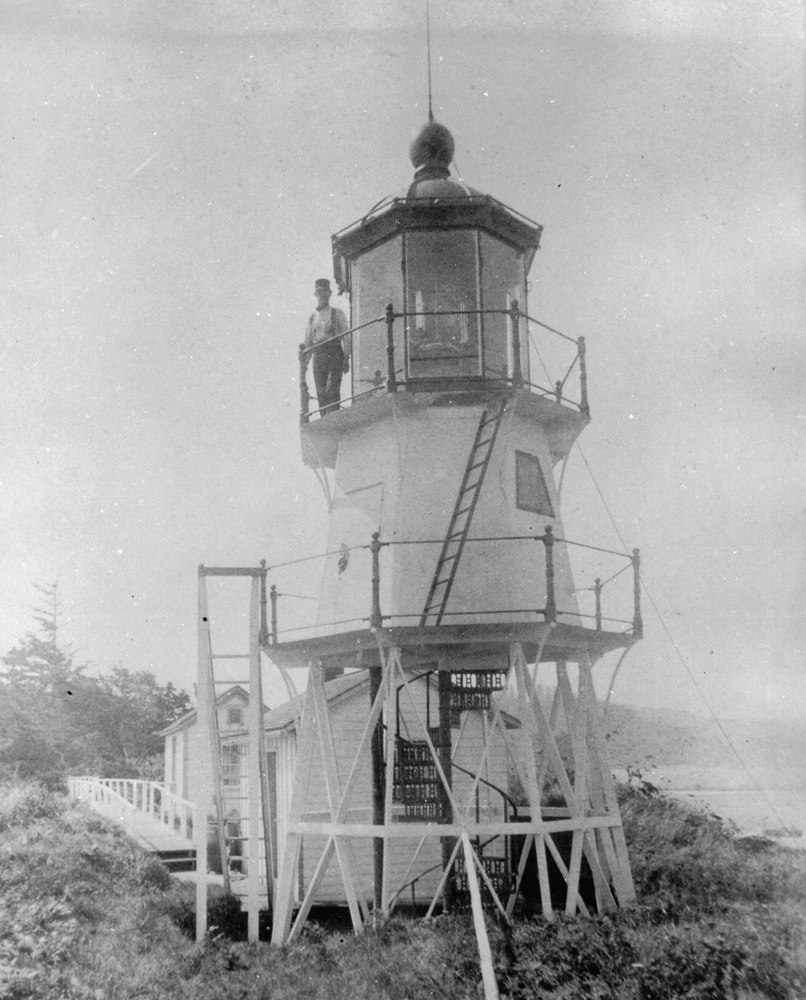
The original lighthouse, completed in 1866, was one of the earliest on the Oregon Coast. It was built not on the mainland, but on a narrow, rocky island separated from shore by a turbulent channel.
From the start, the location created serious challenges.
Everything—building materials, food, fuel, and even the lighthouse keepers themselves—had to be transported across rough water. There were no easy landings, no protected docks, and no guarantee of safe passage during storms.
Life for lighthouse keepers here was intense and often unforgiving:
- Weeks of isolation with limited communication
- Constant exposure to wind, rain, and salt spray
- Dangerous resupply missions from shore
- The responsibility of keeping the light operational no matter the conditions
Despite these hardships, the light became a lifeline for ships navigating the southern Oregon coast.
Structural Changes and Upgrades
The original lighthouse eventually succumbed to the elements. The combination of relentless storms and saltwater corrosion made maintenance increasingly difficult.
To keep the station functional, two major rebuilds followed:
1908 Replacement
A second lighthouse was constructed with improvements in durability and lighting capability. It offered better resistance to the coastal environment but still faced the same harsh exposure.
1934 Final Lighthouse
The third and final structure was built with modern materials and engineering advancements. It featured stronger construction and upgraded lighting technology, making it more reliable and efficient.
This final version stood for decades and represented the peak of the lighthouse’s operational life.
Decommissioning and Removal
By the late 20th century, advancements in navigation—such as GPS and automated systems—reduced the need for manned lighthouses. Cape Arago was eventually automated and later decommissioned entirely in 2006.
Due to its deteriorating condition and extremely difficult access, the decision was made to dismantle the lighthouse in 2009.
Today, only the offshore rock remains—a stark reminder of where the structure once stood.
Visiting Cape Arago Today
Even without the lighthouse itself, this area remains one of the most rewarding coastal destinations in Oregon.
The best place to experience the site is from Cape Arago State Park, where multiple viewpoints offer clear lines of sight toward the offshore rock that once held the lighthouse.
What You’ll See
From the cliffs and overlooks, you can take in:
- The exact location of the former lighthouse island
- Powerful waves crashing against jagged rock formations
- Expansive Pacific Ocean views stretching to the horizon
- Frequent wildlife activity along nearby reefs
Nearby Simpson Reef is especially active with marine life, often packed with barking sea lions and lounging harbor seals.
Best Viewing Spots
South Cove
This is one of the closest accessible viewpoints to the lighthouse site. From here, you can clearly identify the rock where the lighthouse once stood.
Simpson Reef Overlook
A must-stop for wildlife lovers. Bring binoculars—you’ll likely see dozens (sometimes hundreds) of marine mammals.
Shore Acres State Park
Just a short drive north, Shore Acres State Park offers dramatic wave viewing, especially during winter storms. It’s also home to beautifully maintained botanical gardens, adding a different kind of experience to your visit.
Visitor Information and Tips
Getting There
Cape Arago is about a 20–25 minute drive from Coos Bay. The road is paved the entire way and winds through forest before opening up to dramatic ocean views.
Parking
There are designated parking areas at viewpoints and trailheads within the state park. Most are just short walks from the main viewing areas.
Best Time to Visit
- Clear days: Best for spotting the lighthouse rock offshore
- Stormy days: Incredible wave action, especially at nearby viewpoints
- Sunset: Offers some of the most dramatic lighting on the coast
What to Bring
- Binoculars for wildlife viewing
- A windbreaker or layered clothing (it’s almost always breezy)
- Good walking shoes for short trails and uneven ground
- Camera or video gear—this area is extremely photogenic
Wildlife to Watch For
- Sea lions and harbor seals
- Pelicans and cormorants
- Occasional gray whales during migration seasons
Instead of walking through a preserved structure, you’re left to imagine what it was like—standing out there in the wind, tending a light that ships depended on.
Plan Your Visit
If you’re exploring this part of the coast, it’s worth building out a full day:
- Spend the morning exploring tide pools and viewpoints
- Head into Coos Bay for lunch along the waterfront
- Return in the afternoon for wildlife viewing and sunset
The entire Cape Arago loop—including Shore Acres and nearby coastal stops—offers one of the most complete coastal experiences in southern Oregon.