China Beach, Oregon: A Secret Cove
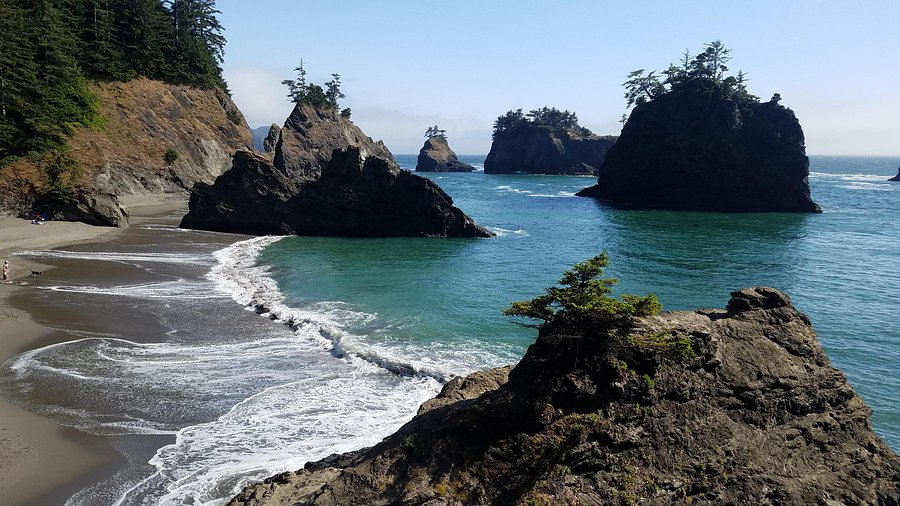
Along a stretch of coastline between Brookings and the California border lies one of the Oregon Coast’s best-kept secrets—China Beach. Blink while driving along U.S. Route 101 and you’ll miss it completely. No big signs. No crowds spilling out of parking lots. Just a hidden cove beneath steep coastal cliffs, waiting for the traveler who’s willing to slow down and take a closer look.
China Beach sits in a natural pocket carved into the coastline, where beach cliffs wrap around the shore and block out much of the wind that defines the Oregon Coast. While other beaches can feel wide open and exposed, this one feels like its own little world. Waves roll in and echo off the rock walls, creating a deeper crash than what you hear on open beaches. On foggy mornings, the mist drifts through the cove slowly, softening everything—the cliffs, the driftwood, even the horizon.
The History of China Beach
The story behind China Beach is woven quietly into the broader history of the southern Oregon Coast. During the mid-to-late 1800s, waves of Chinese immigrants arrived along the West Coast, many drawn by opportunity during and after the California Gold Rush. As mining operations spread north into southern Oregon, so did Chinese labor. These workers played a major role in industries that helped shape the region—gold mining, salmon canning, railroad construction, and coastal trade.
Along remote stretches of coastline near what is now Brookings, small coves like China Beach served practical and sometimes necessary purposes. These inlets offered:
- Shelter from rough Pacific conditions for small boats
- Discreet landing points away from larger settlements
- Temporary campsites near work zones or transport routes
Chinese laborers often lived in segregated communities, sometimes by choice, but often due to exclusion laws and discrimination. Secluded coastal areas provided both access to resources and a degree of isolation from hostility that was common during that era.
By the late 1800s, tensions had escalated significantly across the West Coast. The passage of the Chinese Exclusion Act marked a turning point, restricting immigration and limiting rights for Chinese communities already living in the United States. In many coastal regions—including parts of Oregon—Chinese settlements were abandoned, displaced, or absorbed into other communities.
Places like China Beach remain as quiet geographic reminders of that chapter in history. While there are no preserved buildings or artifacts visible today, it’s widely believed that small camps or landing sites once existed in coves like this, supporting nearby work such as:
- Coastal mining operations
- Fishing and fish processing
- Supply transport between isolated settlements
There’s also a strong possibility that the cove functioned as a staging area for small boats navigating the rugged coastline—especially in an era before modern highways like U.S. Route 101 connected these regions.
Over time, as industries shifted and infrastructure improved, these small, hidden sites faded from active use. Nature reclaimed the camps. Trails disappeared. What remained was the name—passed down informally, then eventually adopted into local maps and memory.
Today, China Beach stands as a subtle but meaningful link to the overlooked contributions of Chinese immigrants along the Oregon Coast.
The shoreline is a mix of sand, rounded stones, and scattered rock formations that create small tidepool habitats when the ocean pulls back. At low tide, the beach reveals pockets of life—sea anemones clinging to rocks, tiny crabs darting between crevices, and the occasional starfish tucked into a shaded pool.
Massive driftwood logs line parts of the beach, bleached and weathered from years at sea. Some are stacked naturally into tangled piles, while others rest alone, like sculptures placed by the ocean itself.
Wildlife is part of the experience here too. Keep an eye out and you might spot:
- Seabirds gliding along the cliffs or diving offshore
- Harbor seals popping their heads above the water
- Pelicans cruising low over the waves
- Gray whales migrating past during the winter and spring months
Getting There: The “Secret” Part
Driving north out of Brookings on Highway 101, you’ll need to keep an eye out for a small, often overlooked pull-off. There’s no major signage announcing your arrival. If you’re not looking for it, you’ll pass it without a second thought.
From the roadside, a short trail leads down to the beach. It’s not a long hike, but it is a bit steep and uneven in spots. Loose dirt, roots, and narrow sections mean you’ll want to take your time—especially heading back up.
When to Visit China Beach
Timing your visit can completely change your experience here.
Low tide is the best time to explore. More of the beach opens up, and the tidepools become accessible, revealing all the small details that make this place special.
Early morning brings a calm, almost meditative feel. Fog often lingers, and you may have the entire cove to yourself.
Late afternoon and sunset are where China Beach really shines. The cliffs catch the golden light, and the entire cove takes on a warm glow that feels almost unreal.
Winter visits can be dramatic, with larger swells crashing into the cove, while spring and summer offer calmer conditions and better access.
What to Bring
China Beach is undeveloped, which is part of its appeal—but it also means you’ll need to come prepared.
- Sturdy shoes for the trail down
- Water and snacks (no facilities nearby)
- Tide charts for safe exploring
- A light jacket, even on sunny days
And most importantly, pack out everything you bring in. Places like this stay special because people treat them that way.
Nearby Stops
If you’re already exploring this stretch of the southern Oregon Coast, China Beach fits perfectly into a day of hidden gems around Brookings.
Consider pairing your visit with:
- Harris Beach State Park for dramatic sea stacks and easy access
- Samuel H. Boardman State Scenic Corridor for jaw-dropping viewpoints and short hikes
- Natural Bridges for iconic arch formations carved by the ocean
You might come here for the views, the solitude, or the adventure of finding it. A connection not just to the landscape, but to the people who once stood in this same cove, working, living, and navigating a very different Oregon Coast.