Fall Oyster Mushroom Hunting on the Oregon Coast: Finding Wild Treasures in the Rainforest
Wandering through an Oregon coastal rainforest smells like wet cedar, the forest floor is covered in moss, and nearly every fallen tree looks like it might be hiding a treasure. For mushroom hunters, this is one of the most exciting times of the year, especially when you're searching for wild oyster mushrooms.
While everyone else seems to be chasing chanterelles through the coastal hills, I've always thought oyster mushrooms deserve a little more attention. They're beautiful, they're delicious, and unlike many other wild mushrooms, they often grow in large clusters right out of dead or dying trees. Find the right log at the right time, and you might stumble upon enough mushrooms for several meals.
The Oregon Coast has excellent habitat for these fascinating fungi. From the damp forests surrounding Tillamook and the Nestucca River to the wooded hills near Florence, Coos Bay, and Brookings, the combination of moisture, decaying hardwood, and mild fall temperatures creates favorable growing conditions.
But oyster mushroom hunting is a little different from hunting chanterelles. Instead of staring at the forest floor, you'll spend much of your time looking at trees.
And once you learn what to look for, you'll never walk through the woods quite the same way again.
Why Fall Is Such a Great Time to Hunt Oyster Mushrooms
Oyster mushrooms have a distinctive appearance, but proper identification is absolutely essential before harvesting anything for the dinner table.
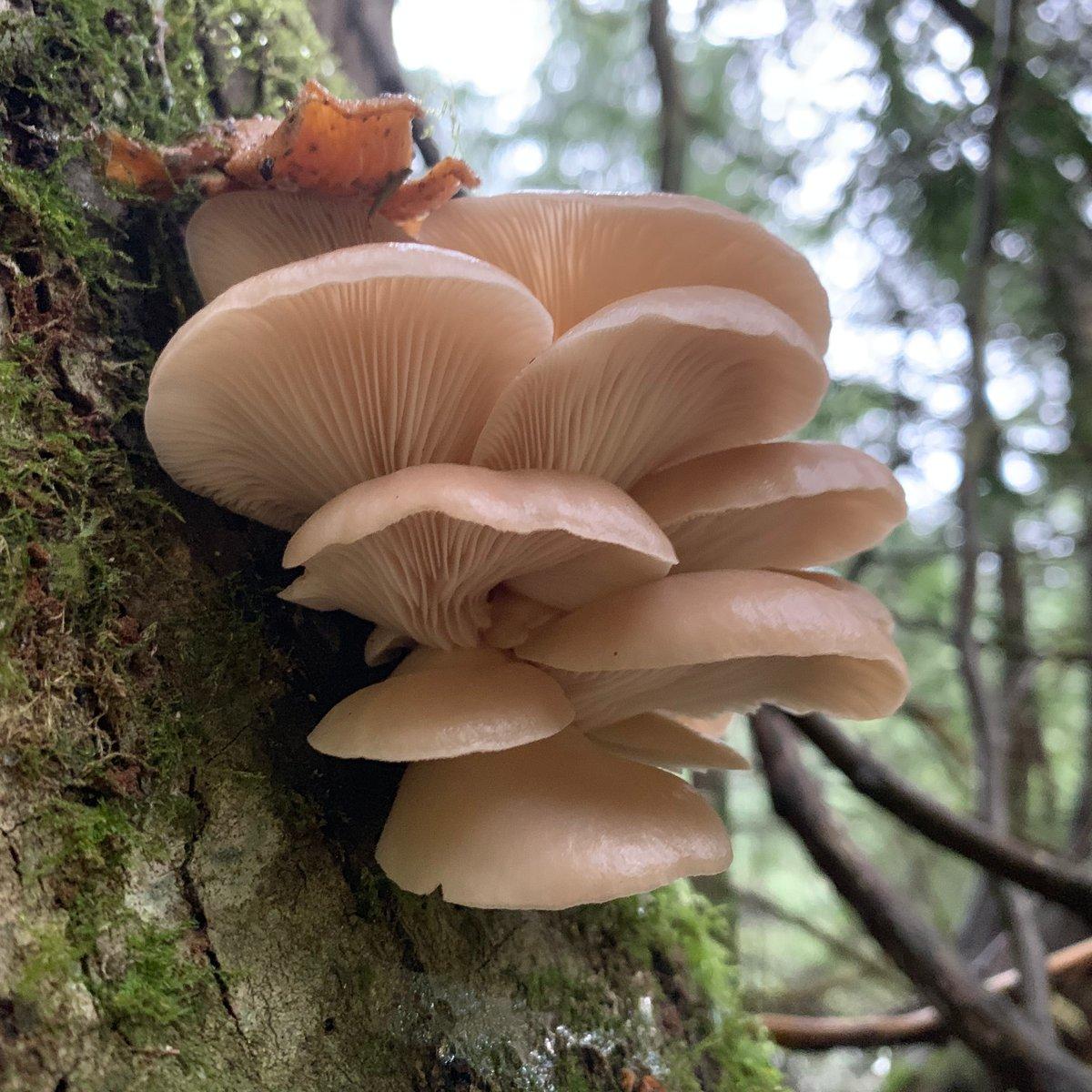
Their caps are generally fan-shaped, shell-shaped, or somewhat oyster-shaped, which is where they get their name. Depending on the species, age, and growing conditions, the caps may be gray, tan, cream, brownish, or nearly white.
One of their most recognizable characteristics is the way they grow in overlapping clusters. Several mushrooms may emerge from the same section of wood, creating what almost looks like a layered arrangement of shelves.
The gills underneath the caps are typically pale and run down the short, off-center stem, a feature known as decurrent gills. Some specimens have such short stems that the caps appear to grow directly out of the wood.
Other characteristics include white to pale lilac-gray spore prints, depending on species, and flesh that is generally white and firm when fresh.
However, no single characteristic is enough to identify an oyster mushroom safely.
Several other mushrooms can resemble oysters, including angel wings (Pleurocybella porrigens), which have been associated with serious poisonings, and other wood-growing species. Habitat, host tree, gill structure, spore print, and the complete collection of identifying features all matter.
Never eat a wild mushroom based solely on a photograph, an identification app, or this article. Have your identification independently confirmed by a qualified local mushroom expert before eating it. When identification is uncertain, leave it in the forest.
How I Would Search for Oyster Mushrooms in the Coastal Forest
When you're hunting oyster mushrooms, patience and observation are more important than covering a lot of ground.
I like the idea of starting along a quiet forest trail where hardwood trees grow among the evergreens. Rather than rushing down the trail, slow down and examine the fallen logs and standing dead trees around you.
Look at the sides of logs, not just the tops. Oyster mushrooms frequently emerge from vertical surfaces, cracks in the wood, and shaded areas that hold moisture.
Pay attention to fallen alder trees that have begun to lose their bark. Wood in various stages of decay can support different fungal species, and sometimes a log that looks completely unremarkable from a distance turns out to be covered in mushrooms.
After a period of steady rain, it's worth returning to areas where you've previously noticed oyster mushrooms. The fungal network inside the wood may continue producing mushrooms under favorable conditions, sometimes across multiple seasons.
Finding a beautiful cluster of oyster mushrooms is exciting, but harvesting responsibly is just as important as finding them.
I recommend carrying a small mushroom knife, a breathable basket or mesh bag, and a soft brush for removing loose dirt and debris. Avoid sealing fresh mushrooms in plastic bags, where moisture can accumulate and cause them to deteriorate quickly.
Once you've positively identified an edible oyster mushroom, use a clean knife to cut the cluster near its attachment point. Try to avoid unnecessarily tearing apart the wood or damaging the surrounding habitat.
Leave old, deteriorating, insect-infested, or questionable mushrooms behind. Younger, firm specimens are generally better for cooking.
I also prefer leaving some mushrooms on the log, especially when there's a large cluster. The visible mushrooms are only the fruiting bodies of a much larger fungal organism living within the wood, and leaving some behind allows them to mature and release spores.
Before harvesting, verify the land ownership and applicable rules. National forests, state forests, state parks, private timberlands, and other public lands can have different permit requirements, quantity limits, and restrictions. Public access does not automatically mean mushroom collection is permitted.
Oregon Coast Mushroom Harvesting Regulations
Before heading out, it's worth knowing that Oregon has specific rules for mushroom collection.
According to the USDA Forest Service, the Siuslaw National Forest currently allows personal-use collection of up to one gallon of mushrooms per person per day without a permit, excluding matsutake mushrooms, which have separate rules.
The Oregon Department of Forestry also allows personal-use mushroom harvesting of up to one gallon per vehicle at any one time without a permit in designated state forest districts, including Tillamook and Astoria. Larger harvests require permits.
EXCEPT FOR FIREWOOD
Always check the specific area you're visiting for restrictions, and remember that private timberland requires landowner permission.
Bringing Your Oyster Mushrooms Home: Cleaning, Cooking, and Storage
One of the best things about hunting oyster mushrooms is getting home after a cold, wet day in the woods and turning your harvest into something delicious.
Once your mushrooms have been positively identified by a qualified expert, carefully inspect them for insects, soft spots, and decay. Use a soft brush or damp cloth to remove dirt and forest debris, trimming away any tough or damaged sections.
Fresh oyster mushrooms are best kept refrigerated in a breathable paper bag and used within a few days. They can deteriorate quickly, especially when harvested wet.
My favorite way to prepare oyster mushrooms is also one of the simplest: a hot cast-iron skillet, a little butter, fresh garlic, and a pinch of salt.
Tear the mushrooms into strips and place them in a hot skillet with a little oil. Let them cook until their moisture evaporates and the edges begin to turn golden brown. Add butter, minced garlic, and fresh thyme near the end.
Cook them thoroughly rather than eating them raw. Properly prepared oyster mushrooms develop a savory, slightly nutty flavor with a satisfying texture.
They're fantastic served alongside fresh coastal salmon, mixed into pasta, folded into an omelet, or piled over toasted sourdough bread.
For me, there's something especially satisfying about enjoying a meal that came from a day spent exploring the Oregon rainforest.
A Few Things Every Coastal Mushroom Hunter Should Remember
The coastal rainforest is beautiful, but it can also be unforgiving, especially during the wetter months.
Fall brings shorter days, slippery logs, swollen creeks, and rapidly changing weather. Dense forest can make it surprisingly easy to lose your sense of direction, even when you're not far from a trail.
Wear waterproof boots with good traction, bring extra layers, and carry an offline map or GPS device. Let someone know where you're going and when you expect to return.
Avoid climbing unstable logs or standing dead trees to reach mushrooms. No mushroom is worth getting injured over.
And remember that not every mushroom you discover needs to end up in your basket. Sometimes finding an unusual fungus, photographing it, and learning about its role in the forest is just as rewarding.
The Real Reward of Oyster Mushroom Hunting
There's a special kind of satisfaction that comes from finding wild food in the Oregon coastal rainforest. It's not just about filling a basket or putting dinner on the table. It's about slowing down, paying attention, and discovering an entirely different side of the forest.
Oyster mushrooms are a perfect example of how much life is happening around us that we rarely notice.
That old fallen alder tree isn't simply rotting away. It's supporting an entire community of fungi, insects, microorganisms, and other forest life. The mushrooms growing from its bark are part of the natural process that keeps the rainforest healthy.
And that's what makes mushroom hunting so fascinating. Once you start recognizing these little details, the forest becomes a much more interesting place.
So this fall, when the rains return to the Oregon Coast and the fog settles into the valleys, consider spending a morning exploring the hardwood forests. Bring your camera, a basket, a reliable mushroom identification guide, and a healthy respect for the wilderness.
You might discover a beautiful cluster of oyster mushrooms growing from a moss-covered log. You might find an entirely different mushroom species you've never seen before. Or you might simply enjoy a few quiet hours wandering through one of the most beautiful rainforests in the Pacific Northwest.
Either way, it's time well spent.