Foraging and Preparing Oyster Mushrooms on the Oregon Coast
For those who know where to look, the Oregon Coast is a treasure trove of wild edible mushrooms. Among the most accessible and abundant are oyster mushrooms (genus Pleurotus), a prized culinary fungi known for their velvety texture, delicate aroma, and versatility in the kitchen. Whether you’re a seasoned forager or a curious first-timer, the coastal environment offers ideal conditions to discover and enjoy these delicious wild mushrooms.
Why Oyster Mushrooms Thrive on the Oregon Coast
Oyster mushrooms flourish in moist, temperate environments, particularly on hardwood trees in varying states of decay. The Oregon Coast’s weather—cool temperatures, frequent rain, and consistent humidity—creates perfect fungal habitat. The coastal forests of alder, maple, spruce, and hemlock provide ample host material, while the soft fogs and shaded understory keep things damp year-round.
You’ll often find oysters growing in clusters on fallen logs, standing deadwood, or living hardwoods weakened by age or moisture. After a good rainfall or during the fall and spring mushroom flushes, these clusters can appear almost overnight.
Best Seasons for Oyster Mushroom Foraging
While oysters can appear anytime conditions are moist enough, the peak seasons on the Oregon Coast are:
- Late September through early December – the prime fall flush
- February through April – excellent spring growth
- After significant rain events in summer – occasional smaller flushes
Fall is the forager’s favorite. Temperatures drop, rains stabilize, and the coastal forests come alive with everything from chanterelles to hedgehogs—and, of course, flushes of oysters clinging to mossy logs.
Where to Look on the Coast
While never trespass or harvest on private or protected land without permission, oyster mushrooms can be found throughout the coastal range. Productive areas include:
Public Forestlands
- Siuslaw National Forest – rich in alder and maple, ideal hosts
- Tillamook State Forest – countless decaying logs along trails and riverbanks
- Elliott State Forest – deep, humid valleys that regularly produce oysters
Common Habitat Types
- Edges of logging roads where sunlight and moisture meet
- Along creeks and river bottoms
- On decaying hardwood logs covered in moss
- On fallen trees in shaded, damp gullies
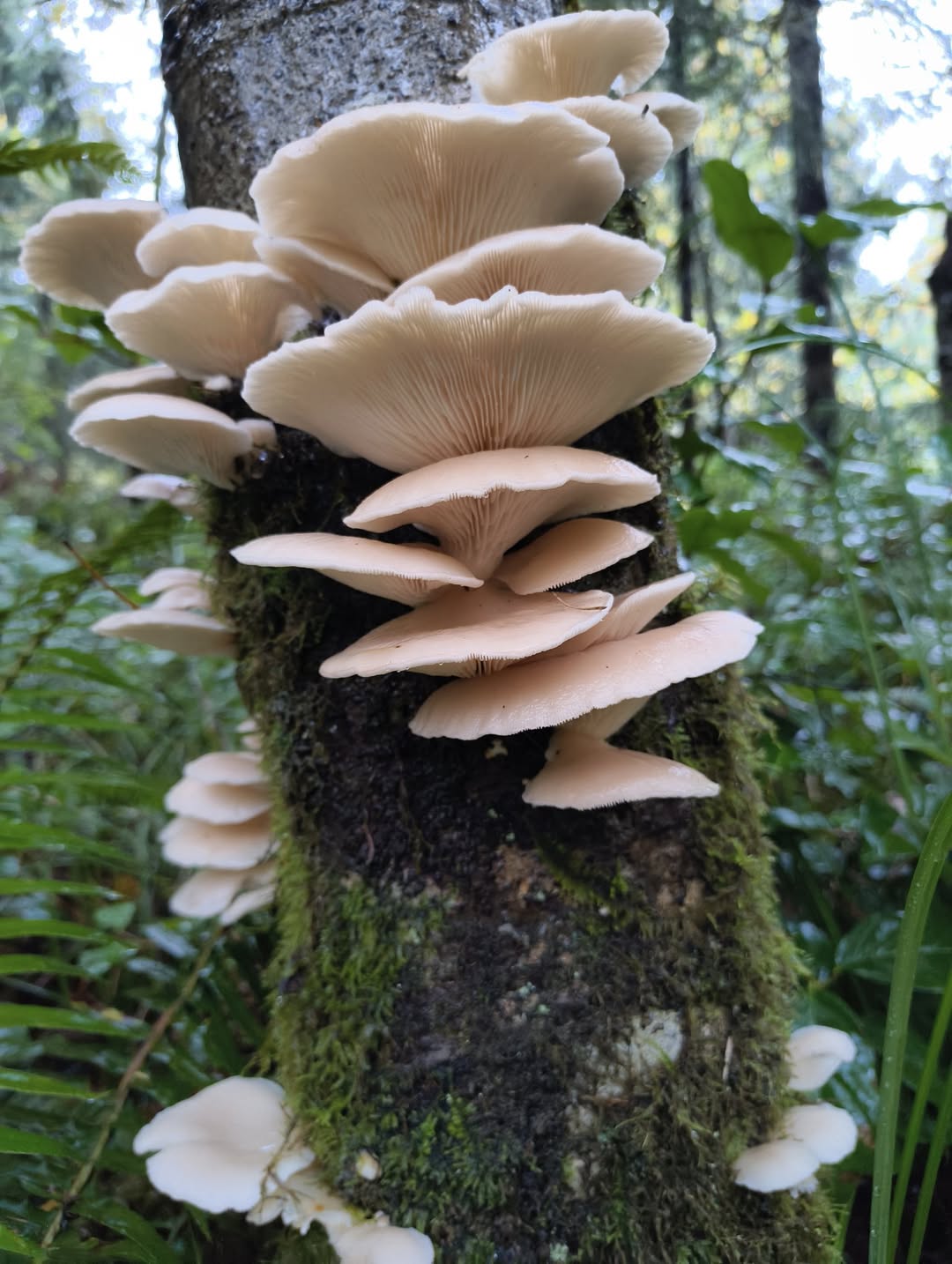
Look for large clusters of pale white, cream, light tan, or light grey shelves stacked like overlapping fans.
How to Identify Oyster Mushrooms
Correct identification is essential. Oysters are among the safer mushrooms to forage because they have few dangerous look-alikes, but always double-check key features:
Defining Characteristics
- Gills running down the stem (decurrent gills)
- Shelf-like or fan-shaped caps
- Cluster growth on wood
- Pleasant mild smell, often slightly sweet or like anise
- Soft, smooth caps, sometimes wavy or scalloped
- White spore print
Common Oyster Species on the Oregon Coast
- Pleurotus ostreatus – the classic oyster; grey to tan
- Pleurotus pulmonarius – lighter in color, common in summer
- Pleurocybella porrigens – “Angel Wings,” edible for most people but with rare reported toxicity; harvest with caution
If you’re ever unsure, consult a local mushroom club, guidebook, or expert.
Ethical and Safe Harvesting
Foraging responsibly protects the forest and ensures mushrooms continue to thrive:
- Use a sharp knife to cut mushrooms at the base instead of ripping them out
- Leave older, waterlogged clusters to help spores spread
- Avoid harvesting near busy roads, sprayed areas, or industrial sites
- Bring a breathable basket or mesh bag to prevent moisture buildup and spread spores as you walk
Oyster mushrooms grow quickly and often multiple times a season on the same log, so gentle harvesting encourages future flushes.
Cleaning and Preparation
Once harvested, oysters are generally easier to clean than many other wild mushrooms. Their smooth caps don’t trap much debris, but you should still prepare them properly:
Cleaning Steps
- Trim the tough stem base where dirt or bark attached.
- Gently brush away debris or insects using a soft brush or cloth.
- Avoid soaking—oysters absorb water and can become soggy. If necessary, a quick rinse followed by patting dry is fine.
- Separate large clusters into more manageable pieces before cooking.
Fresh oysters should be firm, dry, and smell pleasant. If they seem overly soft, watery, or sour, skip them.
Cooking Oyster Mushrooms
Oyster mushrooms shine in a wide variety of dishes thanks to their meaty texture and mild, seafood-like flavor—hence the name “oyster.”
Basic Sauté (the best way to enjoy them)
- Heat a wide skillet over medium-high.
- Add a little oil or butter.
- Lay mushrooms in a single layer—avoid crowding.
- Allow them to brown deeply on one side before flipping.
- Season with salt, pepper, and herbs.
The edges crisp beautifully while the centers stay tender and velvety.
Recipe Ideas
- Creamy oyster mushroom chowder
- Wild mushroom risotto with coastal chardonnay
- Oyster mushroom tacos with lime and smoky paprika
- Crispy oven-fried oysters (vegan “fried oyster” substitute)
- Stir-fried oysters with garlic and miso
Because they are naturally delicate and high in moisture, high heat brings out their best texture.
Preserving Oyster Mushrooms
If you find a massive flush—and oyster mushrooms often grow in huge clusters—you can preserve them for later:
- Dehydrate (stores for months; great for soups)
- Pan-sear and freeze (best texture when reheated)
- Pickle with vinegar, herbs, and chili flakes
- Make compound butter infused with sautéed oysters
Properly preserved oysters can add coastal forest flavor to your meals all year long.
Why Foragers Love Oysters
Oyster mushrooms are one of the most forgiving wild mushrooms for beginners. They are:
- Easy to identify
- Great for learning tree-based mushroom foraging
- Abundant in multiple seasons
- Delicious and versatile
- Often found near trailheads, creeks, and logging access roads
The Oregon Coast, with its rain-soaked woods and rich biodiversity, remains one of the best regions in the Pacific Northwest to find them.