How Did Huge Lava Rocks Appear on the Oregon Coast?
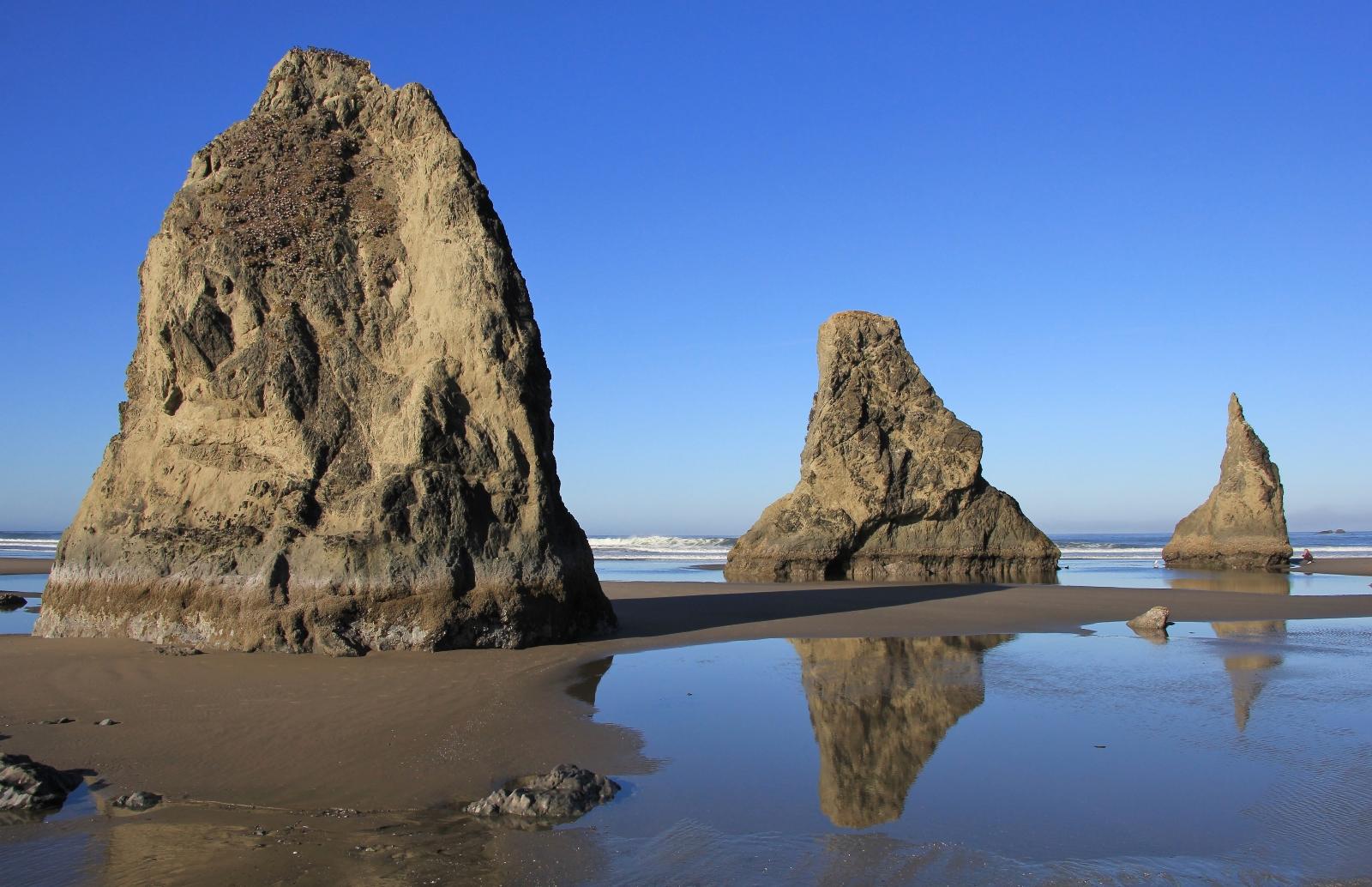
If you've ever stood on an Oregon beach and stared at massive sea stacks rising from the Pacific, you may have wondered: How did these giant lava rocks get here?
The answer takes us back millions of years to one of the largest volcanic events in North American history.
A River of Lava Crossed Oregon
Between 17 and 6 million years ago, enormous volcanic eruptions occurred in eastern Oregon, Washington, and Idaho. Instead of erupting from classic volcanoes, lava poured from long cracks in the earth called fissures. These eruptions created what geologists call the Columbia River Basalt Group, one of the largest flood basalt events on Earth.
The lava flowed hundreds of miles across the landscape. Some individual flows were so large they traveled all the way across Oregon, through ancient river valleys, and eventually reached the Pacific Ocean.
When Lava Reached the Ocean
At the time these eruptions occurred, Oregon's coastline was much farther inland than it is today. When the molten basalt reached the ancient shoreline, it continued flowing into the ocean, where it rapidly cooled against seawater. This process created thick lava deltas, underwater lava formations, and enormous deposits of basalt rock.
Some of these lava flows piled up hundreds of feet thick.
The Coastline Moved
Over millions of years, powerful tectonic forces uplifted the Oregon Coast Range and pushed the coastline westward. Areas that were once buried beneath the ocean gradually became part of the modern coast.
Meanwhile, relentless waves, storms, rain, and wind began carving away softer rock layers.
The toughest material left behind was often basalt—the same lava rock created by those ancient eruptions.
Birth of the Sea Stacks
As the ocean eroded headlands and cliffs, isolated chunks of resistant basalt remained standing offshore. These became the sea stacks that define much of Oregon's coastline today.
Famous examples include:
- Haystack Rock
- Three Arch Rocks
- Yaquina Head
- Face Rock
Many of these formations are composed primarily of basalt, making them resistant to erosion compared with surrounding rock.
Not All Coastal Lava Rocks Came from the Same Eruption
Some lava formations along the coast are even older than the Columbia River Basalts. Geologic formations such as the Yachats Basalt were formed by volcanic activity roughly 40 million years ago, long before the flood basalt eruptions swept across Oregon.
This means the Oregon Coast contains layers of volcanic history spanning tens of millions of years.
Why the Rocks Look Different
Many coastal basalt formations display fascinating patterns:
- Hexagonal columns called columnar basalt
- Rounded pillow lava formed underwater
- Lava tubes and volcanic dikes
- Wave-carved arches and caves
These features formed as lava cooled, cracked, and was later sculpted by the ocean.
A Geological Wonder
The giant lava rocks scattered along Oregon's shoreline are the remnants of ancient volcanic floods that traveled hundreds of miles across the Pacific Northwest. After millions of years of tectonic uplift and relentless wave action, these basalt formations remain as some of the most iconic landmarks on the coast.
The next time you visit an Oregon beach and see a towering sea stack rising from the surf, you're looking at the hardened remains of lava that began its journey millions of years ago far inland—long before the modern Oregon Coast even existed.