Quarry Cove in Newport, Oregon: A Scenic Beach Shaped by History
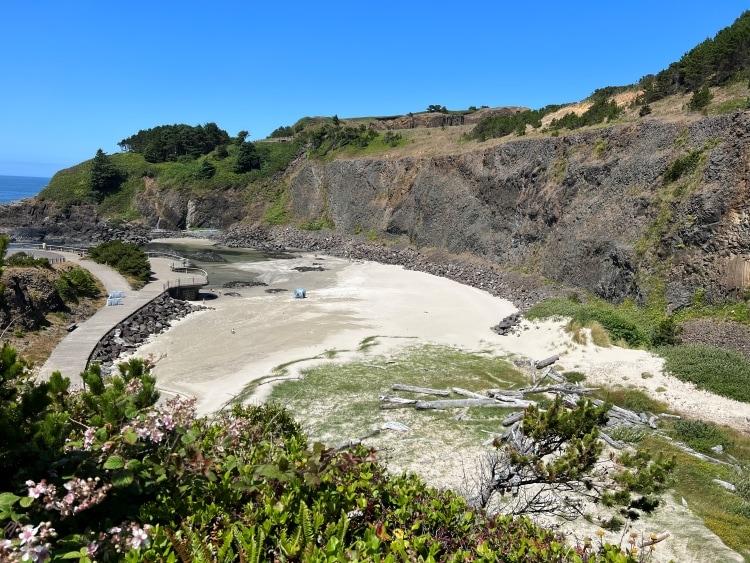
Beneath the rugged cliffs of Yaquina Head Outstanding Natural Area, The cove sits just north of Newport along the Central Oregon Coast, where black basalt cliffs drop into crashing surf and tide pools shimmer with sea stars, anemones, and tiny crabs hiding in the rocks. On foggy mornings, the place feels prehistoric. When the sun comes out, the water glows blue-green against the dark volcanic stone.
What makes Quarry Cove especially fascinating is that it is not just naturally beautiful — it is also deeply tied to Newport’s industrial history. Long before visitors arrived with cameras and tidepool guidebooks, this area was heavily quarried for basalt rock. The cliffs surrounding the cove were mined for decades, supplying material used in construction projects, including portions of U.S. Highway 101 along the Oregon Coast. The quarrying activity began around the 1920s and continued for many years, dramatically reshaping the shoreline.
The name “Quarry Cove” comes directly from that industrial past. In fact, the cove itself exists largely because of the rock removal operations that carved into the headland over time. Historical photographs of the area show how different the coastline once looked before excavation changed the landscape. At one point, there were even serious concerns that continued mining could permanently damage or remove portions of Yaquina Head entirely.
Fortunately, conservation efforts stepped in before that happened. Today, Yaquina Head is protected federal land managed by the Bureau of Land Management, preserving both the wildlife and the dramatic coastal scenery for future generations. Yaquina Head Lighthouse, built in 1873, still stands above the cove as Oregon’s tallest lighthouse and serves as a reminder of how important this stretch of coastline has been for navigation and maritime history.
One of the most remarkable parts of Quarry Cove is that it became part of an innovative ecological restoration project. According to local sources and educational materials, Quarry Cove evolved into what has been described as one of the first intentionally constructed rocky intertidal ecosystems designed to support marine life while remaining accessible to visitors. Engineers and marine scientists worked together to create habitat areas where ocean creatures could thrive despite the earlier industrial disturbance.
Today, visitors can wander carefully through the tide pools during low tide and spot purple sea urchins, giant green anemones, mussels, hermit crabs, and the occasional harbor seal bobbing offshore. The area is also known for being more accessible than many Oregon Coast tidepool locations, with pathways and viewing areas designed to help more people experience the marine environment.
Visiting Quarry Cove feels different depending on the season. Winter storms slam the cliffs with enormous waves, coating the air in salt spray and thunderous noise. Summer mornings often bring calm water, coastal wildflowers, and families crouched beside tide pools pointing out tiny marine creatures. During whale migration seasons, gray whales are sometimes visible offshore from the headland trails above the cove.
The walk down to the shoreline is relatively short, but sturdy shoes are a smart idea because the basalt rocks can be slick and uneven. The best time to explore is during a minus tide or especially low tide, when more of the intertidal zone becomes exposed. Visitors should always avoid turning their backs on the ocean, since sneaker waves can occur unexpectedly along the Oregon Coast.
After exploring Quarry Cove, many travelers head into Newport to grab fresh seafood or continue exploring the coast. Nearby spots like Nye Beach offer oceanfront walks, surf views, and local shops, while Newport’s harbor area is packed with fishing boats, sea lions, and classic Oregon Coast atmosphere.
What makes Quarry Cove memorable is the contrast between raw nature and human history. It is a place where industrial scars became wildlife habitat, where volcanic cliffs tell a story millions of years old, and where the Oregon Coast’s rugged beauty somehow feels even more powerful because of everything the landscape has survived. Standing on the rocks at low tide with waves echoing against the basalt walls, it is hard not to feel connected to both the wildness and resilience of the coast itself.