The History of the Sitka Spruce Giants of Gold Beach, Oregon
On Oregon's rugged southern coastline, the area around Gold Beach is home to some of the most impressive Sitka spruce forests remaining in North America. These towering giants have stood watch over the Pacific Ocean for centuries, surviving storms, floods, wildfires, and the arrival of settlers. Today, they are among the last living reminders of the vast coastal rainforests that once stretched almost uninterrupted along the Pacific Coast.
The Tree of the Coastal Fog
The Sitka spruce (Picea sitchensis) is the largest species of spruce in the world and thrives in the cool, foggy climate of the Pacific Northwest. Its natural range extends from Alaska to northern California, but some of the most impressive specimens grow along the Oregon Coast, where abundant rainfall and ocean moisture create ideal conditions.
Unlike many inland forests, coastal Sitka spruce forests rarely experience extreme temperatures. The near-constant moisture allows these trees to grow rapidly and reach astonishing sizes. Mature trees commonly exceed 150 feet in height, while exceptional specimens can surpass 200 feet.
Ancient Forests of the Gold Beach Area
Long before Gold Beach became a coastal town, ancient Sitka spruce forests dominated the river valleys and coastal terraces surrounding the mouth of the Rogue River. Some of these trees began growing hundreds of years before European explorers reached the Pacific Northwest.
The forests around Gold Beach were part of a vast temperate rainforest ecosystem that included western hemlock, Douglas-fir, red alder, and giant Sitka spruce. Indigenous peoples, including the Tututni and other Rogue River tribes, lived among these forests for thousands of years, using spruce roots, bark, and wood for tools, baskets, shelters, and medicines.
Many of the oldest trees in the region germinated on decaying "nurse logs"—fallen trees that provided nutrients and moisture for young seedlings. This natural cycle helped create the cathedral-like forests that early visitors described as almost impossible to walk through because of their density and size.
The Logging Era
During the late 1800s and early 1900s, much of Oregon's coastal old-growth forest was logged. Sitka spruce became especially valuable because of its remarkable strength-to-weight ratio. During World War I, the wood was highly sought after for aircraft construction. Later, it was used in boats, musical instruments, and specialty lumber products.
Many giant trees around Gold Beach were harvested during this period. Logging camps expanded throughout Curry County, and massive logs were floated down rivers or transported by rail to coastal mills.
Fortunately, the rugged terrain surrounding portions of the Rogue River and nearby coastal mountains made some areas difficult to access. These remote locations allowed pockets of ancient Sitka spruce forest to survive when much of the surrounding old growth disappeared.
The Remaining Giants
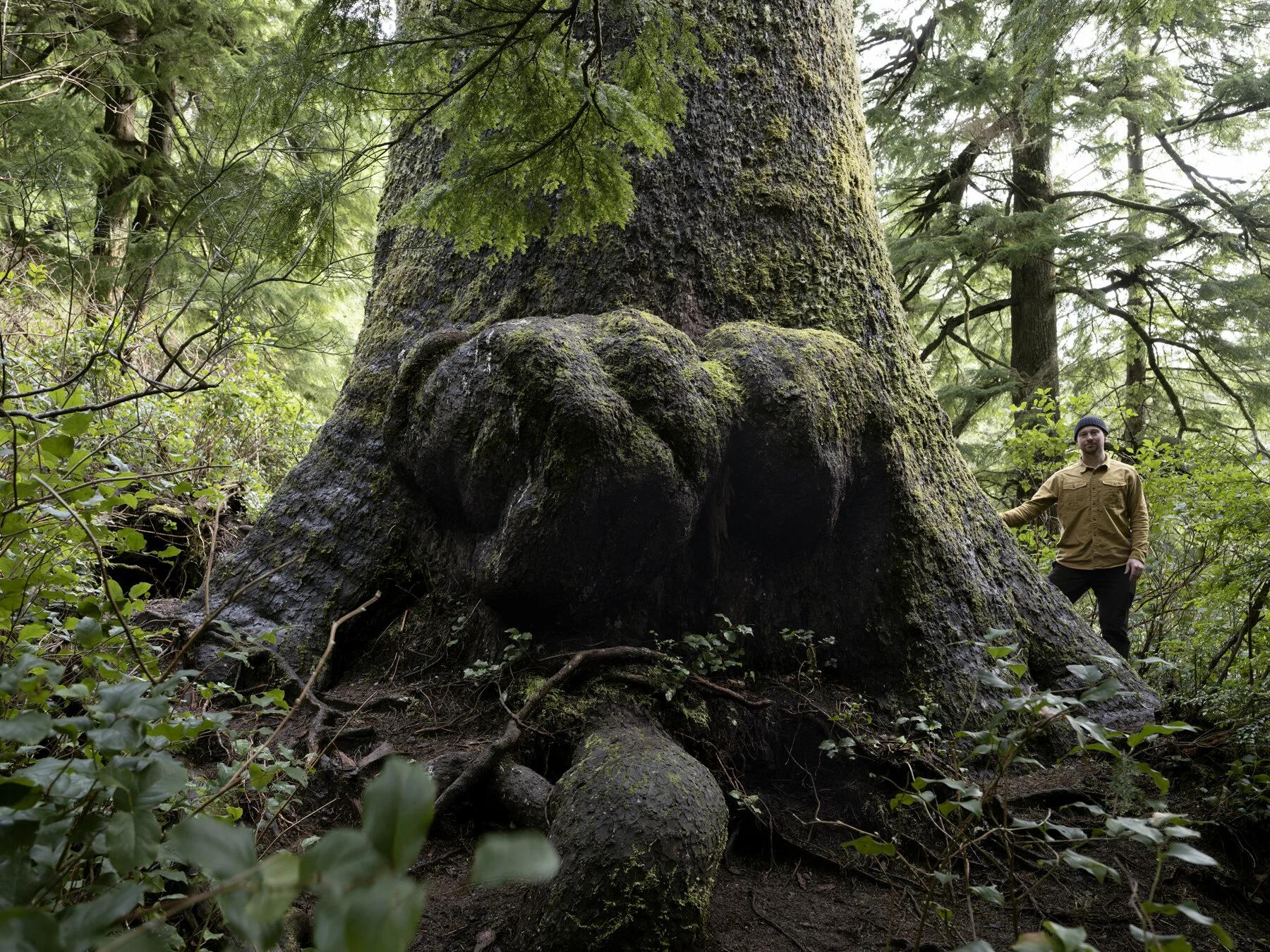
Today, visitors exploring the forests near Gold Beach can still encounter enormous Sitka spruce trees, especially within portions of the Rogue River watershed and nearby protected lands. Some are estimated to be several centuries old.
These surviving giants offer a glimpse into what Oregon's coastline looked like before widespread logging. Their trunks can measure more than 10 feet in diameter, and their crowns tower above the forest floor. Moss-covered limbs, ferns, and lichens thrive in the cool, damp environment beneath them.
Scientists believe many of these trees have survived countless Pacific storms that regularly batter the coast with winds exceeding 70 miles per hour. Sitka spruce are uniquely adapted to these harsh conditions, with flexible wood and shallow but widespread root systems that help them withstand powerful coastal winds.
Why These Trees Matter
Old-growth Sitka spruce forests are among the most productive ecosystems on Earth. They provide critical habitat for birds, amphibians, salmon-bearing streams, and countless other species.
These giant trees also store enormous amounts of carbon and play an important role in maintaining healthy watersheds. Fallen spruce eventually become nurse logs that support the next generation of forest growth, continuing a cycle that has existed for thousands of years.
Visiting the Sitka Spruce Giants Near Gold Beach
Some of the best opportunities to experience these ancient forests are found along trails near the Rogue River, within sections of the Rogue River-Siskiyou National Forest, and on protected coastal lands surrounding Gold Beach. Visitors often describe walking beneath these towering trees as entering a living cathedral, where sunlight filters through massive branches draped in moss.
Early mornings, when coastal fog drifts among the trunks, provide some of the most memorable views and photography opportunities.
A Living Link to Oregon's Past
The Sitka spruce giants of Gold Beach are more than just large trees. They are living witnesses to centuries of Oregon history. They survived long before roads, towns, and logging operations reached the coast. Today, they remind visitors of the immense forests that once covered the Pacific Northwest and the importance of protecting what remains.
Standing beneath one of these giants, it's easy to understand why generations of Oregonians have been inspired by these remarkable trees. Their immense size, incredible age, and enduring presence make them among the most awe-inspiring natural treasures on the Oregon Coast.