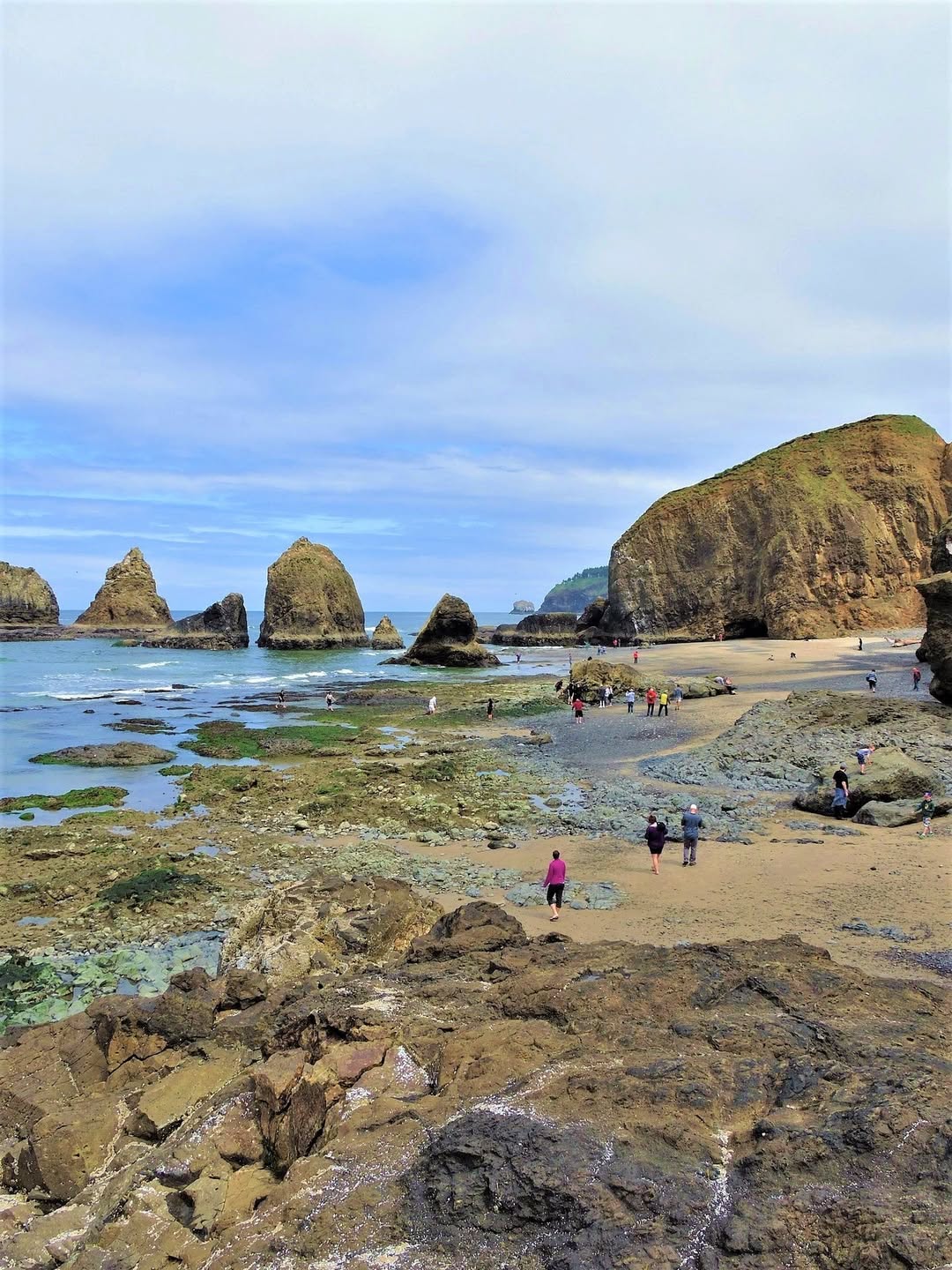
Three Arch Rocks National Wildlife Refuge, Oceanside Oregon (Just West of Tillamook)
Three Arch Rocks National Wildlife Refuge sits just offshore from the quiet coastal village of Oceanside, Oregon, rising out of the Pacific like three ancient sentinels guarding the shoreline. These huge basalt sea stacks may look like ordinary rocks to the untrained eye, but they are part of one of the most important wildlife sanctuaries on the entire West Coast. Their dramatic cliffs, echoing seabird colonies, and rugged, windswept setting make them one of the most memorable sights along the Oregon Coast.
The refuge was established in 1907 and holds the distinction of being the first National Wildlife Refuge created west of the Mississippi River. Its origins are tied to early conservation pioneers William L. Finley and Herman Bohlman, who documented the destructive hunting of seabirds in the area for feathers, eggs, and sport. Their photographs and field notes caught the attention of President Theodore Roosevelt, who responded by designating the islands as protected territory. More than a century later, the rocks remain off-limits to the public, ensuring that the wildlife continues to thrive without disturbance.
Tens of thousands of seabirds nest on the cliffs during the late spring and summer months. Tufted puffins, perhaps the most beloved species on the refuge, return each year to dig burrows into the steep slopes. Their bright orange bills and swift, frantic wingbeats make them a delight to watch from shore. Equally impressive are the enormous colonies of common murres, whose dark bodies and upright postures often cause visitors to compare them to penguins. Their sheer numbers turn the rocks into bustling bird cities.
The refuge is also home to marine mammals. Stellar sea lions, some of the largest pinnipeds on the Pacific Coast, haul out on the lower ledges where they bark, groan, and sprawl in the sun. Harbor seals and even the occasional gray whale can be spotted moving through the nearshore waters, especially during seasonal migrations. Binoculars greatly enhance the experience, but it is possible to enjoy the abundance of life here with the naked eye as well.
Viewing Three Arch Rocks from land is easy and rewarding. Oceanside Beach State Recreation Site is the most accessible and popular spot. From the wide sandy beach, the rocks dominate the horizon, framed by waves and shifting light. This beach is perfect for long walks, exploring driftwood, or simply sitting and watching the tides change. At the north end of the beach is a historic tunnel carved through the headland, which leads to a quiet, less-visited stretch of coastline often called Tunnel Beach. This viewpoint offers a slightly different angle on the rocks and is a favorite among photographers.
A short drive south leads to Cape Meares State Scenic Viewpoint, where the elevation adds drama to the view. From the cliffs near the lighthouse, the rocks appear almost sculptural, backed by miles of open ocean. The area also includes the famous Octopus Tree and several short walking paths that showcase the rugged coastal forest. Farther along, the Three Capes Scenic Route provides multiple pullouts where travelers can stop and take in various perspectives of the refuge.
Nearby attractions round out the experience. Cape Lookout State Park offers hiking trails, camping, and excellent whale-watching opportunities during migration seasons. Netarts Bay, one of the most pristine estuaries in Oregon, is a peaceful spot for kayaking, crabbing, and clamming. A short trip inland brings you to the Tillamook Creamery, a popular stop for tours, exhibits, and locally made dairy treats.
The best time to visit depends on what you want to see. Spring and summer bring puffins, calmer seas, and brighter weather, although conditions can still change quickly. Fall offers fewer crowds and atmospheric coastal storms. Winter transforms the scene entirely as large swells crash against the rocks and offshore winds whip ocean spray into the air, creating a dramatic and sometimes awe-inspiring display of nature’s power.
Photographers find endless inspiration at Three Arch Rocks. Early morning and late afternoon offer warm light and long shadows that enhance the textures of the cliffs. Low tide creates reflective wet sand that mirrors the rocks for striking compositions. Stormy days can produce moody, cinematic scenes, though caution is always needed when the waves grow large.
What makes Three Arch Rocks National Wildlife Refuge so special is its untouched nature. You cannot hike on the rocks, walk among the birds, or approach the sea lion colonies. Instead, you observe from afar, which creates a sense of reverence for the wildlife that depends on this protected space. The rocks remain entirely wild, shaped only by wind, waves, and the creatures that have lived there for generations.
Standing on Oceanside Beach and watching the birds drift overhead or the waves roll around the rocks, you feel a connection to something both ancient and enduring. The scene is simple yet powerful, a reminder that some of the most remarkable places on the Oregon Coast are those left exactly as nature intended.