Tidepooling in Bandon, Oregon: Adventure into the Intertidal World
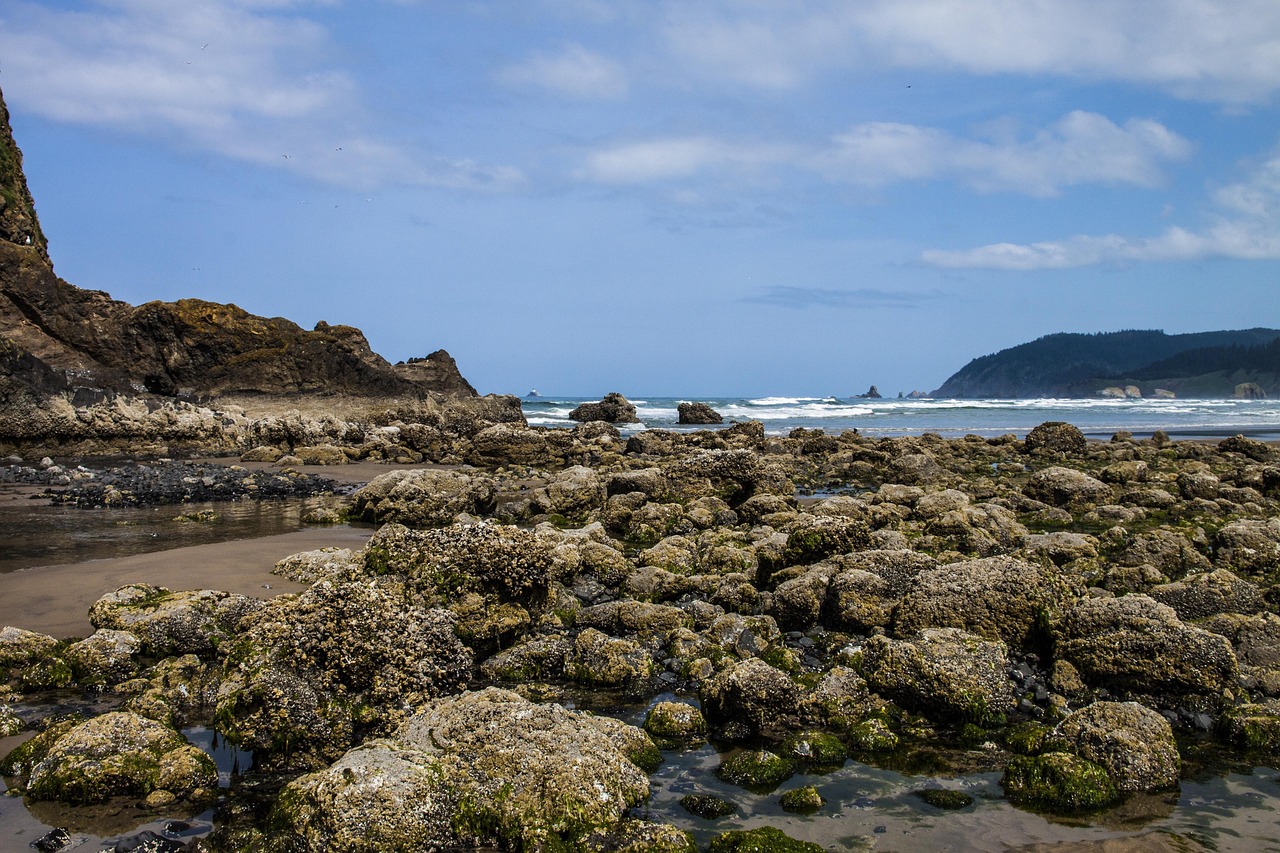
I’ve walked a lot of beaches on the Oregon Coast, but Bandon feels different the moment your boots hit the sand. The sea stacks rise straight out of the surf like something ancient and watching, and when the tide pulls back, it reveals a world most people walk right past. That’s when I head for the rocks.
Low tide in Bandon is an invitation.
I arrive early, the air cold and sharp, the beach quiet except for the hiss of retreating waves and the cries of gulls overhead. Face Rock stands offshore, half wrapped in mist, and the exposed rock shelves stretch farther than they looked an hour ago. Where the ocean used to be, tidepools now shimmer like scattered mirrors.
Stepping Into the Intertidal Zone
The first thing I learn — again — is to move slowly. The rocks are slick with algae, and life clings to every surface. What looks like bare stone is actually crowded with organisms that have figured out how to survive one of the harshest places on Earth: the space between tides.
I kneel beside my first pool and instantly lose track of time.
Sea anemones dot the bottom like living flowers, their tentacles open and swaying underwater. When a wave splashes over the rocks and drains away, they shrink into tight, rubbery blobs, sealing themselves off from the air. It’s a simple motion, but it feels ancient — a survival trick perfected over millions of years.
I know these aren’t plants. They’re predators, armed with microscopic stinging cells, waiting for the tide to return with plankton and tiny prey.
Sea Stars and Slow Motion Drama
Further out, where the rocks sit lower and the pools are deeper, I spot sea stars clinging to the stone. Some are deep purple, others burnt orange, their arms spread wide like they’re holding the rock in a careful grip.
It’s easy to forget that sea stars are hunters.
I watch one inch its way toward a cluster of mussels, its tube feet moving almost imperceptibly. It’s using seawater pressure to move, not muscles — and when it finally reaches its prey, it will slowly pry the mussel open and digest it outside its own body. Brutal, quiet, and incredibly efficient.
Standing there, I realize this drama happens every day, hidden under waves most of the time.
Hermit Crabs, Mussels, and Living Armor
As I step carefully around a narrow channel, something skitters at my feet. Hermit crabs scatter in every direction, dragging mismatched shells like awkward backpacks. I pause and watch them regroup, antennae waving, deciding whether I’m a threat.
Their whole lives depend on shells they didn’t make — and I think about how they’re constantly upgrading, sometimes even lining up to trade shells by size. It’s chaotic and oddly organized at the same time.
Nearby, mussels form a black, jagged carpet across the rocks. They’re packed so tightly together it looks impossible for anything to move between them, yet entire micro-ecosystems exist inside those clusters. Their byssal threads — stronger than steel by weight — hold them fast against waves that could knock me flat.
The Camouflage Game
I nearly miss the fish entirely.
Only when one darts forward do I notice it — a tidepool sculpin, perfectly blended into the rocky bottom. It freezes the moment it sees me, trusting its camouflage. These fish can survive conditions that would kill most others: warm water, low oxygen, even brief exposure to air.
I lean closer, careful not to cast a shadow, and watch it breathe. The pool is still, the surface glassy, and for a moment the ocean feels very far away.
Barnacles, Limpets, and the Grip of Survival
Higher on the rocks, barnacles cluster like tiny volcanoes, shells sealed tight. They’re crustaceans, not rocks — relatives of crabs — and when the tide returns, they’ll open and extend feathery legs to filter food from the water.
Limpets cling nearby, their shells molded perfectly to the stone beneath them. Each one has a “home scar” — a spot it returns to again and again. I try gently touching the rock beside one and can feel the force of its grip. The suction is incredible. The ocean can do its worst, and the limpet will still be there.
Timing the Ocean
I glance back toward the sea more often now. Tidepooling teaches you humility. The ocean always gets the final say.
The tide has turned, subtle at first. Pools begin to refill, waves pushing farther in. I take one last slow walk across the rocks, careful to step only where I’m sure, and start making my way back toward the sand.
Behind me, the tidepools disappear one by one, reclaimed by the Pacific as if they were never exposed at all.
Tidepooling in Bandon is about slowing down enough to notice a world that operates on a different clock. Every anemone, crab, and sea star is a reminder that survival doesn’t always look dramatic — sometimes it looks patient, quiet, and incredibly resilient.
As I walk back up the beach, Face Rock silhouetted against the sky, I know I’ll be back. Low tide will return. The ocean will pull away again. And the hidden world beneath it will be waiting.