Trask River Fishing Report — Tillamook County, Oregon
October, 2026
If I were heading to the Trask River right now, fall Chinook would absolutely be the reason I'd go. We're smack in the heart of October, and this is the time of year when a good shot of rain can move fresh salmon out of Tillamook Bay and tidewater and into the Trask.
Fishing hasn't exactly been lights-out this fall. ODFW's September report described Chinook fishing as slow, with most fish still hanging around Tillamook Bay and tidewater and only some Chinook entering the lower Trask. But we're more than a month farther into the season now, which makes the river increasingly interesting—especially whenever water conditions encourage another push of fish.
Fall Chinook Are the Main Event
October is when I start taking the Trask seriously for fall Chinook.
The Trask is part of the larger Tillamook Bay salmon fishery, so you're dealing with fish entering the bay before eventually sorting themselves out among rivers such as the Trask, Wilson, Kilchis, Miami and Tillamook.
When conditions are low, I'd concentrate heavily on the lower river and tide-influenced water. Salmon don't necessarily charge upriver just because they're present in the system. They'll often hold until changing flows give them a reason to move.
After a decent rain, though, everything can change.
That's when I'd start working farther upriver and looking for fresh fish traveling through deeper runs and pools.
How I'd Fish the Trask Right Now
This time of year, I'm carrying eggs.
A good glob of cured Chinook roe fished beneath a float is still one of my favorite ways to work deeper Trask River holes. I'd set the depth so those eggs are traveling close to the bottom without constantly dragging.
Spinners are another excellent option, particularly if I want to cover water. Cast slightly downstream, get that blade working and slowly swing it through the travel lane.
When the river is clear, I'd tone everything down. Smaller presentations, lighter leaders and natural-looking eggs can make a noticeable difference.
Once the Trask gets some color, I'm much more comfortable throwing bigger presentations.
Where I'd Look for Salmon
Forget the idea that you need to stand shoulder-to-shoulder in the most famous hole on the river.
I'd rather hunt.
Look for deep pools below riffles, walking-speed current, current seams, deeper slots along the bank, boulder pockets and the head of larger holes. Traveling Chinook frequently pause anywhere they can get out of the strongest current.
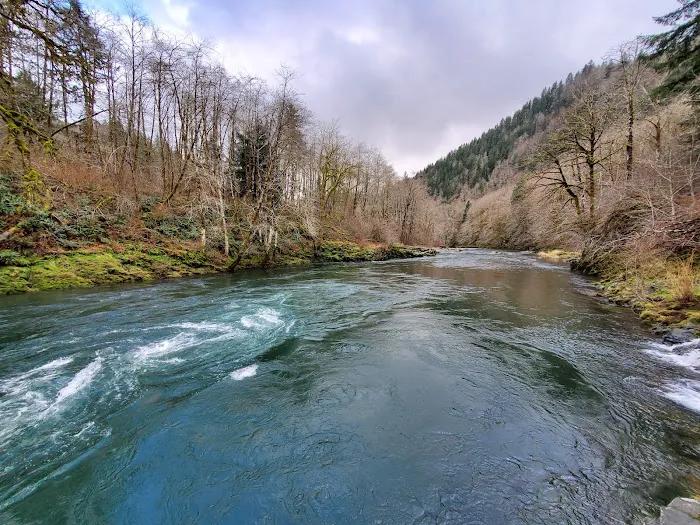
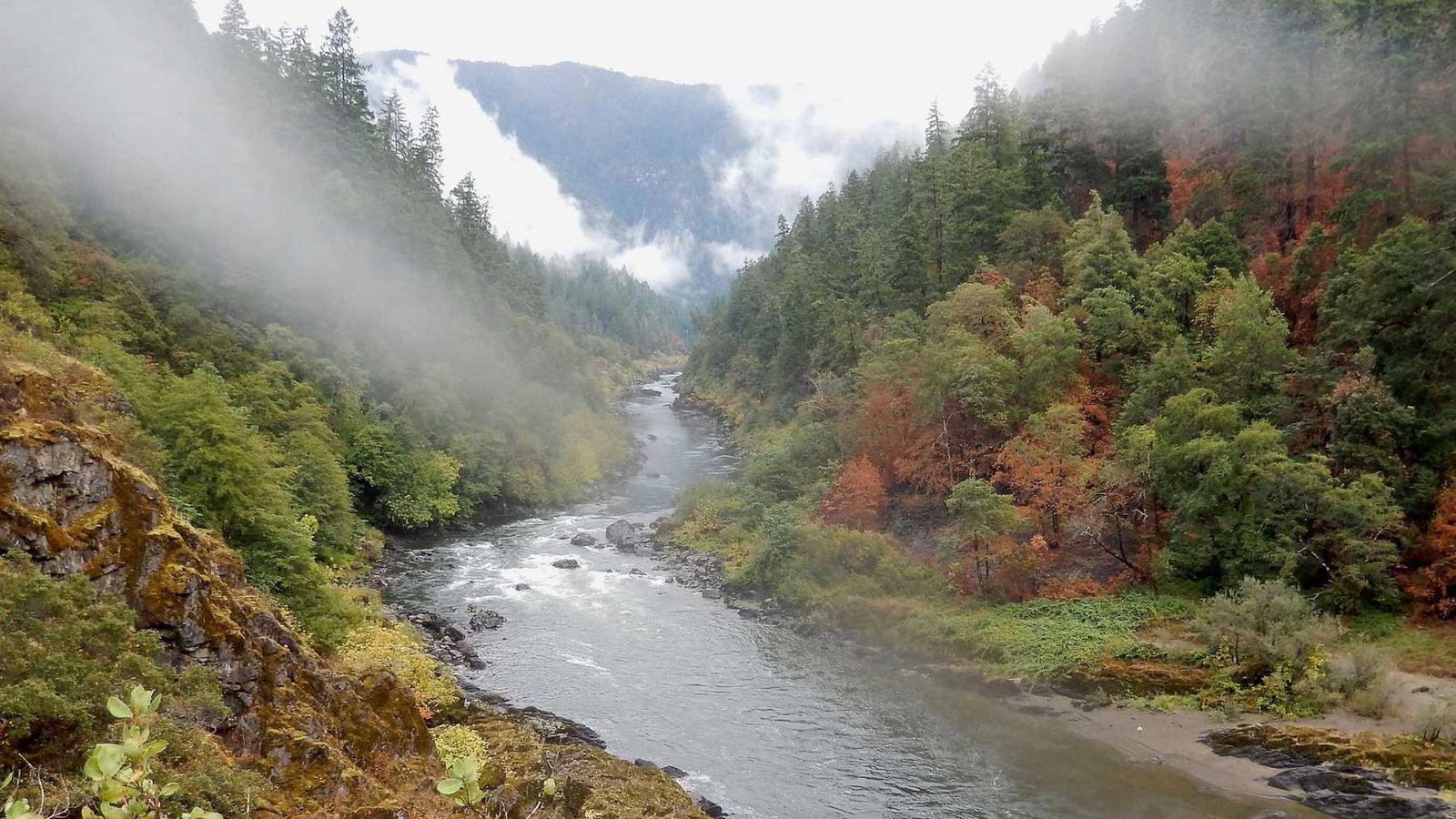
One thing I really like about the Trask is that it gives you that classic Coast Range salmon-river feeling—dark timber, moss, green water and big salmon tucked into surprisingly small pieces of holding water.
Keep an Eye on the River Level
This is probably the biggest factor I'd watch before making the drive.
The USGS gauge above Cedar Creek was reporting a stage around 5.55 feet on October 14, although the latest accessible USGS page isn't providing a dependable current discharge figure for October 16. So I wouldn't pretend we have a precise current CFS number when we don't.
For salmon fishing, the exact number isn't always as important as the trend anyway.
If the Trask suddenly rises after rain, that's what gets my attention.
The first significant fall freshet can pull fish out of tidewater and send them upstream. If the river gets high and dirty, I'll wait. But when it starts dropping and turns that beautiful Coast Range green, I'm getting serious.
That's the window I want.
The Hatchery Area — Pay Attention to Closures
There's an important change for anglers fishing this week.
The section 200 feet above to 900 feet below Gold Creek at Trask Hatchery, including the well-known Hatchery Hole, was closed through October 15. That seasonal closure has now reached its scheduled end, but anglers should still verify current emergency regulations before fishing there.
However, another closure remains in effect: the Trask from the marker at Dam Hole around milepost 7 on Trask River Road upstream to Blue Ridge Creek is closed to angling September 1 through November 30.
There's also an access issue at Trask River Hatchery. ODFW says slide damage has closed the hatchery access road to unauthorized vehicles, so visitors and anglers must park outside the gate and walk in until further notice.
2026 Fall Chinook Regulations
This is especially important this year.
For the Trask mainstem from the Highway 101 bridge upstream to the confluence of the North and South forks, the special 2026 Tillamook Basin regulations allow one adult wild Chinook per day, with no more than five adult wild Chinook for the August 1–November 30 season, aggregated with the specified Tillamook Basin waters.
Beginning December 1, angling for and retention of Chinook closes in these specified Tillamook Basin waters through December 31.
Wild coho are another story. Do not assume that seeing coho in the Trask means you can keep them. ODFW's Trask guidance specifically notes that wild coho retention isn't allowed upstream of the Highway 101 bridge.
Check ODFW's current Oregon fishing regulation updates
My Trask River Game Plan
If I were fishing tomorrow, I'd start early—really early.
I'd have cured eggs, a handful of Chinook spinners and probably some bobber-and-egg gear already rigged before daylight.
I'd begin low in the system unless recent rainfall showed me that the river had risen enough to trigger a significant push. If the river had recently bumped and was dropping into shape, I'd start moving upstream and checking the deeper travel lanes.
And I wouldn't spend half the morning pounding dead water.
Give a good hole a legitimate shot. Change your depth. Change your presentation. Work the inside seam, middle and far edge. If nothing happens, move.
That's fall Chinook fishing.
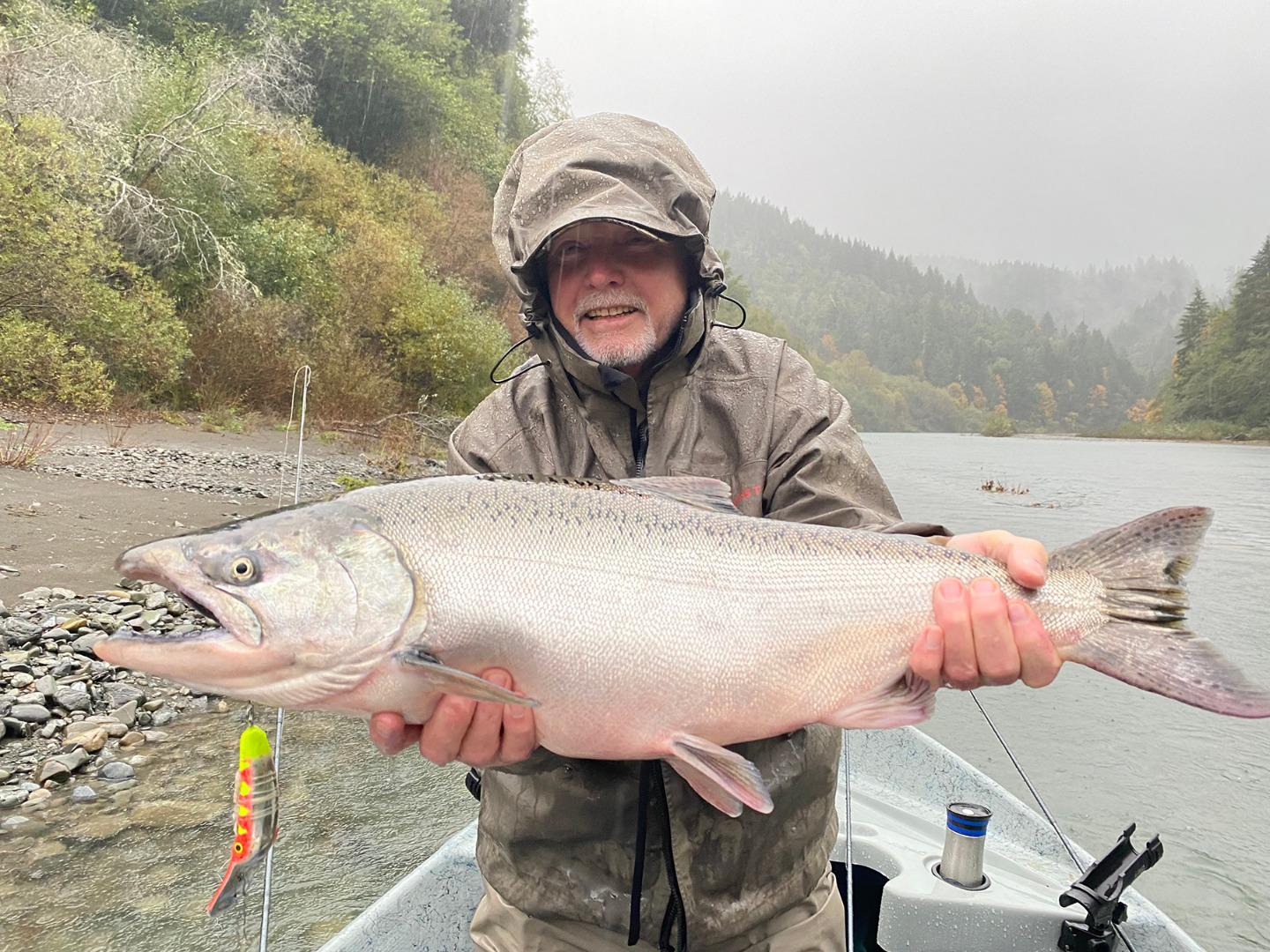
You might fish two hours without touching anything—and then watch your float disappear and suddenly have 25 pounds of angry Tillamook County Chinook headed downstream.
Current Trask River Outlook
🎣 Fall Chinook: FAIR — with considerably better potential following rain
🎣 Cutthroat Trout: FAIR TO GOOD
🐟 Coho: Hatchery fish are returning, but know the retention boundaries
🌧️ Biggest factor: Rain and river movement
🔥 Fish I'd target: Fall Chinook
The Trask is one of those rivers where I'd be watching the weather almost as closely as the fishing report right now. A strong rain followed by dropping, clearing water could be the switch that turns this fishery on.