Alsea River Early Winter Steelhead Fishing Report – November 1st, 2026
The fall salmon season is beginning to wind down on the Alsea River, and for steelhead anglers, that means one thing: it's almost time to start chasing winter chrome. November marks the beginning of the transition into winter steelhead season along the central Oregon Coast, and the Alsea is one of those rivers worth keeping a close eye on as the first serious winter rains arrive.
The Alsea River, flowing through the coastal mountains before emptying into Alsea Bay near Waldport, has a long history of producing winter steelhead. While the strongest fishing generally develops later in the season, the first hatchery fish can begin showing up in late November and December, depending on rainfall, river conditions, and the timing of the run.
For anglers willing to put in some early-season scouting, November can be a great time to get familiar with the water, locate productive holding areas, and prepare for the first push of winter steelhead.
Current Fishing Conditions and Steelhead Outlook
Early season — low expected catch rates
As of November 2, 2026, the Alsea is still in the very early stages of its winter steelhead season. Confirmed November 2026 catch reports and fresh hatchery return counts aren't yet available from the sources checked, so this is an early-season forecast rather than a verified on-the-water catch report.
Historically, the Alsea starts seeing winter steelhead in December, with the strongest fishing usually occurring from mid-January through mid-February. However, ODFW documented steelhead being caught as early as mid-November during the previous season, showing that early arrivals are possible.
Right now, the biggest factor to watch is rainfall. The Alsea responds quickly to coastal storms, and the first significant increases in river flow can encourage fresh steelhead to move upstream from tidewater.
The conditions I'd be looking for are slightly stained green water, moderate flows, and a river that is beginning to drop after a good rain. When the water is extremely low and clear, fish can become difficult to approach. When it's high and muddy, locating holding fish becomes much harder.
Where to Fish for Early Winter Steelhead
Lower Alsea River: The lower river above tidewater is worth watching after the first significant storms. Fresh fish moving upriver often use deeper runs, current seams, and slower water along gravel bars. Look for places where fish can travel without fighting the strongest current.
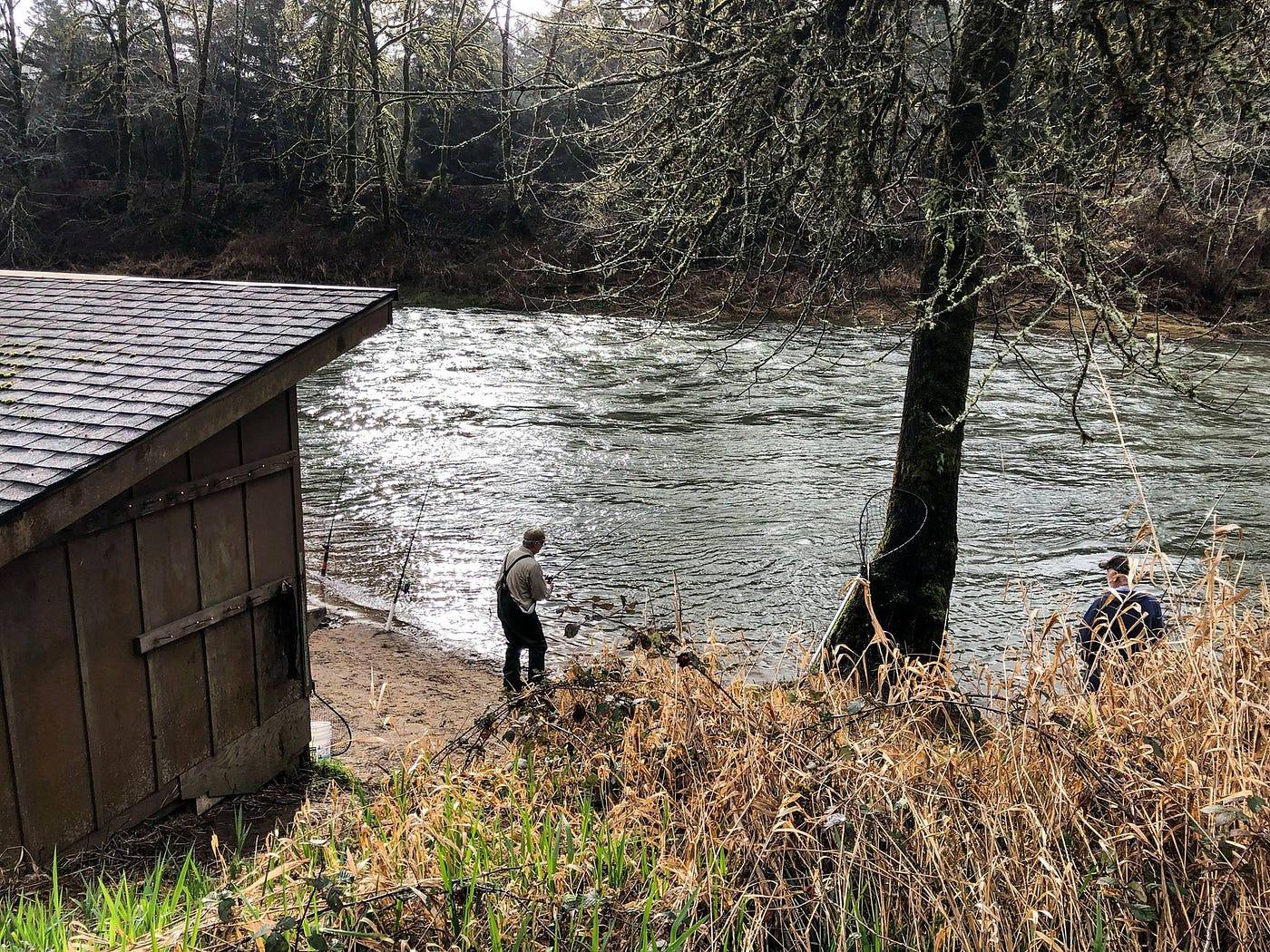
Middle Alsea River: The stretches accessible from Highway 34 offer opportunities to explore traditional steelhead holding water. Concentrate on long tailouts, deeper pools, and the transition between faster riffles and slower runs. During higher flows, don't overlook softer water close to the bank.
North Fork Alsea River: This is an important destination for winter steelhead anglers because of the Alsea Hatchery. However, the North Fork does not open for hatchery steelhead until December 1, so it is not an option for November steelhead fishing. Be aware of the hatchery deadline markers and restricted areas.
Best Techniques for Early Winter Steelhead
Bobber and Jig Fishing
One of my favorite approaches for winter steelhead is working a jig beneath a float through slower runs and current seams. Pink, peach, and cerise jigs are reliable starting colors. Adjust your depth so the jig travels just above the bottom without constantly hanging up.
Beads and Drift Fishing
Small peach, orange, and natural-colored beads can be productive when fish are holding in clear or moderately colored water. Focus on a natural presentation that follows the river's current rather than dragging across the bottom.
Spoons and Spinners
Hardware is another good option for covering water when steelhead are actively moving. Silver, copper, and blue-and-silver finishes are worth carrying. Work the lure slowly enough to stay in the strike zone while maintaining its action.
Alsea River Steelhead Fishing Regulations – 2026
According to the published 2026–2027 Oregon Northwest Zone regulations:
- Alsea mainstem: Open for hatchery steelhead November 1–December 31 and January 1–April 30.
- North Fork Alsea: Open December 1–31 and January 1–April 30, from the mouth to the designated deadline above the hatchery fishway.
- South Fork Alsea: Open December 1–31 and January 1–April 30, from the mouth to the bridge at McBee Park.
- Floating devices: Additional restrictions apply, including no angling from a floating device above Mill Creek on the mainstem and no angling from floating devices on the North and South Forks.
Wild steelhead must be released on the Alsea. Check the current ODFW rules for bag limits, gear requirements, and any emergency changes before fishing.
What to Expect Heading Into December
As November progresses, the Alsea should become increasingly interesting for anglers looking to get an early start on winter steelhead season. The first few significant rain events will be especially important, and December traditionally offers a better opportunity to intercept fresh hatchery fish.
My approach would be simple: watch the river levels, wait for a good push of water, and fish the falling river once visibility improves. Cover several promising runs rather than spending the entire morning in one spot, especially while fish numbers are still building.
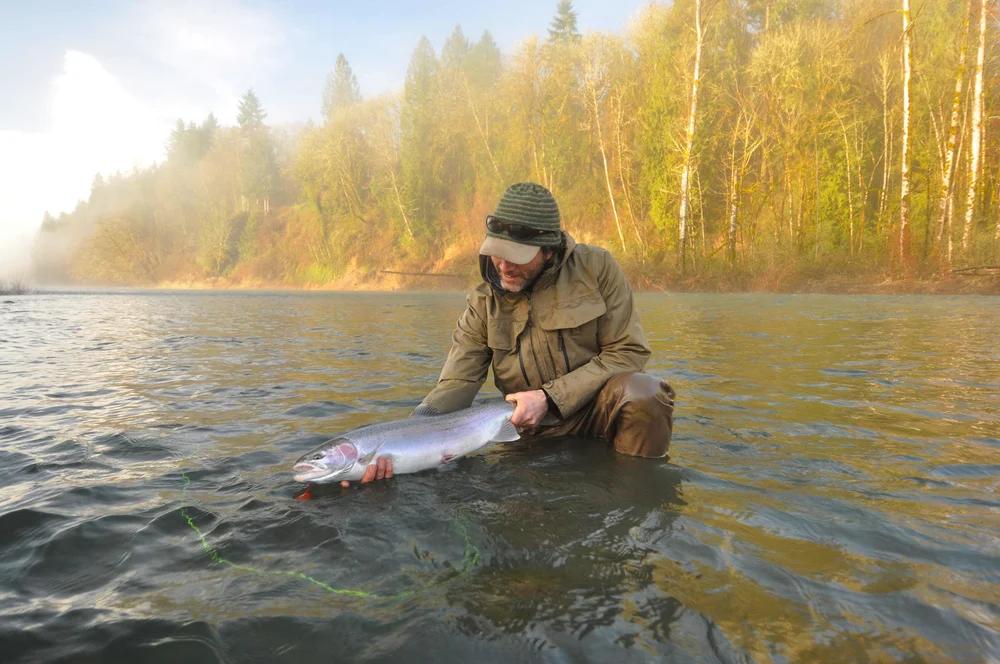
There is something about winter steelhead fishing on the Alsea that keeps anglers coming back. Cold mornings, fog hanging over the river, wet gear, and the possibility of a bright chrome fish fresh from the Pacific are all part of the experience.
November is the beginning of the Alsea's winter steelhead opportunity, not the peak. December should bring improving prospects, while January and February remain the months to circle on the calendar.