Big Fall Chinook on the Alsea River: No Boat, No Problem!
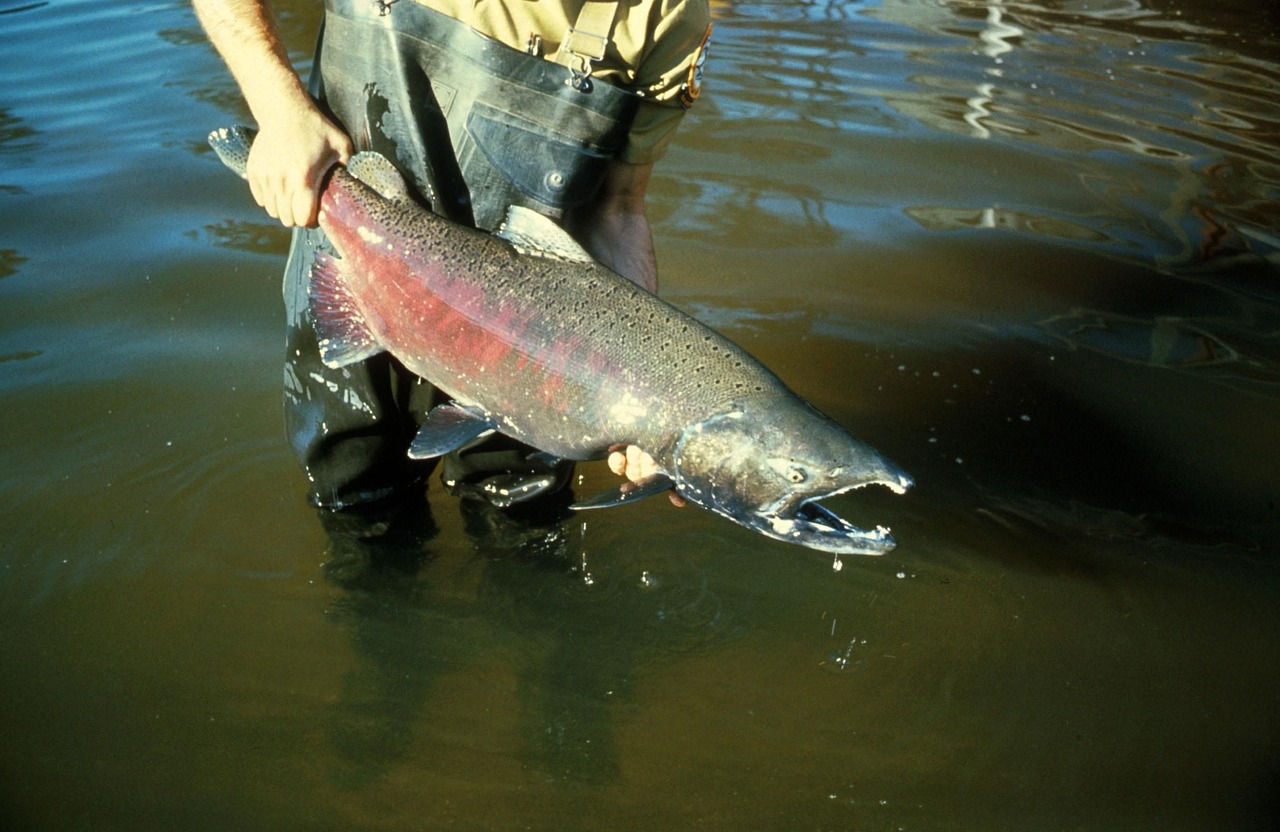
On the bank of an Oregon Coast river in October, knowing a 30-pound Chinook could be swimming right in front of you........
I've never believed you need an expensive boat or thousands of dollars in fishing equipment to catch big salmon. Give me a decent rod, a handful of cured eggs, a few good spinners, and a stretch of river with fresh Chinook moving through, and I'm a happy man.
Running through the forests of Oregon's Coast Range before emptying into Alsea Bay at Waldport, the Alsea is a classic fall salmon river. It's not particularly huge compared to some of Oregon's other salmon fisheries, but don't that fool ya. Every fall, powerful Chinook salmon make their way into this river, and some of them are absolute bruisers.
Why I Love Fishing the Alsea in October
Fall Chinook begin returning to the Alsea during late summer, with September and October offering some excellent opportunities.
Early in the season, many fish concentrate around Alsea Bay and the tidewater stretches of the lower river. When the first significant fall rains arrive, those salmon begin moving farther upstream.
A good rain can bring the river up enough to encourage fish to move, but too much rain can make fishing difficult.
My favorite conditions are when the river has recently risen and is beginning to drop and clear. I like a little color in the water, especially that beautiful green tint that Oregon Coast anglers know so well.
If the river is running gin clear, salmon can become difficult to approach. When the water has a little color, they may be more comfortable traveling during daylight. The trick is getting there when the fish are moving, not three days after they've already passed through.
According to the Oregon Department of Fish and Wildlife's late-September 2026 report, anglers have been catching fall Chinook in Alsea Bay and tidewater, with additional fish expected to move upstream as fall rains arrive.
Where I'd Start Bank Fishing the Alsea River
One of the things I appreciate about the Alsea is that Highway 34 follows much of the river, making it possible to scout different stretches without spending an entire day hiking through the woods.
But here's something I've learned about bank fishing: Just because you can see the river from the road doesn't mean you can legally or safely reach it.
Much of the shoreline is private property, and some of the best-looking water has no public access.
I stick to established access areas, verify property boundaries, and look for places where I can safely land a large fish.
1. Tidewater: My First Stop During Low Water
If we haven't had much rain, I'm heading toward Tidewater.
This small community along Highway 34 sits near the upper reaches of tidal influence, making it an interesting area for anglers looking to intercept salmon moving between the bay and freshwater.
The water here can be deeper and slower than the upper river, and tidal changes influence how fish move through the system.
When I'm scouting this area, I'm looking for deeper channels, current seams, and places where salmon might pause before continuing upstream.
I especially like fishing around tidal changes.
An incoming tide can encourage fish to move into different stretches of water, while an outgoing tide may create current conditions that make certain presentations more effective.
My favorite technique in slower tidewater is fishing cured salmon eggs beneath a sliding float.
I want my bait traveling naturally through the deeper holding water, preferably just above the bottom.
One thing I don't do is assume every fish rolling on the surface is actively biting.
I've watched salmon roll repeatedly without touching a single bait.
Sometimes those fish are simply holding, and it takes a change in current, water temperature, or presentation to get a response.
My advice: During extended dry weather, concentrate your scouting around the lower river and tidewater rather than automatically heading upstream.
2. Lower River Access Along Highway 34
Once the fall rains begin pushing salmon upstream, I start looking farther inland along Highway 34.
The river changes character as you move away from the bay. You'll find deeper bends, faster riffles, gravel bars, and narrow sections where current funnels migrating fish into predictable travel lanes.
I look for three things before deciding where to fish: enough depth to hold a large salmon, current that isn't excessively strong, and a clear area where I can fight and land a fish.
One of my favorite situations is a deep pool with a faster riffle entering at the top.
Salmon traveling upstream may pause in the softer water before pushing through the faster section.
I'll often start by fishing the upper half of the pool, then gradually work my way downstream.
If I'm throwing spinners, I cast across the current and retrieve slowly enough to keep the blade turning.
If I'm fishing eggs, I'll adjust my float depth until the bait travels close to the bottom without dragging.
I also pay attention to submerged logs.
Those logs can create excellent holding water, but they're also where big Chinook love to break you off.
There's nothing quite as frustrating as hooking a powerful fish and watching it wrap your line around a submerged tree.
3. The Five Rivers Area
The Five Rivers area is another stretch I'd consider scouting after the river receives enough rain to move fish upstream.
Confluences and deeper pools can provide resting areas for migrating salmon, especially when flows are increasing.
However, I wouldn't assume that every tributary or creek mouth is open for Chinook fishing.
In fact, Five Rivers itself is closed to Chinook salmon angling under the 2026 regulations. Fishing must remain within legally open portions of the Alsea mainstem.
This is also an area where property boundaries matter.
I would spend time identifying legitimate public access before planning a fishing trip rather than assuming roadside pullouts provide access to the river.
When I find legal access to a good holding pool, I'm looking for the softer water along the edges of the main current.
That's where I want my bait.
My Go-To Chinook Fishing Setup
When I'm fishing the Alsea, I want equipment that's heavy enough to control a big king but sensitive enough to detect a subtle bite.
My preferred setup is a 9- to 10½-foot medium-heavy salmon rod paired with a quality spinning reel.
I generally use 40-pound braided mainline with a 20- to 30-pound leader.
Some anglers prefer lighter leaders in clear water, and there are situations where that makes sense. But when I'm fishing around rocks, submerged timber, and heavy current, I'd rather have a little extra strength.
For float fishing, I carry sliding bobbers, bobber stops, beads, weights, swivels, and a selection of hooks appropriate for the bait and regulations.
I also keep several large spinners in my tackle box.
Silver, brass, copper, and chartreuse are some of my favorite colors for coastal Chinook.
I don't carry a hundred different lures.
I'd rather have a few presentations I know how to fish properly.
Fishing Cured Salmon Eggs: My Favorite Technique
There's a reason cured salmon eggs have been a favorite among Oregon salmon fishermen for generations.
They can be incredibly effective when presented correctly.
When I'm fishing a deeper pool, I start by estimating the water depth and adjusting my sliding float so my bait travels near the bottom.
Let's say I'm fishing a hole that's approximately eight feet deep.
I might start with my bait suspended around six or seven feet below the bobber.
Then I make a few casts and watch how the float travels.
If it's moving unnaturally or repeatedly hanging up, I may be fishing too deep.
If the bait is riding well above the holding fish, I need to increase my depth.
The goal is a natural presentation.
I cast slightly upstream, keep unnecessary slack out of my line, and allow the float to drift through the holding water.
I don't constantly jerk the rod or try to force the bait into position.
I let the current do the work.
And when that bobber disappears, I reel down and set the hook.
One thing I always remind myself is that Chinook aren't feeding in freshwater the way they did in the ocean. Their strikes can be reactions to scent, irritation, or instinct.
That's why presentation matters so much.
Sometimes the difference between getting bit and getting ignored is simply moving your bait a foot deeper.
Throwing Spinners for Big Alsea River Kings
When the river has good visibility and fish are moving, I love throwing spinners.
It's one of the most exciting ways to catch a Chinook because you're actively searching for fish rather than waiting for them to find your bait.
I generally start with a size 4 or 5 inline spinner.
If the water is deeper or the current is stronger, I might go larger or heavier.
My goal is to get that spinner down into the salmon's travel lane and keep it moving slowly enough to give the fish a chance to strike.
I cast across and slightly upstream, let the spinner sink, and begin a controlled retrieve.
I want the blade turning steadily.
Too fast, and the lure may ride above the fish.
Too slow, and the blade might stop spinning.
When I get the retrieve just right, I can feel the vibration of the blade through my rod.
How I Fish the River After a Big Rain
This is where understanding the Alsea really pays.....
During the fall, I watch the weather forecast almost as closely as I watch the fishing reports.
If a storm is coming, I'm already thinking about where the salmon might be holding and how much rain it will take to move them.
Here's how I approach changing river conditions.
Before the rain: I concentrate on the lower river and tidewater, where salmon may be waiting for improved flows.
While the river is rising: I watch the river gauges and look for safe opportunities to fish softer water where traveling salmon might stop.
When the river is high and muddy: I usually wait. Heavy debris, poor visibility, and dangerous currents can make fishing unproductive and unsafe.
As the river drops and clears: This is often my favorite window. Fish that moved upstream during higher water may settle into holding pools, and improved visibility makes presenting bait or lures easier.
The exact timing depends on how much rain falls and how quickly the river responds.
I never assume a certain number of hours after a storm will always be perfect.
Instead, I compare current conditions with what I've seen during previous trips.
Over time, that information becomes more valuable than any secret fishing hole.
Fighting a Big Chinook From the Bank
A big Chinook can strip line off a reel faster than grease lightning, especially when it turns downstream and uses the current.
And when you're fishing from the bank, you've got limited options.
I try to keep steady pressure on the fish while allowing my drag to absorb sudden runs.
If the salmon starts heading toward submerged logs, I apply controlled side pressure to encourage it into open water.
I avoid pointing my rod directly at the fish, and I don't crank the drag down so tight that one powerful run snaps my leader.
Patience is important.
I've seen anglers lose big salmon because they tried to force the fish to shore before it was ready.
A Chinook that's still full of energy can make one final run that leaves you staring at an empty hook with tears in your eyes.
I also make sure I've identified a safe landing area before casting.
A big fish isn't worth falling into a swollen coastal river. Or is it? Hehe
The Mistakes That Cost Bank Anglers Salmon
One mistake is fishing too high in the water column. If the salmon are holding close to the bottom and your bait is drifting several feet above them, you might never get a bite.
Another is fishing water that's too fast. Chinook certainly travel through heavy current, but they often rest in slower areas nearby.
I've also seen anglers repeatedly cast into the same unproductive water without changing anything. If I'm confident fish are present but I'm not getting bites, I'll change my depth, bait size, lure color, or presentation.
Sometimes I'll move just twenty yards and find an entirely different current seam.
Another common mistake is using equipment that's too light. A 20-pound Chinook in heavy current can put tremendous pressure on your tackle.
Finally, I never underestimate the importance of fresh, well-cured bait and sharp hooks. Those two things alone can make a tremendous difference.
What You Need to Know About the 2026 Alsea Chinook Season
Before heading out, I always check the current regulations.
For 2026, the Alsea River and Bay are open for Chinook salmon from August 1 through December 31, up to the USFS River Edge Boat Landing.
The wild Chinook limit is two adults per day and ten for the season, subject to the overall salmon bag limit.
One especially important regulation this year is that wild coho salmon retention is closed throughout the Alsea Basin for the entire 2026 fall season.
That means anglers need to be confident identifying their catch before deciding whether a fish can legally be kept.
Different tributaries also have different regulations, and not every stretch of water is open for salmon fishing.
I recommend checking the latest information from the Oregon Department of Fish and Wildlife Northwest Zone Fishing Report before every trip.