Fall Fishing the Nehalem River: Salmon on the North Oregon Coast
When fall hits the Oregon Coast, the Nehalem River starts calling me back to get my fish on. The mornings get colder, rain finally begins soaking into the Coast Range, and every good storm has me wondering the same thing: Are the salmon moving yet?
The Nehalem is a completely different experience from fishing the Columbia and its much more like traditional coastal salmon fishing. You've got the big Nehalem Bay down around Wheeler and Nehalem, tidewater stretching upriver, and miles of river winding through thick Coast Range timber.
And in the fall, you've got salmon coming on home.
What's Coming Through the Nehalem in Fall?
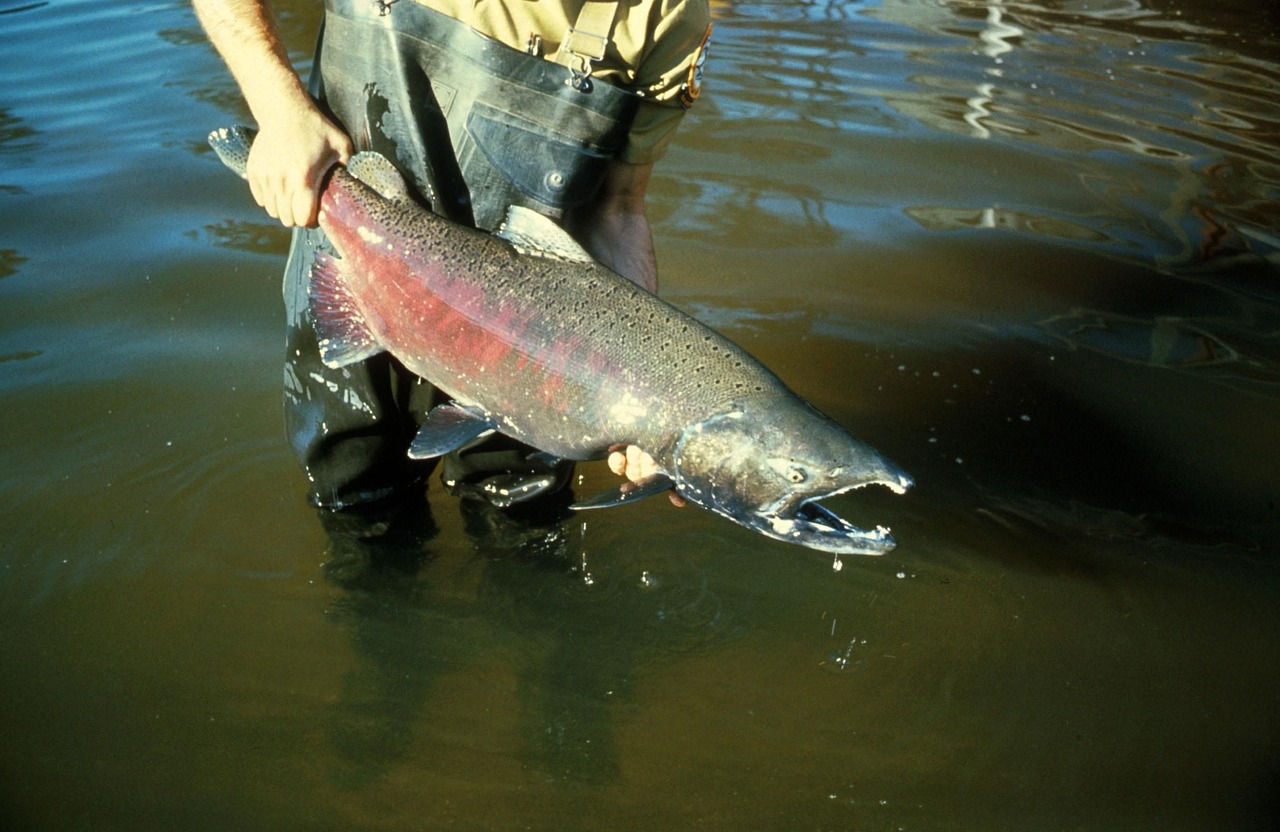
The main attraction is the fall Chinook salmon.
These are the fish that get me excited about September and October on the north coast. Chinook begin entering Nehalem Bay from the Pacific and gradually work their way through the estuary and into the river.
Early in the season, especially when the river is still low and warm, a lot of fish can hang around the bay and lower tidewater.
That's when I concentrate closer to the salt.
Once we start getting those real Oregon fall rains, everything can change.
The river rises, temperatures cool, and fresh salmon that have been waiting down low suddenly have enough water to start pushing upriver.
Coho also return to the Nehalem system during the fall. However, coho regulations can be considerably different from Chinook regulations, and wild coho fisheries are often managed through specific seasons and quotas. Never assume a coho is legal to keep just because the river is open for salmon fishing.
Later in the fall, chum salmon also return to portions of the Nehalem system. They're incredibly powerful fish, but conservation restrictions are important, so I treat them as a fish to admire rather than something I automatically plan on harvesting.
September: Start Down Low
September is when I'd spend more of my time around Nehalem Bay and the lower river.
The first serious fall rains often haven't arrived yet, meaning the main river can be low. Chinook entering from the ocean don't necessarily have a reason to charge upriver.
They'll stage.
Around Wheeler, Nehalem, and the lower bay, you've got tidal channels and deeper water where salmon can move and hold as they adjust from saltwater to freshwater.
Boat anglers have a big advantage here because they can cover water.
Trolling is one of my favorite ways to find these early fish. Spinners can be deadly, and bait presentations have caught Nehalem Chinook for generations.
But don't just troll around blindly.
Watch the depth finder. Look at the channel. Pay attention to where you're marking fish and where other anglers are getting bites.
Most importantly, watch the tide.
The Tide Can Make or Break Your Day
If you're fishing the lower Nehalem, you have to think about the tide almost as much as the salmon.
An incoming tide pushes fresh ocean water into the bay and can bring new salmon with it.
Around the tide change, current slows and fish may reposition.
Then the outgoing tide starts pulling water back toward the ocean.
I've had days where a section of water seemed absolutely dead, then the tide changed and suddenly rods started going down.
If I had an entire day available, I'd much rather fish through a complete tidal cycle than randomly pick a couple of hours and hope I hit it right.
October: Follow the Rain
October is when the Nehalem gets really interesting.
I watch the weather constantly.
I'm not necessarily looking for a massive storm. Too much rain can blow the river out and turn beautiful salmon water into a muddy mess.
What I want is enough rain to raise the river and encourage fish to move.
The first substantial fall rains can be magic.
Salmon that have been sitting in tidewater suddenly begin pushing upriver. Fish that were concentrated around the bay become spread throughout the system.
That's when I start moving with them.
After a good rain, I begin looking farther upstream rather than spending my entire day near the bay.
Reading the River for Fall Chinook
One of the biggest lessons I've learned about coastal salmon fishing is that you don't need to fish every piece of water.
Most of the river isn't holding salmon.
I'm looking for travel lanes and resting water.
Deep holes immediately get my attention, particularly when they're connected to shallower traveling water.
I also like the lower end of a pool where current begins slowing down.
Current seams are another favorite.
Salmon moving upstream don't want to fight the strongest current every second of the journey. They'll often travel along softer edges where they can conserve energy.
Then there are bends.
A river bend can create deeper water against one bank while depositing gravel along the opposite side. That deeper edge can become a natural salmon highway.
Bank Fishing the Nehalem
You don't necessarily need a boat to catch a Nehalem Chinook.
Bank fishing can be productive, but access becomes the challenge.
I look for legal public access near deeper holes, current seams, bridges, parks, boat launches, and established fishing areas. I never assume that a gravel bar or attractive stretch of river is public just because I can see it from the road.
Once I've found good access, I'll usually bring a couple of different presentations.
Spinners are one of my favorites.
A big spinner gives off flash and vibration and allows me to cover water quickly. I'll cast across or slightly upstream, let it sink into the zone, and slowly work it through the current.
The important word there is slowly.
I'm not trying to burn the spinner back to shore.
I want that blade turning just fast enough to work while the lure swings through the area where I think salmon are traveling.
Bobber Fishing for Chinook
Float fishing can also be incredibly effective when salmon are holding in deeper holes.
This is where depth becomes everything.
If the hole is 10 feet deep and your bait is drifting three feet below the surface, you're probably fishing over the top of them.
I adjust until I'm working close to the depth where the fish are holding without constantly dragging bottom.
Depending on current regulations, cured salmon eggs can be a classic Chinook presentation.
Fishing After a Fall Rain
Fresh salmon start moving.
But timing is everything.
I don't necessarily want to fish during the absolute peak of a major storm when the river is ripping through the valley carrying branches and mud.
I want to catch the river as conditions improve.
A dropping river after a good rise can be outstanding.
As visibility returns, salmon that moved during the high water can settle into holes and travel lanes.
That's when I'll start working those deeper areas hard.
Water Color Matters
Everybody talks about river height, but I pay just as much attention to visibility.
Crystal-clear water can make salmon spooky.
Extremely muddy water makes it difficult for them to see your presentation.
Somewhere between those extremes can be fantastic.
When the river has a little green or tea-colored tint but I can still see into the water, I start getting excited.
In dirtier conditions, I'll use presentations that create more flash, vibration, scent, or contrast.
When the river clears, I'll often tone things down.
Don't Ignore the North Fork Nehalem
The North Fork Nehalem River is an important part of the system and is closely associated with hatchery salmon returns.
This is also where anglers really need to understand the regulations.
Different sections of the Nehalem system can have different boundaries, seasons, hatchery rules, and retention restrictions.
Just because something is legal in one section doesn't automatically make it legal farther upstream.
Before I fish, I figure out exactly where I'm going and check the regulations for that specific stretch.
November: The River Changes Again
By November, we're usually dealing with more rain, colder water, higher flows, and fish that have been in freshwater longer.
There may still be late Chinook moving through, while coho and chum can also be present in the system.
But this is when identification becomes especially important.
Some salmon may already be darkening and preparing to spawn.
If I find actively spawning fish on shallow gravel, I leave them alone.
I also avoid walking across obvious spawning beds. Those depressions in the gravel — called redds — can contain the next generation of salmon.
There are plenty of other fish and plenty of other stretches of river to explore.
My Basic Fall Nehalem Setup
For Chinook, I don't mess around with ultralight gear.
These are strong fish, and they know exactly how to use current.
I like a longer salmon rod with enough backbone to control a big Chinook while still having enough sensitivity to work spinners or float gear.
I'll pair that with a quality reel and line appropriate for heavy salmon fishing.
More important than buying the most expensive setup is making sure everything works.
Check your knots.
Check your leader.
Check your hooks.
Check the first several feet of your mainline for damage.
A 25-pound Chinook is a terrible way to discover that your line had a nick in it.
The Biggest Mistake I See in Fall
People chase yesterday's report.
Someone catches salmon near the bay on Tuesday, so everybody goes there Wednesday.
Meanwhile, it rains Tuesday night and those fish move upriver.
Salmon fishing is about movement.
Don't just ask where somebody caught a fish.
Ask why that fish was there.
What was the river level?
Was it rising or dropping?
What was the tide doing?
Had it rained?
How clear was the water?
Were the fish fresh and bright or had they obviously been in freshwater for a while?
Those clues tell me far more than a pin dropped on a map.
Regulations Are Part of the Fishing Plan
Before fishing the Nehalem, check the current Oregon Department of Fish and Wildlife regulations and emergency updates.
Salmon regulations can change during the season, particularly for Chinook and coho. Rules may specify which species can be retained, whether fish must be hatchery-marked, daily limits, open areas, deadlines, and allowable tackle.
I check regulations the morning I fish, not just at the beginning of the season.
I also carry my license and harvest information and make sure I can positively identify Chinook, coho, chum, and steelhead before keeping anything.