Fall Whales in Depoe Bay: Giants Passing Oregon’s Tiny Harbor
When the summer crowds begin to thin, cool mornings return, storms start gathering offshore, and the Pacific takes on that deep steel-blue color that tells you another season is coming. Then, somewhere beyond the rocks, a puff of mist suddenly rises above the water.
The whales of course!
Fall is a fantastic time to watch whales around Depoe Bay, and you don't necessarily have to head miles offshore to see them. With rocky viewpoints sitting high above deep Pacific water, this little coastal town gives visitors an incredible opportunity to scan the ocean for some of the largest animals on Earth.
The Gray Whales of Depoe Bay
The whale most closely associated with the Oregon Coast is the gray whale. These massive marine mammals travel along the Pacific Coast during their annual migrations between feeding areas in northern waters and breeding and calving areas off Mexico.
The major southbound migration becomes most noticeable later in the year, but fall around Depoe Bay has another attraction: gray whales that linger and feed along the Oregon Coast before continuing south.
Instead of simply racing past Oregon, some whales spend considerable time feeding in productive coastal waters. That can make early fall especially interesting because you may see whales actively working relatively close to shore rather than simply traveling in a straight line.
Look carefully and you may see a whale surface several times, disappear beneath the water, and then pop up somewhere completely unexpected a few minutes later.
That unpredictability is half the fun.
Why Depoe Bay Is Such a Great Place to Watch Whales
Depoe Bay almost seems built for whale watching.
The coastline here drops into relatively deep water close to shore, while rocky cliffs and viewpoints provide broad views across the Pacific. Instead of staring across miles of flat beach, you can stand above the ocean and search for blows, backs and splashes.
On a calm fall morning, I could spend hours doing exactly that.
The trick isn't to look for an entire whale. Look for the blow first.
A gray whale surfacing to breathe produces a misty plume that can be visible from surprisingly far away. Once you've spotted one, keep watching that general area. Gray whales commonly take several breaths before making a deeper dive.
That's when you might see the long mottled back roll through the water and, occasionally, the tail rise before disappearing beneath the Pacific.
Fall Feeding Can Put on a Show
One reason fall whale watching can be so entertaining is feeding behavior.
Gray whales are bottom and near-bottom feeders, consuming small crustaceans and other organisms. Along the Oregon Coast, whales may concentrate around productive rocky reefs and shallow coastal feeding areas.
A feeding whale doesn't always behave like a migrating whale.
It might circle an area.
It might surface repeatedly near the same reef.
It might disappear for several minutes before suddenly appearing much closer to shore.
And every once in a while, the ocean really comes alive.
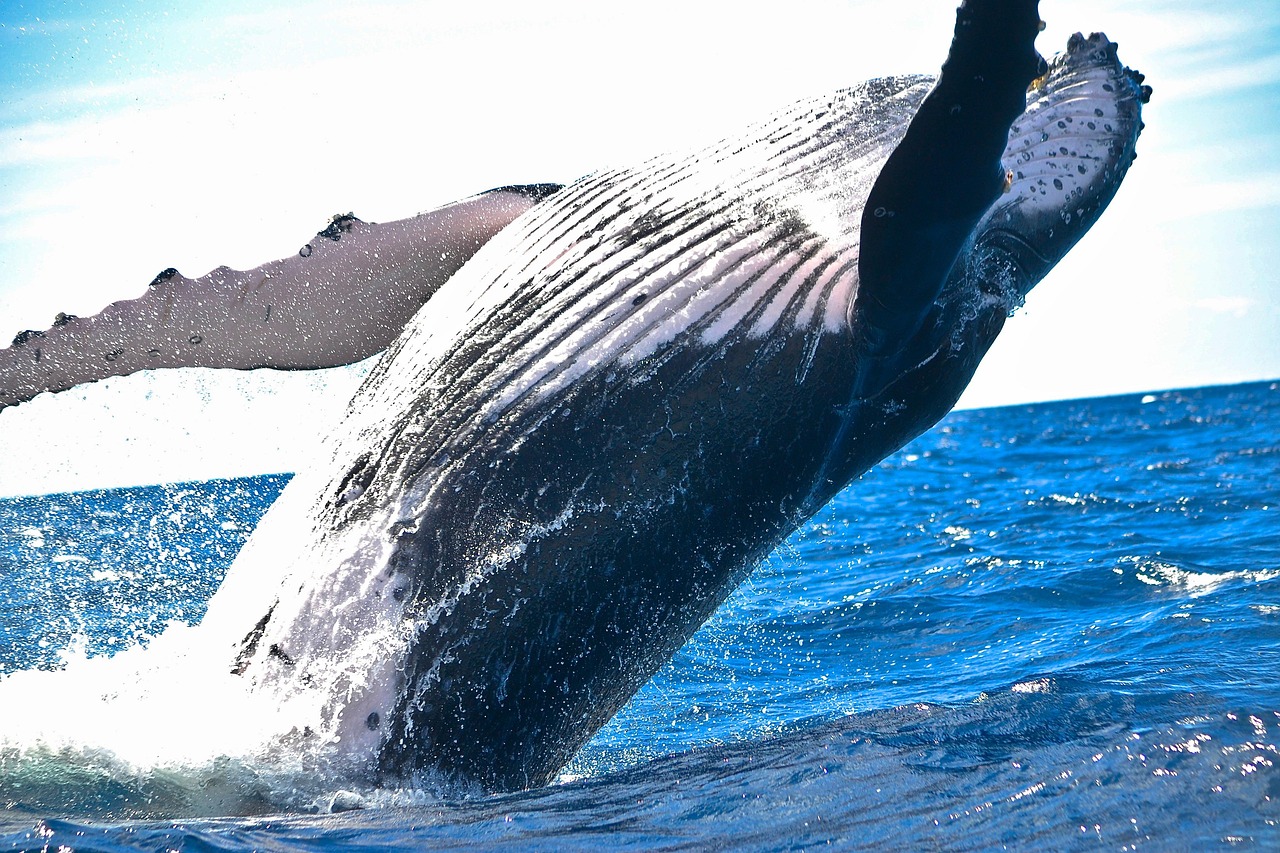
You could witness a whale rolling near the surface, slapping the water with its tail or even breaching. None of these behaviors are guaranteed, of course, which is exactly why seeing one feels so special.
More Than Gray Whales
Gray whales are the stars around Depoe Bay, but they're not the only large marine mammals traveling through Oregon waters.
Depending on ocean conditions, food availability and plain old luck, whale watchers may occasionally encounter humpback whales farther offshore. Other cetaceans, including dolphins and porpoises, can also appear along the Oregon Coast.
That's one reason I never stop watching the surrounding water after spotting my first whale. What initially looks like an empty stretch of Pacific can suddenly explode with wildlife.
Sea lions may surface below the cliffs. Pelicans can glide inches above the waves. Seabirds dive into baitfish. Then a whale blows right in the middle of everything.
The Oregon Coast has a way of reminding you that there is an entire world moving underneath that water.
Where to Watch Around Depoe Bay
One of the easiest places to begin is right along the oceanfront in Depoe Bay. Elevated viewpoints allow you to scan large sections of ocean without traveling far from town.
Another excellent area is Boiler Bay State Scenic Viewpoint, just north of Depoe Bay. Its high vantage point overlooking open water makes it a natural location for searching for whales.
South of town, the coastline around Rocky Creek State Scenic Viewpoint provides another dramatic place to watch the Pacific.
Bring binoculars if you have them, although don't become glued to them. I like to scan with my naked eyes first because a whale's blow is often easier to notice when you're looking across a wide section of ocean. Once I see one, that's when the binoculars come up.
Take a Whale-Watching Boat
Watching from shore is exciting, but heading onto the Pacific takes the experience to another level.
Depoe Bay's harbor provides access to whale-watching excursions that can bring passengers into areas where whales are feeding or traveling. From water level, even an ordinary breath from a gray whale suddenly seems enormous.
There's also something humbling about realizing that the dark shape surfacing nearby may belong to an animal roughly the length of a school bus.
The captain still has to respect required distances and responsible wildlife-viewing practices, but seeing a whale from a boat can give you an entirely different appreciation for its size.
The Best Fall Conditions
For shore-based whale watching, I prefer calm mornings with good visibility.
Strong afternoon winds can cover the ocean with whitecaps, making a whale's blow much harder to distinguish. Fog can also roll across the coastline and erase your view in minutes.
Fall weather changes quickly, though, so don't automatically give up because the morning starts gray.
This is the Oregon Coast.
Wait ten minutes.
The whole sky might change.
Then Comes the Big Migration
Fall whale watching eventually leads into one of the Oregon Coast's great wildlife events.
As winter approaches, large numbers of gray whales begin traveling south toward the warm lagoons of Baja California, Mexico. Oregon's coastal headlands become excellent places to watch the migration, and gray whales can be seen moving between their northern feeding grounds and Mexico during their seasonal journeys. Oregon State Parks specifically identifies coastal viewpoints as prime locations for watching these migrations.
That means a fall trip to Depoe Bay can feel like the beginning of something much bigger.
The occasional feeding whale of September and October gradually gives way to travelers heading south.
A Different Side of the Oregon Coast
People often associate whale watching with summer vacations or organized winter whale-watching events, but I think fall deserves far more attention.
There's a quieter feeling around Depoe Bay this time of year.
Put on a warm jacket, grab a cup of coffee and find a place overlooking the ocean. Watch the horizon instead of your phone. Give it some time.
At first, you may see nothing but waves.
Then comes that little burst of mist.
A dark back rolls through the water.
And suddenly you're standing on the Oregon Coast watching a gray whale continue a journey that has been happening along this shoreline for thousands of years.