Hiking the Ancient Rainforest of Cummins Creek on the Oregon Coast
Fall is probably my favorite time to disappear into the forests along the Oregon Coast. Don't get me wrong, I love the beaches, fishing, and everything else the coast has, but the rainforest after the first good fall rains that makes me want to grab my hiking boots and get lost in the woods for hours.
Cummins Creek is tucked into the coastal mountains just south of Yachats near Cape Perpetua. We're talking about a real coastal rainforest, with enormous old-growth trees, thick carpets of moss, sword ferns growing everywhere, and enough greenery to make you wonder if you've wandered into some prehistoric jungle.
And the best part? You don't have to drive miles into the mountains to experience it. Some of the most beautiful rainforest scenery on the Oregon Coast is practically right off Highway 101.
Why Cummins Creek Is Such a Special Place
The Cummins Creek Wilderness protects something pretty remarkable. It's home to the only old-growth Sitka spruce forest within Oregon's federally designated Wilderness system.
Some of these giant spruce trees reach nine feet in diameter. Imagine standing next to a tree so massive that several people would have to link arms just to reach around it.
The forest also contains western hemlock, Douglas fir, towering ferns, and moss-covered trees that seem to stretch endlessly into the canopy.
The wilderness encompasses roughly 9,000 acres, with Cummins Creek and Bob Creek draining through the forest toward the Pacific Ocean. These waterways provide habitat for salmon, steelhead, and coastal cutthroat trout.
What I find especially interesting is how close this wilderness is to the ocean. You can spend the morning watching waves crash against the rocks at Cape Perpetua and then head inland into a forest that feels completely removed from the coastline.
It's two entirely different Oregon Coast experiences.
Getting There: Just South of Yachats
From Yachats, head south on Highway 101 past Cape Perpetua. Continue approximately 1.2 miles beyond the Cape Perpetua Campground turnoff and look for Forest Road 1050 on your left.
Follow the gravel road approximately a tenth of a mile to the trailhead parking area.
The Cummins Creek Trailhead provides access to the trail system, including the Cummins Creek Loop. Before leaving, I recommend checking the current trail conditions with the Siuslaw National Forest, especially after heavy fall storms.
The Hike: Where the Rainforest Takes Over
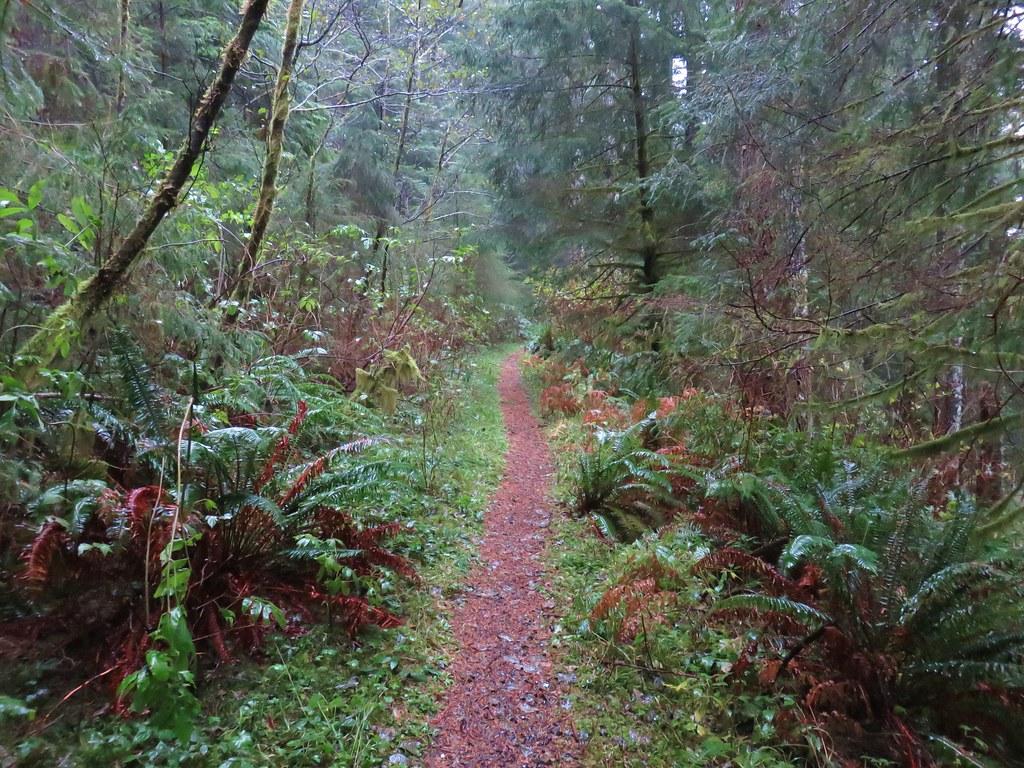
The lower section of the Cummins Creek Trail follows an old roadbed through thick coastal vegetation. It's a relatively gentle introduction to the area, with ferns, spruce, hemlock, and plenty of moss lining the route. There are massive tree trunks, fallen logs slowly disappearing beneath moss, and little patches of forest floor that look like miniature gardens.
In October and November, the forest takes on a completely different appearance. The ground is damp, the ferns are bright green, and the moisture brings out the incredible colors of the moss and lichens.
How Far Should You Hike?
Here's where you have a couple of options, depending on how adventurous you're feeling. For somebody who just wants to experience the rainforest without committing to an all-day hike, I'd recommend walking the lower Cummins Creek Trail for a mile or so before turning around.
You still get beautiful forest scenery without having to tackle the more demanding upper sections.
If you're looking for something more challenging, the Cummins Creek Loop is a much bigger adventure. Depending on the exact route, the loop is approximately six miles, with sustained climbing and some steeper, rougher sections.
The trail starts with a gradual ascent before becoming noticeably steeper farther uphill. One section gains roughly 500 feet in about half a mile, so you'll definitely earn your lunch.
For experienced hikers wanting an even longer outing, the surrounding Cape Perpetua trail network offers additional routes, including a longer loop from the visitor center.
The Giant Trees Are Worth the Trip Alone
Some of these trees were already growing long before Oregon became a state. They've survived generations of coastal storms, heavy rainfall, and everything else Mother Nature has thrown at them. When you stand underneath them, it's hard not to wonder about everything that's happened in the forest over the centuries. I especially love the way moss grows along the trunks and branches. In some places, it hangs down in long strands, giving the forest that wild, untouched appearance.
You'll also notice nurse logs scattered throughout the woods. These are fallen trees that slowly decompose, providing moisture and nutrients for new plants and young trees. It's an entire ecosystem recycling itself.
One thing worth understanding is that the biggest old-growth Sitka spruce aren't necessarily visible from every section of the maintained trail. The wilderness protects extensive old-growth habitat, but some of its most impressive trees grow away from established hiking routes.
I wouldn't recommend wandering off into the brush trying to find them. The terrain can be steep, wet, and confusing, and there's plenty to appreciate from the trails themselves.
Fall Is Mushroom Season, Too
Another reason I love hiking coastal rainforests during fall is the mushrooms.
Once the rain returns, fungi begin appearing all over the forest floor. You might notice mushrooms growing through needles, clusters around fallen wood, or tiny colorful caps emerging from thick moss.
Chanterelles are among the better-known edible mushrooms associated with Oregon's coastal forests, but there are many other species, including poisonous lookalikes.
Even if you're not interested in harvesting anything, mushroom photography can be a fun addition to a fall hike.
I like looking closely at the forest floor because it's amazing how much you miss when you're only watching the trail ahead.
Remember that collecting mushrooms in protected wilderness areas may be restricted. Check the applicable Forest Service rules before harvesting, and never eat a wild mushroom without a reliable identification.
What About Wildlife?
The Cummins Creek area supports a variety of coastal wildlife, although spotting animals in thick rainforest can take some patience. Roosevelt elk and black-tailed deer inhabit the surrounding forests, while smaller mammals and numerous bird species make their homes among the trees.
You may hear woodpeckers working on dead snags or notice birds moving through the canopy. The nearby creeks are especially interesting because they provide habitat for coastal cutthroat trout, salmon, and steelhead. During fall, when water levels rise, coastal streams become important corridors for migrating fish. I always enjoy stopping near a creek and listening to the water moving through the forest.
What I Bring for a Fall Rainforest Hike
I'm a big believer in being prepared, especially when hiking the Oregon Coast during fall. The weather can change quickly, and a trail that was perfectly dry a week ago might be muddy and slippery after several days of rain. Waterproof hiking boots with good traction are at the top of my list. I also bring a rain jacket, extra layers, drinking water, snacks, and a small first-aid kit.
Trekking poles can be helpful on the steeper sections, particularly when wet leaves and mud make the trail slippery. I also recommend downloading an offline map before leaving home. Cell reception can be unreliable in the coastal mountains, and it's easy to underestimate how quickly daylight disappears beneath a thick forest canopy. One more thing I always keep in mind during fall is the possibility of falling branches.
These forests contain enormous trees, and strong coastal winds can bring down limbs without much warning. I avoid hiking beneath large trees during windstorms and don't linger near damaged or leaning trees.
My Favorite Time to Explore
If I had to choose, I'd go on a cool October morning after a stretch of rain, provided the forecast calls for manageable conditions.
I actually prefer the mist.
Sunshine is beautiful, but cloudy skies give the rainforest a magical atmosphere. The moss seems brighter, the trees look darker, and everything feels more mysterious.
Early morning is especially appealing.
And if you enjoy photography, the soft light filtering through the canopy can make for some incredible pictures. You don't need a fancy camera, either. Some of the best things to photograph are right at your feet: mushrooms, ferns, moss, and little droplets of water hanging from leaves.
Make a Full Day of It
One of the best things about hiking Cummins Creek is its location. You're only a short drive from Cape Perpetua, one of my favorite stretches of the central Oregon Coast.
After exploring the rainforest, you can head back toward Highway 101 and spend some time checking out the dramatic rocky shoreline, scenic overlooks, and coastal viewpoints. If the weather cooperates, you could easily spend the morning hiking through the rainforest and the afternoon watching waves crash against the rocks. Then head into Yachats for something warm to eat.
Why This Is One of My Favorite Oregon Coast Adventures
I think people sometimes forget just how much there is to explore beyond Oregon's beaches. The coastline gets most of the attention, and understandably so. But some of the most incredible scenery is hiding just a few miles inland.
And fall is best time to experience it.
So the next time you're driving along Highway 101 near Yachats and the rain starts falling, don't automatically assume your outdoor plans are ruined.
Grab your rain jacket, lace up your boots, and head into the forest!


.jpeg)