Hug Point: Where Oregon Coast History Meets the Sea
Hug Point isn’t always at the top of the list when people talk about destinations on the Oregon Coast, but in my opinion, it absolutely should be.
Not only is it one of the more unique places along the Pacific Coast, but there’s something almost magical about it. Add in an incredible piece of Oregon history that often gets overlooked, and Hug Point becomes much more than just another beautiful beach.
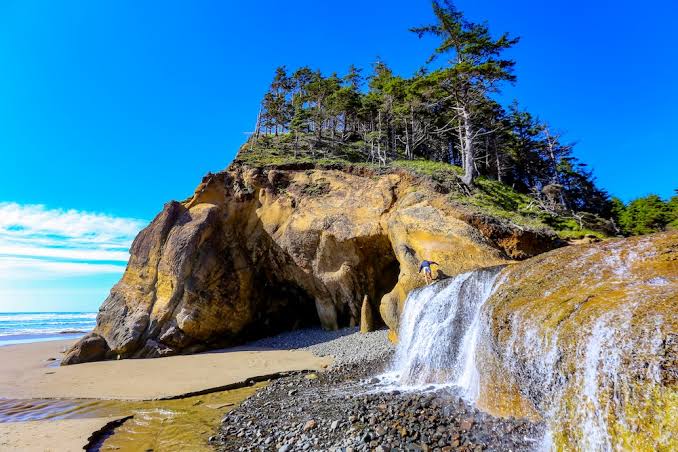
Hug Point is an awesome place to explore. There are sea stacks scattered offshore, Cannon Beach isn’t far away, and during the right tides, you can find some great little tide pools. There are caves, unusual rock formations, and yes—even a waterfall right on the beach.
And you know me. A waterfall on the beach? That’s my kind of place!
We’ll circle back to the waterfall in a minute, because first, there’s a fascinating piece of history hiding in plain sight.
Before Highway 101
Long before Highway 101 carried travelers up and down the Oregon Coast, the beach itself was often the highway.
At Hug Point, travelers once used the shoreline as part of the old coastal travel route. When tides allowed, people moved along the beach on horseback and with wagons and carriages.
As you walk around the point, you can still see evidence of that history carved directly into the rock. An old roadbed was cut into the sandstone so travelers could make their way around the rocky headland rather than becoming trapped by the ocean.
Standing there today and looking at that old route is pretty incredible. You can actually imagine horses, wagons, and travelers making their way around the point with the Pacific Ocean crashing beside them.
This history also connects to the much larger story of Oregon's public beaches and people like Governor Oswald West, who fought to protect public access to the coastline.
What I love most is that this piece of history isn't sitting behind glass in a museum. It's still right there along the beach. You can walk beside it, study the rock, and imagine what traveling the Oregon Coast must have been like more than a century ago.
How Hug Point Got Its Name
Once you study the shape of the headland, the name "Hug Point" starts making a lot more sense.
Travelers had to "hug" the point as they worked their way around the rocky headland. When you stand there and look at how the rock curves along the shoreline, you can see exactly why the name stuck.
It amazes me that such a small pocket of the Oregon Coast can hold so much natural beauty and history at the same time. Then again, that's one of my favorite things about exploring Oregon. Some of the most interesting places are tucked into little nooks and crannies that people drive right past.
Now, About That Waterfall...
I promised we'd circle back to the waterfall.
Hug Point Falls tumbles down the sandstone cliffs and directly onto the beach. Depending on recent rainfall and the season, the waterfall can look completely different from one visit to the next.
Sometimes it falls like a beautiful veil over the rocks. Other times, it breaks into thin little streams that remind me of strands of silver tinsel hanging against the cliff.
You can explore around the waterfall and surrounding rocks when conditions are safe, but always use caution. Wet sandstone can be extremely slippery, and conditions along this stretch of coast can change quickly.
That's part of what makes Hug Point so interesting. You're not just looking at one attraction. The waterfall, caves, cliffs, sea stacks, tide pools, beach, and history all come together in one relatively small area.
A Beach Worth Exploring
The rest of the beach is just as incredible.
There are beautiful caves, unusual sandstone formations, and hidden corners that make you want to keep exploring just to see what's around the next bend. Hug Point is easily a 10 out of 10 for me, and unless you actually walk down onto the beach and explore it for yourself, you might never realize how much is hiding here.
Hug Point has also experienced closures because of erosion, storm damage, and safety concerns. I had wanted to explore this area months earlier, only to learn that access had been closed to the public. When I finally discovered it had reopened, I couldn't wait to get back down there and experience this beautiful and historic stretch of coastline.
Know Before You Go
If you've never been to Hug Point, I highly encourage you to check it out—but explore it responsibly.
Always check the tides before heading around rocky points or exploring areas that could become cut off by incoming water. Pay attention to changing ocean conditions, falling rocks, unstable cliffs, erosion, and slippery surfaces. Sinkholes and landslides can also occur along sections of the Oregon Coast, especially following heavy rain and powerful winter storms.
Most importantly, respect this incredible place. Leave the rocks, tide pools, caves, and natural features the way you found them so the next person can experience that same sense of discovery.
Hug Point isn't just another stop along Highway 101.
It's a place where waterfalls tumble onto the sand, ocean waves crash against sandstone cliffs, and Oregon Coast history is literally carved into the rock beneath your feet.
Happy waterfall adventures, and remember—leave no trace.