Minus Tide Late-Summer Rock Fishing for Black Rockfish on the Oregon Coast
Most anglers spend late summer looking far offshore for tuna or crowding the bays for salmon. Meanwhile, one of the Oregon Coast's most consistent fisheries unfolds almost unnoticed, right beneath the cliffs where the Pacific pounds volcanic rock day after day.
It happens during the lowest tides of the month.
For just a few hours, the ocean pulls back and exposes ledges, kelp pockets, and rocky points that spend most of the year underwater. These "minus tides" create a rare opportunity for shore anglers to target aggressive black rockfish without ever stepping into a boat.
It's a style of fishing that feels more like hunting than casting.
Reading the Ocean Instead of the Water
Walking onto a rocky headland at low tide is like entering another world.
Kelp sways in crystal-clear pools. Purple sea stars cling to basalt walls. Tiny crabs dart between rocks while anemones open like underwater flowers.
Most visitors stop to admire the tide pools.
Experienced anglers keep walking.
They're searching for something different.
A narrow channel where waves surge in and out.
A submerged rock shelf that suddenly disappears into deep blue water.
A current seam where baitfish have nowhere to hide.
That's where black rockfish wait.
Unlike salmon that constantly migrate or trout that roam rivers, rockfish are homebodies. Many spend years living around the same reef, ambushing anything swept past them by the tide.
Timing Is Everything
Late summer is ideal because calmer seas often provide more safe access to rocky shorelines than during the winter months. Even then, the ocean deserves complete respect. Conditions can change quickly, and waves can arrive unexpectedly. Always fish from stable ground well above the waterline and never turn your back on the surf.
The best strategy isn't necessarily fishing the absolute lowest tide.
It's arriving an hour before the tide bottoms out.
As the ocean slowly begins flooding back over the reef, baitfish move first.
Then come the predators.
That first hour of incoming water can feel like someone flipped a switch.
The Gear Doesn't Need to Be Fancy
Forget expensive offshore tackle.
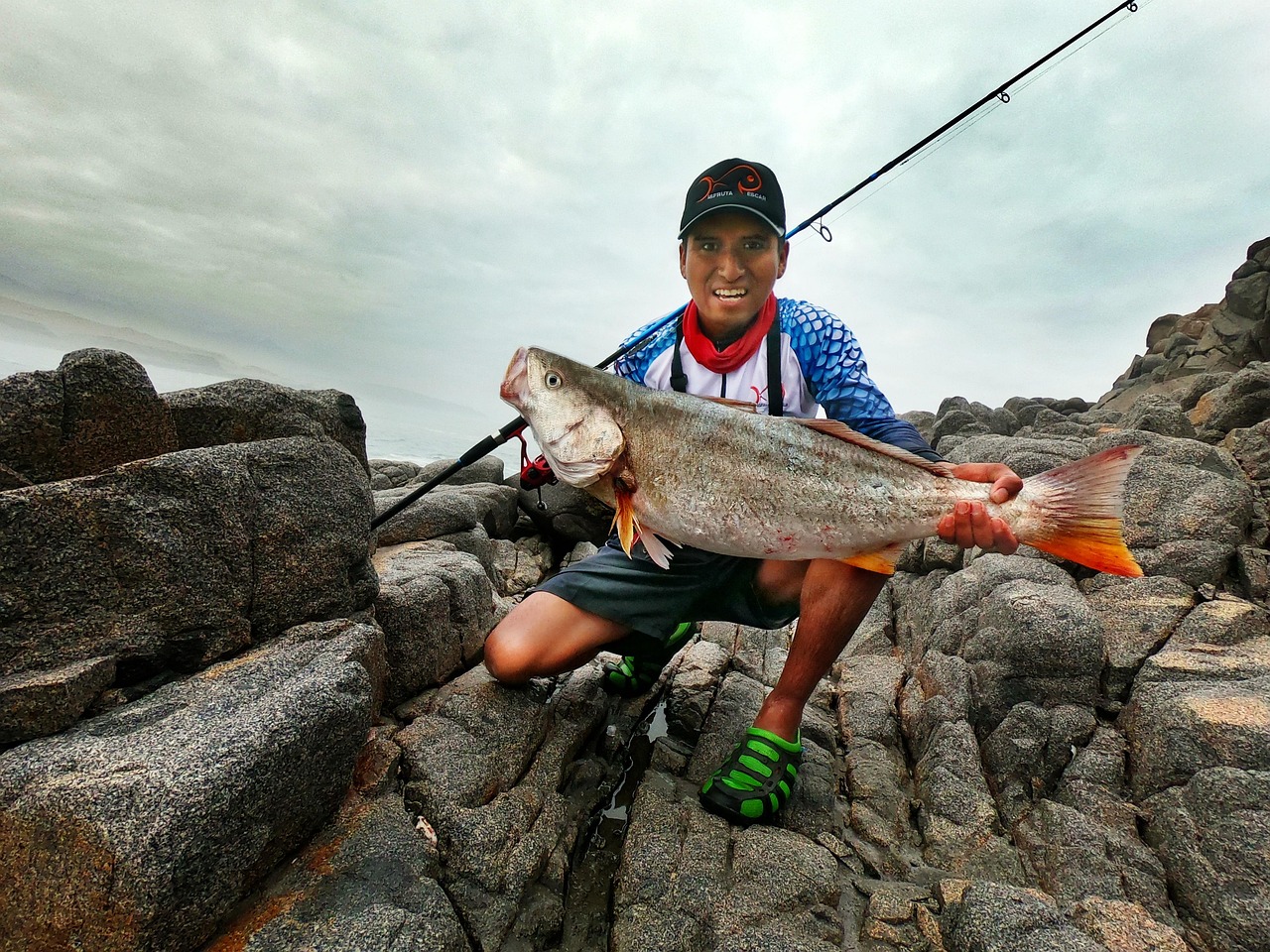
A medium-heavy spinning rod around 8 feet long paired with 20- to 30-pound braided line is plenty for most shoreline rockfish.
Simple catches fish.
Many locals rely on:
- A 1- to 2-ounce jig head
- Soft plastic paddle tails in white, chartreuse, or motor oil
- Curly-tail grubs
- Metal jigs for deeper pockets
Cast beyond the visible rocks.
Let the lure sink.
Then retrieve slowly enough to occasionally tap the bottom.
Most strikes happen just as the lure rises over a ledge.
Instead of a violent hit, it often feels like your lure suddenly weighs twice as much.
Set the hook immediately.
Every Pocket Holds Possibility
One of the joys of rocky shoreline fishing is that every cast tells a different story.
One pocket may produce nothing.
The next might hold half a dozen hungry rockfish.
You quickly learn that structure matters more than distance.
Sometimes the best fish are only twenty feet from where you're standing.
Other times they're sitting beneath a swirling patch of kelp that everyone else walks past.
Patience—and observation—beat power every time.
More Than Just Rockfish
Late-summer reef fishing rarely produces only one species.
Depending on the location and regulations, anglers may also encounter:
- Blue rockfish
- Kelp greenling
- Cabezon
- Lingcod in deeper water
- Surfperch cruising nearby sandy pockets
Every cast carries a little mystery.
That's part of what makes this fishery addictive.
The Real Reward
By midmorning the tide has reclaimed the reef.
The channels disappear.
The tide pools vanish beneath whitewater.
Within an hour, it's impossible to tell where you were standing.
The ocean quietly erases every opportunity until the next series of minus tides arrives.
That's what makes this style of fishing feel special.
It's temporary.
It rewards anglers who pay attention to tide charts instead of crowds, who are willing to hike a little farther, and who understand that some of Oregon's best fishing doesn't happen from a $100,000 boat—it happens with wet boots, salty air, and a backpack full of tackle.
Late summer offers countless ways to fish the Oregon Coast, but few experiences are as intimate with the landscape as working a rocky shoreline while the Pacific briefly reveals secrets that spend most of the year hidden beneath the waves.