Spring Chinook Fishing on the Oregon Coast
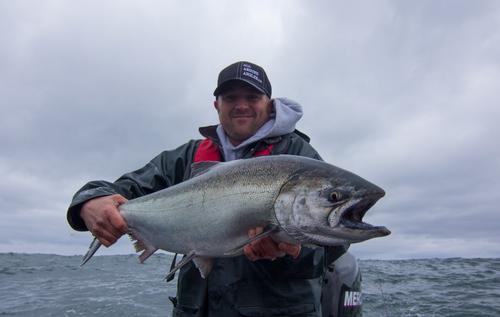
Spring Chinook on the Oregon Coast isn’t easy fishing—and that’s exactly why it draws skilled anglers every year. While there’s no guarantee of catching one of these babies, it's an adventure well worth the investment . These fish move when they want, hold where they want, and if you’re not in the right place at the right time, you won’t even know they were there.But if you’re serious about chasing springers on the coast, it comes down to three things: timing, water, and positioning yourself where fish travel.
Timing Matters More Than Anything
Most anglers talk about dates—late April, May, early June—and sure, that’s roughly when spring Chinook show up. But the calendar doesn’t catch fish. Conditions do.
The best fishing usually lines up with:
- The first drop in river levels after spring rain
- Water that has a slight green tint—not muddy, not crystal clear
- A few days of stable flows
That window doesn’t last long. Some years it’s a couple of weeks. Other years it feels like it’s over before it even started. If the river drops into shape, that’s your signal—go.
The Best Rivers to Fish on the Oregon Coast
Each coastal river fishes a little differently, but they all have one thing in common: spring Chinook are moving through them quickly. They’re not sitting in one place waiting to be found.
Rogue River (Gold Beach Area)
If there’s one river on the Oregon Coast that gives you a real shot every year, it’s the Rogue.
Down near Gold Beach, especially in tidewater, fish push through fast and tight to the bank. This isn’t random water—you need to be fishing lanes that fish actually use.
The best spots are usually:
- Inside bends where current slows just enough
- Edges of heavier flow
- Shallow travel lanes that don’t look like much at first glance
Umpqua River (Reedsport to Winchester)
The Umpqua is a river that rewards patience—and punishes guesswork.
There’s a lot of water, and not all of it holds fish. The lower river near Reedsport and the stretch around Scottsburg offer solid access, while areas near Winchester Dam can see fish stacking up before pushing farther upstream.
What you’re looking for here isn’t pretty water—it’s useful water:
- Deep runs with steady current
- Tailouts where fish pause briefly
- Travel lanes where fish move through without stopping
Siletz River
The Siletz is quieter, less pressured, and a lot less forgiving.
It’s not a numbers game. It’s a place where you put in time and hope to connect with one fish that makes the whole day.
Tidewater below the town of Siletz, along with areas like Moonshine Park and the Twin Bridges stretch, all hold fish at different times in the run.
The key is slowing down and really working the water:
- Look for structure like logs and cut banks
- Pay attention to subtle depth changes
- Focus on slower water near current
Nestucca River
The Nestucca is one of the more accessible coastal rivers, but that doesn’t mean it’s easy.
Fish move quickly through the lower river, especially between Cloverdale and Pacific City. If you’re not in the right place when they pass through, you miss them.
The best approach here is to stay mobile:
- Fish deeper channels in the lower river
- Work tidewater transitions
- Don’t stay in one spot too long if nothing’s happening
Tillamook Bay & Its Tributaries
Tillamook Bay, along with rivers like the Trask, Wilson, and Kilchis, offers a different kind of opportunity—especially early in the season.
Fish often stage in the bay before heading upstream, and trolling these areas can be productive if you’re willing to move and search.
Key areas include:
- Trolling lanes near river mouths
- Lower sections of tributaries
- Areas with active current and bait presence
Reading The Water
More than gear, more than bait, more than anything else—success with spring Chinook comes down to reading water.
These fish are traveling, not holding. They follow paths that make sense for conserving energy.
Look for:
- Walking-speed current—not too fast, not dead slow
- Defined seams where currents meet
- Depth changes and transition zones
Avoid:
- Slack, lifeless water
- Heavy, chaotic current
- Shallow riffles
If the water looks “boring” but has steady movement and depth, that’s often where fish are moving.
Gear and Setups
You don’t need anything fancy—but you do need gear that works.
Most anglers stick with:
- Medium-heavy rods in the 8’6” to 10’6” range
- Strong reels with reliable drag
- 30–50 lb braid with a 20–30 lb leader
As for setups, a few proven options cover most situations:
- Spinners for covering water and fishing seams
- Plug-cut herring for tidewater and slower lanes
- Roe or bait fished near the bottom in travel zones
Presentation matters—but location matters more.
Bank vs Boat
Bank anglers have a harder job. You’re limited in where you can stand, which means you need to move more and choose your water carefully.
Boat anglers have the advantage of positioning, but that doesn’t mean it’s easy. If you’re not in the right lane, it doesn’t matter how good your setup is.
In both cases, success comes down to one thing: being where fish are moving.
The Reality of Spring Chinook Fishing
There’s no way around it—this is a grind.You’ll have days where nothing happens. No bites, no signs, just hours of watching water slide by. Then, out of nowhere, everything changes.The rod loads up and the line starts peeling.