The People’s Coast
The next time you walk along the beach in Oregon, you will actually be exercising a piece of Oregon’s history. You’re walking on a legacy that was deliberately protected for you—and for the people who will come after you.
There are other places in America that have public beaches. However, the way we went about making Oregon’s beaches public is unique and very much a reflection of the Oregonian spirit.
There is something easy to take for granted when you stand on an Oregon beach.
You can walk for miles along the sand. You can watch the sunset from the water’s edge. You can explore tide pools, hunt for agates, build sandcastles, surf, fish, or simply sit and listen to the Pacific.
And no matter how expensive the house or resort behind you might be, the beach itself cannot simply be fenced off and claimed as someone’s private playground.
This wasn’t an accident. It is the result of more than a century of Oregonians fighting to keep the coast open to everyone.
The story begins with an Oregon governor who came up with a remarkably clever solution.
Oswald West and the “Highway” to the Sea
It’s no surprise to me that Oswald West is the person who put this whole thing in motion, seeing as Oswald West State Park is my favorite place in Oregon. But let’s get to the facts.
In the early 1900s, Oregon’s coastline was becoming increasingly valuable. Railroads were bringing tourists to coastal communities, resorts were being built, and private interests were beginning to acquire pieces of beachfront. By around 1910, about 25 miles of Oregon beach had already been sold into private ownership.
Governor Oswald West, who served from 1911 to 1915, believed the ocean shore should remain available to everyone. But there was just one problem. Simply declaring the beaches public wasn’t necessarily an easy political sell.
So, West found another way.
He convinced the Oregon Legislature in 1913 to declare the ocean shoreline from the Columbia River to the California border a public highway. The law declared the shore between ordinary high tide and extreme low tide a public highway that would remain open to the public.
This was a brilliant maneuver because it saved the state from having to buy hundreds of miles of beachfront from private owners. Instead, the shoreline was placed under the protection of the state’s public highway system.
As the years went by, Oregonians grew accustomed to the idea that the beach belonged to everyone.
It was a great idea, but there was still one problem: the law primarily protected the wet-sand portion of the beach. The dry sand above the ordinary high-tide line could potentially be privately owned and restricted.
The Fight Over the Dry Sand
Now let’s fast-forward to 1966.
A Cannon Beach motel owner named William Hay tried to restrict access to the dry sand in front of his property. Large driftwood logs were placed across part of the beach, private-property signs appeared, and an area was set aside for motel guests only.
This was shocking to many Oregonians because, by then, generations of people had grown up believing the coastline belonged to everyone.
The motel owner’s actions raised concerns and brought attention to a much bigger question: What would happen if other beachfront property owners did the same thing?
Could the beautiful beaches of Oregon, long thought of as belonging to the people, eventually become a patchwork of private resorts, fences, and restricted access?
The fight that followed would change Oregon forever and help shape the coast as we know it today.
Governor Tom McCall and the Oregon Beach Bill
In 1967, Governor Tom McCall threw his support behind House Bill 1601, better known as the Oregon Beach Bill.
There was significant opposition because this wasn’t simply a fight over beaches. It involved the difficult question of private property rights versus the public’s right to access the coast.
So what does any great leader do when they need to make an impact?
Well, it wasn’t exactly a publicity stunt—or maybe it was.
In May 1967, Governor McCall traveled to the coast with scientists, legislators, and members of the press. They examined the relationship between the proposed 16-foot elevation line and the natural vegetation line along the beach.
At the time, an event like this created a dramatic visual and generated tremendous attention from Oregonians.
Then, on June 7, 1967, the Beach Bill was passed.
And believe it or not, in many ways, everybody won.
Private property could still exist near the beach, but beachfront ownership did not mean private owners could simply shut the public out of the shoreline. The legislation also helped establish and protect the ocean shore as a state recreation area, with Oregon State Parks responsible for protecting its recreational, scenic, and natural values.
A Coast That Belongs to All of Us
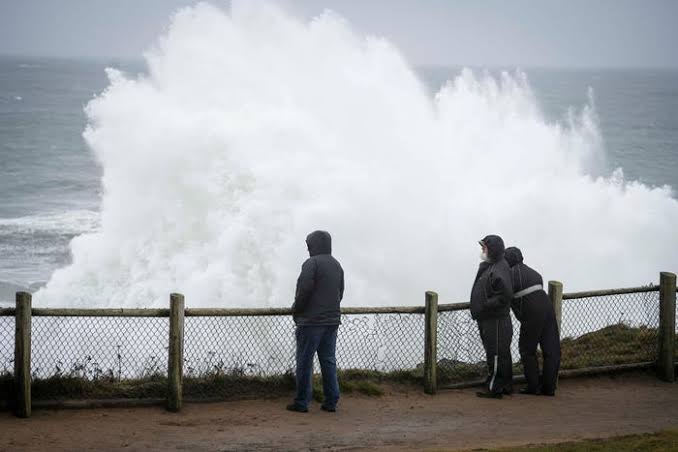
That stretch of sand where you find your first agate, watch your first storm roll in, experience your first king tide, teach your kids to surf, or simply stand barefoot in the Pacific doesn’t belong exclusively to the people who can afford the property behind it.
It’s the People’s Coast.
And our coast isn’t just scenery. It’s a shared inheritance.
That open stretch of sand exists the way it does because people before us decided that access to the Pacific Ocean was too important to leave solely to whoever happened to own the land behind it.
So enjoy your next sunset knowing that people fought for your right to stand there and enjoy it freely. :)